

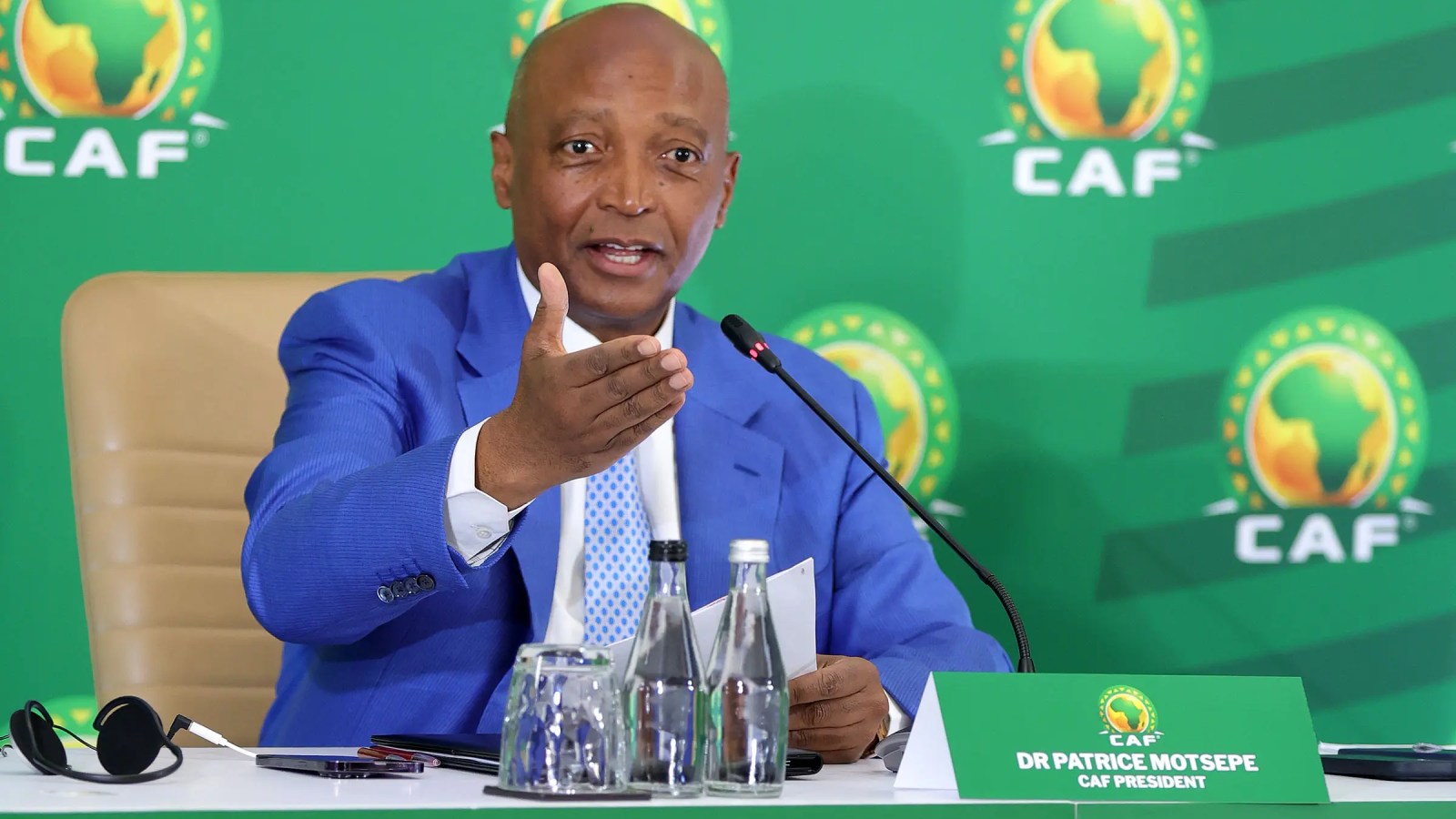
Africa’s position has become one of the most consequential unanswered questions in the fallout from the 2026 FIFA World Cup, with CAF yet to outline a clear public stance as pressure grows around Gianni Infantino’s leadership and broader commercial agenda. That silence matters because Africa’s voting weight now appears capable of shaping the next phase of FIFA’s internal struggle, particularly as resistance hardens elsewhere. Patrice Motsepe remains the central figure in this story, not only because of his role as CAF president but also because he had previously backed Infantino despite what was described as a tumultuous 2026 World Cup. With opposition emerging from other confederations and criticism intensifying around plans tied to FIFA competitions, CAF’s next move carries significance far beyond the continent.
- CAF has not yet made its position clear publicly, leaving Africa’s voting bloc central to the fallout from the 2026 World Cup.
- Africa is viewed as a potential swing vote in the growing dispute surrounding Gianni Infantino’s leadership.
- Patrice Motsepe had previously backed Infantino despite what was described as a tumultuous 2026 FIFA World Cup.
- Infantino’s broader plan to sell stakes in FIFA competitions has faced heavy criticism and resistance.
- UEFA’s 55 member nations were involved in a reported boycott, while Concacaf also opposed the plan.
Why CAF’s position now matters so much
The central issue is not simply whether CAF supports Infantino or distances itself from him. At a moment when other parts of world football appear more openly resistant, Africa’s collective position could determine whether the FIFA president retains enough political backing to steady his authority. In a dispute that now extends beyond tournament criticism into questions of governance and commercial direction, a large voting bloc that has not fully declared itself becomes enormously important. CAF’s silence therefore reads as more than caution; it has become a strategic factor in its own right.
That significance is heightened by the wider context of the 2026 World Cup fallout. The tournament has already been described as tumultuous, and that matters because it frames the political environment in which every subsequent FIFA decision is now judged. When a World Cup leaves behind turbulence, scrutiny naturally shifts from the field to the leadership structure above it. In that atmosphere, even issues that might once have been handled as internal business can quickly become tests of confidence, and Africa’s eventual response could be interpreted either as a stabilising endorsement or as a sign that discontent has spread further.
Motsepe’s earlier backing of Infantino is a crucial part of the picture because it gives CAF’s current quietness added weight. If the confederation had been openly critical all along, silence now would carry one meaning; because its president had previously supported Infantino, the absence of a fresh and emphatic public position invites closer scrutiny. It leaves room for multiple interpretations, from tactical patience and internal deliberation to a desire not to move too early while the broader balance of power is still shifting. Whatever the reason, that uncertainty has made Africa the focal point of a debate that increasingly looks global rather than regional.
The commercial battle is now tied to the leadership battle
The dispute surrounding Infantino is not limited to reaction from the 2026 World Cup itself. It is also bound up with the wider plan to sell stakes in FIFA competitions, a proposal that has drawn heavy criticism and resistance. That matters because commercial strategy and political legitimacy are now intersecting in a way that makes every vote more consequential. Once opposition forms around both leadership and the future shape of FIFA’s competitions, support is no longer just about loyalty to an individual; it becomes a statement about the direction of the organisation.
The scale of that resistance is important. UEFA’s 55 member nations were involved in a reported boycott, while Concacaf also opposed the plan, creating a picture of meaningful pushback from major parts of the global game. Even without a full public declaration from every confederation, those developments suggest the argument has moved well beyond ordinary disagreement. This is no longer a minor policy dispute but a broader contest over authority, influence and the commercial future of FIFA’s flagship properties. In that setting, CAF’s undecided or undeclared posture becomes even more valuable because it may provide the decisive margin in a fractured landscape.
For Africa itself, the moment presents both leverage and pressure. On one hand, being seen as a swing vote gives CAF unusual influence in shaping what happens next inside FIFA. On the other, that same influence means any eventual stance will be examined for what it says about the confederation’s priorities, independence and appetite for reform or continuity. If CAF backs Infantino again, it could help him withstand a period of intense criticism and reinforce his position at a delicate time. If it moves away, or even signals discomfort with the commercial plans, it could deepen the sense that the post-2026 fallout has become a genuine threat to his wider project.
There is also a strategic reason why CAF may be moving carefully. In moments like this, confederations often gain more by waiting until the contours of the dispute are clearer rather than declaring themselves at the first sign of pressure. A delayed position can preserve negotiating space, avoid unnecessary confrontation and increase the value of eventual support. That does not explain the final direction CAF will take, but it does help explain why silence itself has become a story. When the stakes are this high, restraint can be a form of influence.
The broader significance is that the aftermath of the 2026 World Cup has evolved into a referendum on more than tournament management. It now touches FIFA’s political alliances, the credibility of its leadership and the acceptability of its commercial ambitions. Africa’s role in that process is especially important because its voting strength gives it the ability to affect not just optics but outcomes. In practical terms, that means the next meaningful signal from CAF or Motsepe could reshape the balance of the entire debate. Until that happens, the uncertainty will continue to define this phase of the FIFA story.
What comes next will depend on whether CAF maintains its public silence or chooses to clarify where it stands on Infantino and the contested plans around FIFA competitions. Any clear move from Africa would immediately sharpen the picture of who holds momentum in this dispute and who does not. For now, the most important fact is that the continent remains central to the calculation, with Motsepe and CAF holding a potentially decisive role in the post-2026 struggle over leadership, power and the future direction of world football.
Leave a Reply