

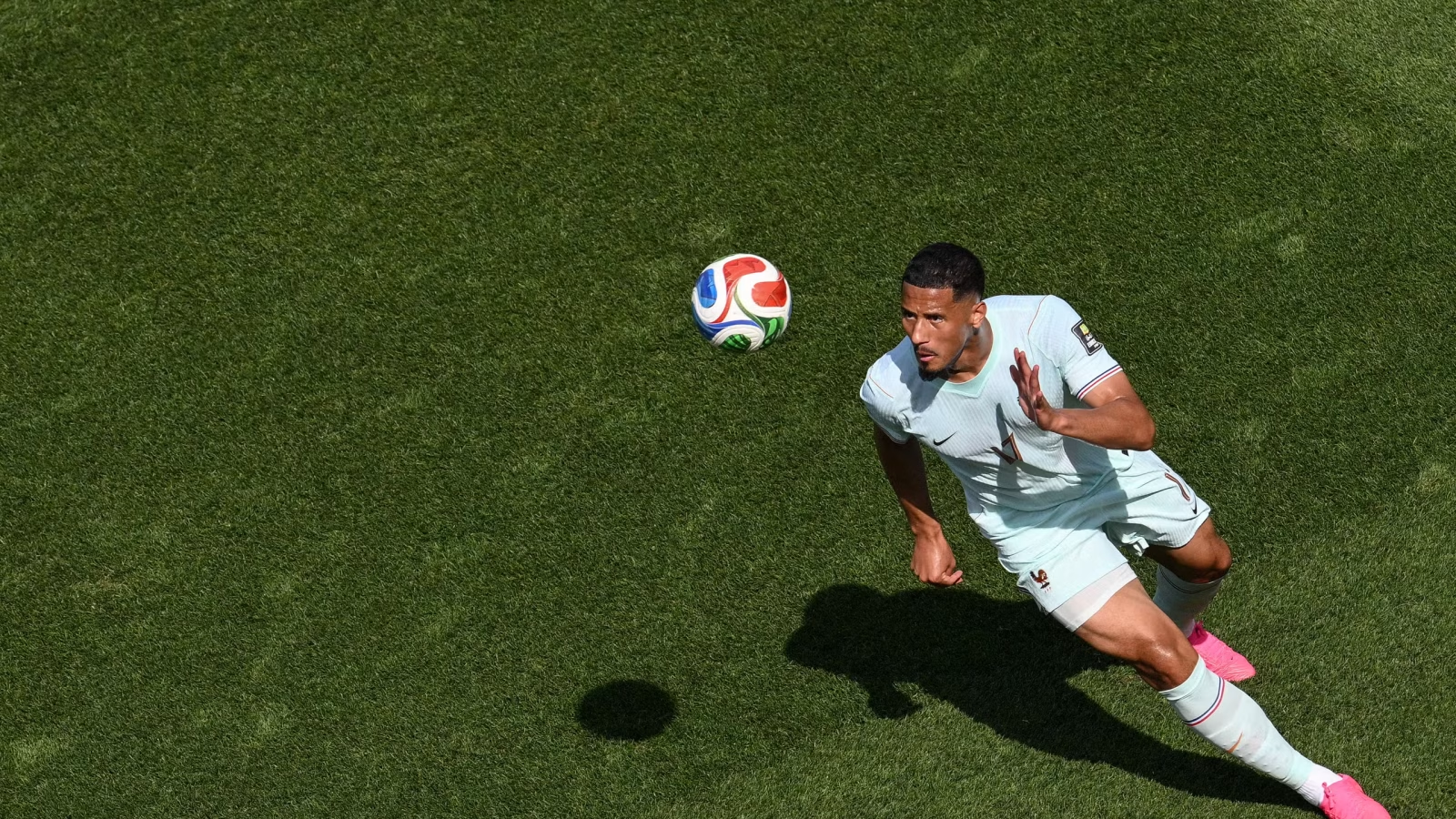
Arsenal’s World Cup footprint has emerged as one of the clearest storylines ahead of the new Premier League season, with the club’s players logging 4,285 minutes across the 2026 tournament. That total ranks second among Premier League clubs, underlining how deeply Mikel Arteta’s squad was involved on the biggest international stage. William Saliba stands out within that picture after playing 450 minutes for France, a figure that reflects both his importance to his national team and the scale of Arsenal’s overall workload. While the broader evidence firmly supports the view that Arsenal were heavily affected by the World Cup, it does not establish that they were the single most impacted club, nor does it verify specific injury claims.
- Arsenal players recorded 4,285 World Cup minutes, the second-highest total among Premier League clubs.
- William Saliba played 450 minutes for France during the tournament.
- The figures support the broader view that Arsenal were among the clubs most affected by World Cup involvement.
- The available evidence does not confirm that Arsenal were the most impacted Premier League side overall.
- The available evidence also does not verify specific claims about injuries linked to tournament participation.
How Arsenal’s World Cup load shapes the conversation
The headline number matters because it offers a clear measure of how much tournament football Arsenal’s squad carried into the summer. A total of 4,285 minutes is not a marginal contribution made up of a few brief appearances; it points instead to sustained involvement from Arsenal players throughout the competition. That level of exposure can influence pre-season planning, conditioning work and early-season squad management, especially when players return on different schedules and with varying physical demands. Even without drawing unsupported conclusions about fatigue or injuries, the raw volume alone places Arsenal at the centre of any league-wide assessment of World Cup impact.
Just as significant is the fact that Arsenal rank second among Premier League clubs rather than first. That distinction meaningfully alters the framing. It reinforces the argument that Arsenal were heavily affected, but it stops short of proving they were burdened more than every rival. In practical terms, the conversation should therefore focus on Arsenal being in the upper tier of clubs managing substantial post-World Cup demands, rather than presenting them as a uniquely affected outlier when the verified figures do not support that claim.
Saliba’s 450 minutes for France add an important human dimension to the broader team total. When one player reaches that level of involvement, it reflects both the trust placed in him by his national side and the demands of a deep tournament run. For Arsenal, it also illustrates that the World Cup impact is not only about how many players were involved, but about the intensity of the roles they performed. Heavy minutes for key individuals can carry a different significance from brief cameos, and Saliba’s tally shows that Arsenal’s contribution included players operating at the sharp end of the competition.
That is why the numbers resonate beyond simple participation. They speak to the concentration of responsibility within Arsenal’s squad and the extent to which important first-team players were exposed to elite-level football over an extended period. In a club season where margins can be tight from the opening weeks, the timing and volume of that involvement naturally become part of the wider discussion around readiness, rhythm and squad management.
What the numbers mean for Arsenal and the wider Premier League picture
The wider angle is just as revealing as Arsenal’s own tally. Comparing every Premier League club through the lens of World Cup involvement offers a more useful perspective than viewing one squad in isolation. Arsenal’s 4,285 minutes place them firmly among the clubs dealing with significant tournament aftereffects, making their situation notable but also part of a broader competitive landscape. Other clubs are navigating similar issues to varying degrees, and Arsenal’s position near the top of the list suggests they enter the season in a context where player management, rotation and recovery could be especially important.
That broader context also helps guard against overstating what the available evidence can prove. The verified figures support the case for a substantial workload and validate the wider discussion about how Premier League clubs were affected by World Cup participation. What they do not do is confirm a direct line from those minutes to specific physical problems, nor do they verify claims that Arsenal suffered more than every other side. For that reason, the strongest version of the story is not one of certainty about negative consequences, but one of measurable exposure and the challenge of absorbing it before domestic competition resumes.
There is also a footballing dimension to this beyond pure conditioning. Players returning from a major international tournament often come back having operated in different tactical systems, at different rhythms and under different emotional pressures than they experience at club level. For a team like Arsenal, reintegrating heavily used internationals can be as much about restoring collective cohesion as it is about managing minutes on the training ground. The significance of the 4,285-minute figure lies not only in physical wear, but in how much of Arsenal’s squad has spent the summer in high-stakes football away from the club environment.
At the same time, there is another side to that equation. Extensive World Cup involvement can also be read as evidence of squad quality, status and trust at the highest level. Arsenal having the second-highest minute total among Premier League clubs suggests a roster filled with players important enough to feature prominently for their countries. That does not erase the challenge that comes with such a demanding summer, but it does frame the issue as one tied to strength as well as strain. The same players who increase the club’s workload profile are often the ones expected to drive performance once the domestic season begins.
For Arsenal, then, the key takeaway is balance. The numbers clearly show a squad that was deeply engaged in the World Cup, and Saliba’s 450 minutes for France provide a sharp example of that burden at an individual level. But the evidence is most persuasive when kept within its limits: Arsenal were among the most affected clubs, not definitively the most affected, and the available material does not substantiate specific injury narratives. That distinction matters because it keeps the focus on what is known for certain, namely the scale of Arsenal’s tournament involvement and the significance of that involvement within the league-wide picture.
Looking ahead, Arsenal’s World Cup minute total will remain an important reference point as attention shifts fully to the Premier League season. Their 4,285 minutes ensure they are part of any serious discussion about how international football may shape the opening weeks of the campaign. Saliba’s heavy use for France only sharpens that focus, particularly when assessing how key players settle back into club demands. The months ahead will show how effectively Arsenal absorb that workload, but the verified evidence already makes one point clear: they return from the 2026 World Cup carrying one of the heaviest tournament burdens in the Premier League.



Leave a Reply