

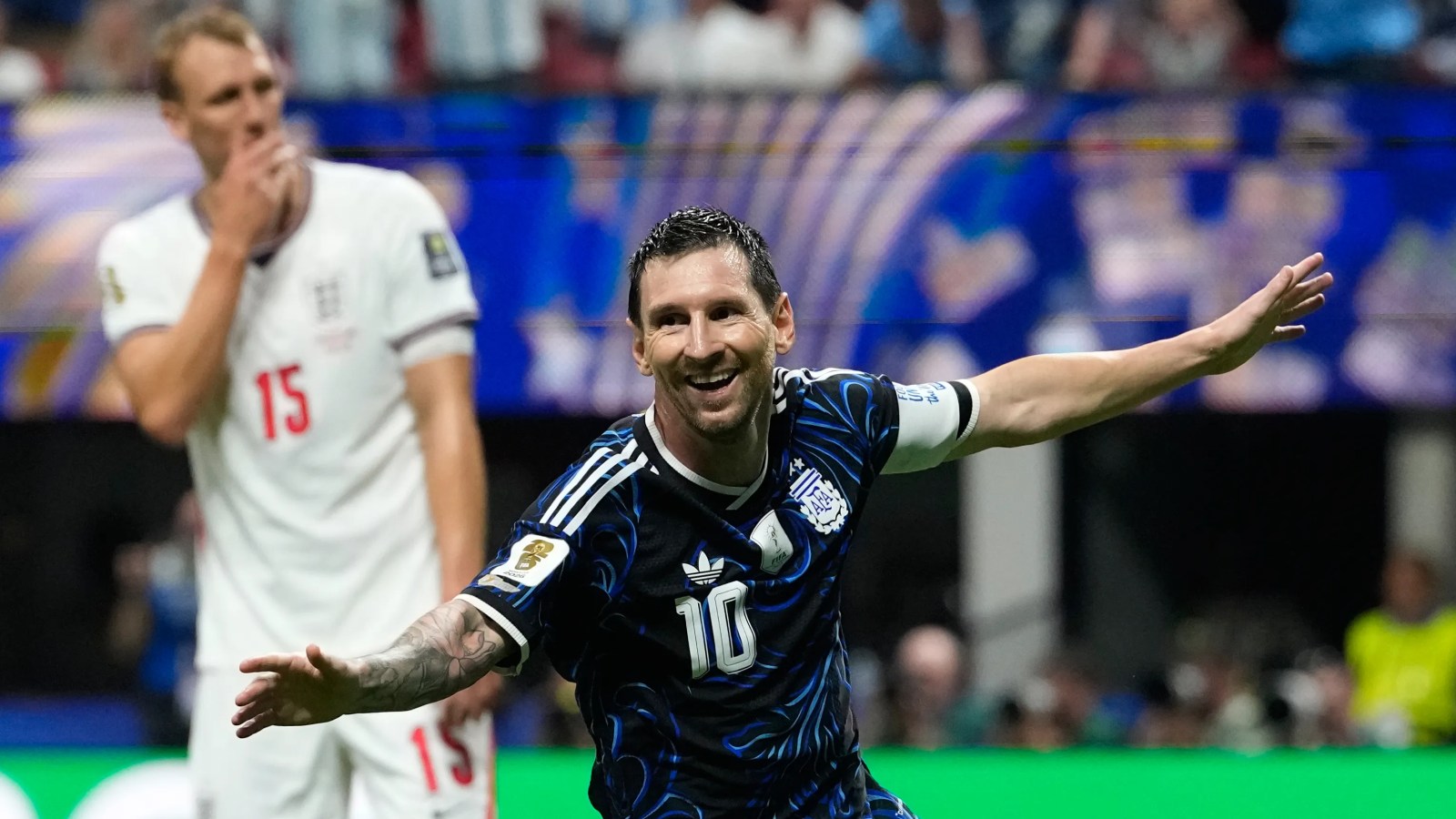
Argentina head into Sunday’s World Cup final against Spain on a run that has revealed both their quality and their nerve, and that combination is why Lionel Messi remains the standout figure in the build-up to New York New Jersey Stadium. This is not a team that has simply cruised into the showpiece. It has had to solve different kinds of problems, from controlling matches early to surviving momentum swings and delivering under intense knockout pressure. The semifinal against England, turned by two late goals in a 2-1 win, underlined a side still capable of producing decisive moments when the stakes are highest. For a nation preparing for its seventh World Cup final appearance, the story of this run is not just about form but the manner of it: resilient, technical and increasingly comfortable in the emotional chaos that defines the final stages of a tournament.
- Argentina face Spain in the FIFA World Cup 2026 final on Sunday 19 July at New York New Jersey Stadium.
- They reached the final by beating England 2-1 in the semifinal, scoring twice late to complete the comeback.
- The quarterfinal also tested them deeply, as they let a 2-0 lead slip before advancing 4-2 on penalties.
- One confirmed group-stage result from their campaign was a 3-0 win over Algeria.
- This is Argentina’s seventh World Cup final appearance, and their route suggests a team blending technical quality with resilience under pressure.
- No verified fresh injury or fitness concerns for Argentina’s key players are confirmed in the supplied results ahead of kickoff.
A route shaped by control and recovery
The clearest theme in Argentina’s path to the final is that they have won in more than one way. The confirmed 3-0 group-stage victory over Algeria showed their ability to impose themselves cleanly and efficiently, the kind of result that points to order, authority and enough attacking sharpness to settle a match without needing late rescue acts. Yet the knockout rounds have told a more layered story. Rather than gliding through, Argentina have had to absorb pressure, manage emotional swings and remain composed when matches moved away from them.
That was especially evident in the quarterfinal, where Argentina surged into a 2-0 lead before being dragged back into a contest that extended beyond 90 minutes. A team capable of building such an advantage clearly carries front-foot threat, but the more revealing detail may be what happened next. Instead of collapsing after being reeled in, Argentina regained enough composure to come through 4-2 on penalties. In tournament football, that matters because finals are rarely won by purity alone; they are often shaped by the ability to steady the mind when control begins to slip.
The semifinal against England added another layer to that profile. Argentina did not just edge through; they recovered from a losing position and scored twice late to win 2-1, a sequence that speaks directly to belief, patience and game-state management. Late turnarounds in matches of that magnitude do not happen by accident. They suggest a side that continues to trust its technical level and decision-making deep into games, even when the pressure is at its most intense and the margin for error has almost disappeared.
What the run says about Argentina’s tactical approach
Although the available results do not confirm a detailed game-by-game formation, the shape of Argentina’s campaign still offers a strong tactical clue ahead of the final. Their route points to a side comfortable alternating between proactive football and more pragmatic survival. Building a 2-0 lead in a quarterfinal indicates the capacity to push opponents back and create scoreboard pressure, while surviving a comeback and then winning on penalties shows they can also endure long stretches in which rhythm and territorial control are harder to maintain. Against Spain, that flexibility may be one of Argentina’s biggest assets.
The expectation around this final is that Messi’s influence and the midfield battle could be decisive, and Argentina’s run supports that reading. Knockout football tends to compress space and magnify the value of players who can slow the game, accelerate it or unlock it in a single action. Argentina’s late goals against England fit that pattern, suggesting they remain dangerous even when matches become tense, narrow and difficult to script. If the final becomes a contest of control versus disruption, Argentina’s journey says they are equipped for both phases: they can play when the game opens up, but they can also stay alive long enough for their technical quality to matter.
That makes pragmatism a likely part of their plan rather than a sign of caution. Argentina’s route has shown that they do not need every phase of a match to belong to them in order to progress. They can lead, wobble, recover and still find the defining moments. Against a Spain side that will expect to dictate parts of the game, Argentina may be content to choose their moments carefully, protect central areas and trust that their experience in tight knockout situations gives them a platform from which to strike when the contest turns.
Just as important is the physical picture, because finals are often shaped as much by availability as by ideas. Here, the verified information is straightforward: there is no confirmed fresh injury or fitness concern for Argentina’s key players in the supplied results. That absence of negative news matters in itself, particularly after a knockout route that has included extra-time demands and the emotional drain of a late semifinal comeback. It means the pre-match conversation is driven less by who might be missing and more by how a battle-tested squad uses the momentum of survival and recovery.
Momentum can be a vague word in football, but in Argentina’s case it has a specific feel. This is not only a team arriving on the back of victories; it is a team arriving after proving it can handle different emotional climates. A comfortable win in the group stage, a quarterfinal that required nerve after surrendering a lead, and a semifinal won by two late goals all point to a side that has been repeatedly forced to answer difficult questions. The answers have not always been neat, but they have been effective, and that can be invaluable before a final where perfection is rarely possible.
There is also historical weight to this occasion. A seventh World Cup final appearance places Argentina once again on the sport’s biggest stage, and their route to this one suggests a team shaped less by smooth dominance than by competitive maturity. They have shown they can command matches for stretches, but also that they can withstand disorder without losing their identity. That blend of technical quality, big-game experience and late-match composure is likely to define how they approach Spain: alert to danger, respectful of the midfield contest and ready to trust their stars when the decisive moments arrive.
As kickoff approaches at New York New Jersey Stadium, the key question is not whether Argentina can play one particular way, but which version of them the final will demand. If they find early control, their run shows they can build pressure and protect an advantage; if the game turns frantic, their knockout path shows they can endure and respond. Messi’s presence ensures attention will always settle on the possibility of one defining intervention, but Argentina’s journey to this point has been about more than one player. It has been about a team that keeps finding a way, and that resilience may be the clearest clue to how they will try to meet Spain on the biggest night of all.



Leave a Reply