

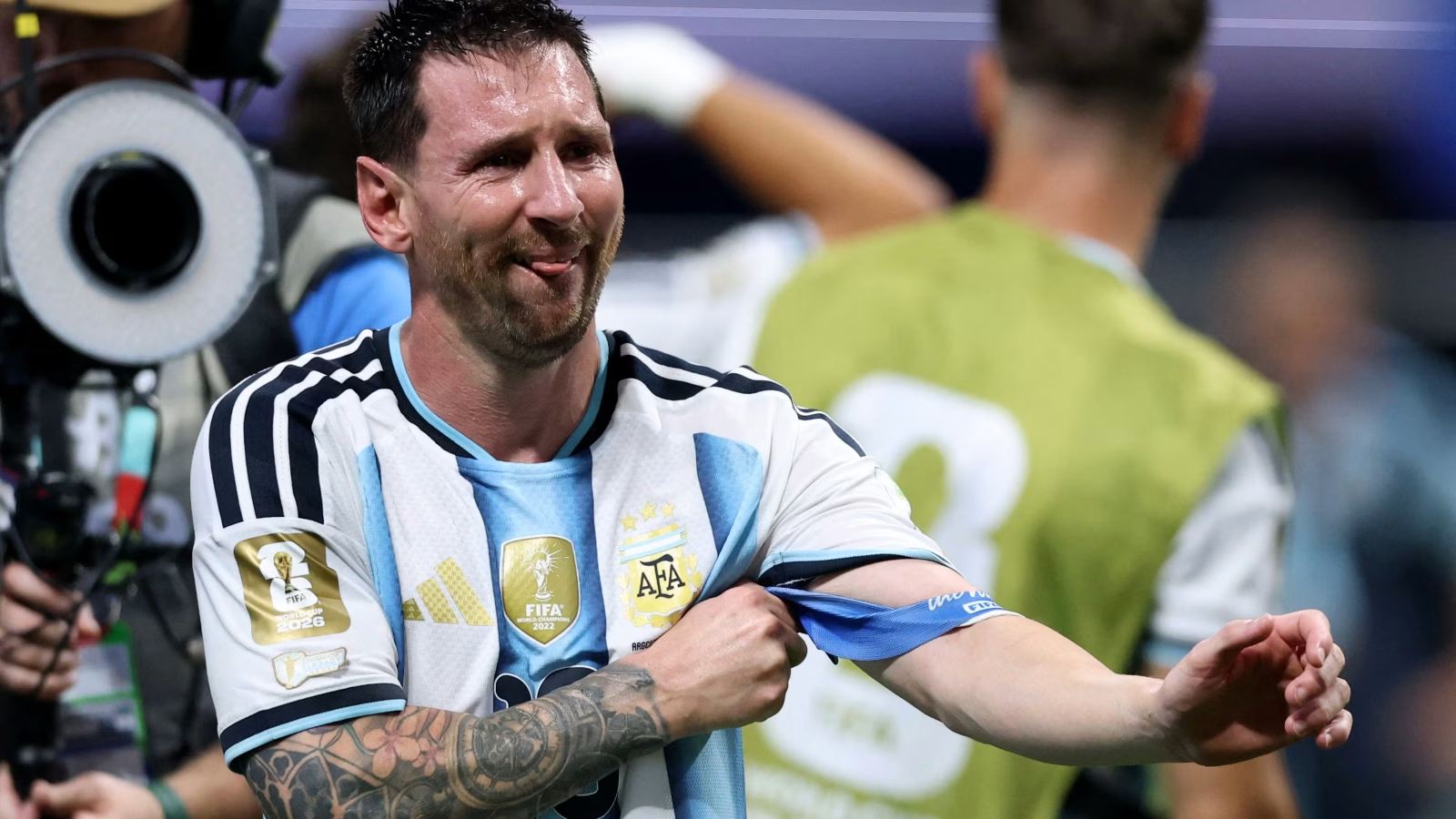
Argentina and Spain will contest the 2026 FIFA World Cup final in a match already defined by several notable firsts, with football’s biggest prize now linked to new ceremonial and commercial elements as well as the action on the pitch. At the center of it all is a meeting between two of the game’s most decorated national teams, a final that gives the tournament a fittingly heavyweight conclusion. Donald Trump is set to attend, adding another layer of attention to an occasion that was already certain to command a vast global audience. FIFA is also preparing to introduce World Cup rings for the winners for the first time, while the final will feature the competition’s first-ever halftime show, making the event distinctive even before kickoff.
- Argentina and Spain are the confirmed finalists for the 2026 FIFA World Cup.
- Donald Trump is set to attend the World Cup final.
- FIFA is set to introduce World Cup rings for the winners for the first time in tournament history.
- The 2026 World Cup final will feature the competition’s first-ever halftime show.
- The match combines footballing prestige with several new presentation elements on the sport’s biggest stage.
A final built on football pedigree
The most important detail remains the sporting one: Argentina and Spain have reached the final, setting up a meeting between two nations with distinct footballing identities and major international pedigree. A World Cup final between these sides carries immediate competitive weight because both teams are associated with technical quality, control of possession and the ability to shape matches through structure as much as individual talent. Even without additional confirmed match details, the pairing alone points to a contest likely to be decided by fine margins and long spells of tactical tension. Finals are often remembered for defining moments, but they are usually won by the side that can impose its rhythm for the longest period, and this matchup suggests exactly that kind of strategic battle.
For Argentina, reaching another World Cup final reinforces the country’s enduring place near the summit of the international game. The nation’s football culture has long been built on balancing competitive edge with elite technical quality, and another final appearance underlines that capacity to navigate the pressure of knockout football. There is broader significance in being one match from the title, because a World Cup final is not only about current form but also about legacy, continuity and the ability to deliver on the largest stage. Every decision, every substitution and every phase of control becomes magnified when the trophy is one result away.
Spain’s presence in the final is equally significant because it places the team back at the center of the global game in the clearest way possible. Spain’s footballing reputation has often been tied to composure, technical assurance and collective structure, and a place in the final offers the chance to convert those qualities into the sport’s most valuable prize. There is a major difference between entering a tournament as a respected contender and standing one match from the title, and Spain has now crossed that line. That shift changes the stakes entirely, because the conversation is no longer about potential but about execution under maximum pressure.
That is what gives this final its strongest foundation. Before the added spectacle, before the ceremonial changes and before the broader public attention, the match already stands on the strength of the teams involved. Argentina and Spain bring enough history, quality and tactical intrigue to make this a compelling final on football terms alone. The occasion may be expanding around them, but the core contest remains substantial enough to carry the weight of the tournament by itself.
New traditions arrive on the biggest stage
What makes this final especially notable is that FIFA is attaching new symbols and formats to an event that already carries unmatched prestige. The introduction of World Cup rings for the winners marks a first for the tournament and adds a fresh layer to how triumph will be commemorated. Medals and the trophy itself have always been central to World Cup victory, so the addition of rings suggests an effort to broaden the visual and ceremonial identity of winning the competition. That matters because major sporting institutions often use finals to establish traditions, and if the rings are well received, this could become a lasting part of how future champions are recognized.
The first-ever halftime show in a World Cup final is another significant development, not simply as entertainment but as a sign of how the event is evolving in presentation. The World Cup final has traditionally been able to rely on the match itself to generate spectacle, so the decision to add a halftime show indicates a deliberate broadening of the occasion beyond the 90 minutes and whatever extra time or penalties might follow. That does not diminish the footballing importance of the game, but it does alter the shape of the event around it. The final is now being framed not only as the decisive match of the tournament but also as a larger live production, one designed to capture attention across sporting and cultural audiences at the same time.
Donald Trump’s expected attendance adds another dimension to the occasion, underlining the political and public visibility that a World Cup final naturally attracts. High-profile attendance is nothing new in major international sport, but it consistently reinforces the scale of the event and the breadth of its reach beyond football circles. In practical terms, it means the final will be watched not just as a sporting contest but also as a major public occasion with diplomatic, cultural and symbolic resonance. That level of attention can heighten the sense of occasion around the teams, because every image and every moment carries global visibility.
Even with those additions, the balance of the occasion will still depend on whether the football matches the scale of the buildup, and that is where Argentina and Spain give the final its greatest strength. New rings, a halftime show and a prominent attendee can shape the atmosphere, but they do not decide the result or define the competitive legacy of the match. The teams will do that themselves, and this pairing offers enough footballing substance to ensure the final is not relying on presentation alone. In that sense, the surrounding innovations may enhance the spectacle, but the central appeal remains unchanged: two elite national sides meeting with the World Cup at stake.
There is also a compelling tension between tradition and change in the way this final is taking shape. The World Cup remains one of sport’s most established and emotionally powerful competitions, built on history, national identity and the singular pressure of knockout football. Introducing rings and a halftime show reflects a willingness to modernize the event’s presentation, yet the final’s authenticity will still be judged by the intensity, quality and consequence of the match itself. Argentina against Spain is a strong enough football story to carry the occasion on its own, which may be why these added elements feel more like enhancements than distractions.
As the final approaches, the central questions are straightforward even if the event around them is growing: which team will handle the pressure better, which side will impose its style more effectively and which nation will leave with the defining result of the tournament. Argentina and Spain now stand one match from immortality, while FIFA prepares to unveil new traditions on the game’s biggest stage. The winners will not only lift the World Cup but also become the first team to receive the new rings, and they will do so after a final that includes the competition’s first halftime show. That combination ensures this will be a final remembered for more than one reason, but its lasting meaning will still come from the team that finds a way to win.

Leave a Reply