

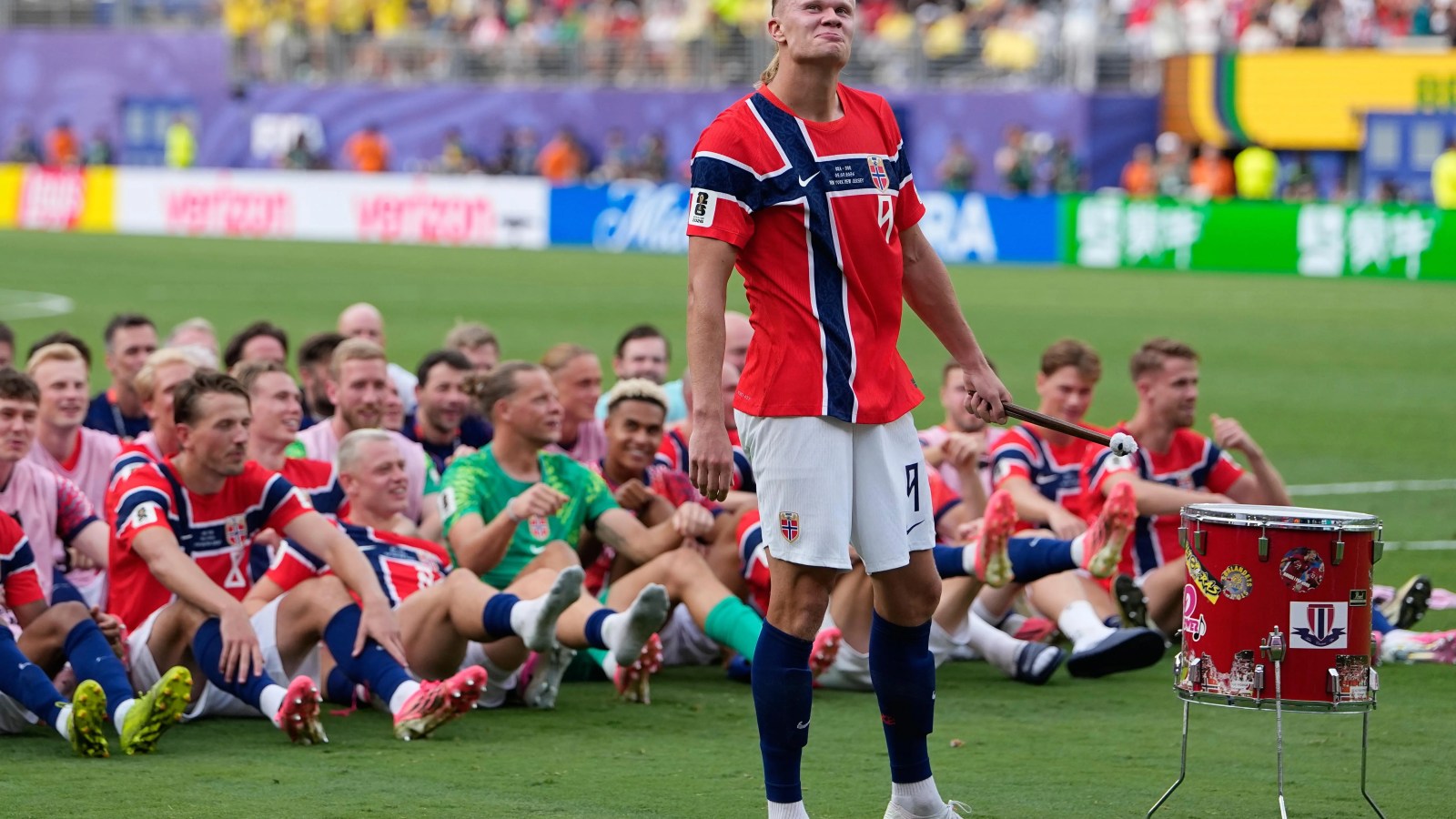
Norway’s 2026 FIFA World Cup campaign ended in a 2-1 defeat to England on July 11, but the tournament still stands as a landmark chapter for the national side after it reached the knockout stage and, by one reference, made a first-ever round of 16 appearance. That mix of progress and frustration gives Norway’s story its force: this was a team that moved beyond the group phase, earned a 2-1 win over Côte d’Ivoire on June 30, and stayed in the competition long enough to become one of the notable runs of the tournament. While there is no verified basis for claims of a major celebration in Oslo, there is clear evidence that Norway’s journey resonated because it combined tangible achievement with the sense that the team had pushed into new territory.
- Norway advanced to the knockout stage at the 2026 FIFA World Cup.
- One reference describes the run as Norway’s first-ever round of 16 appearance.
- Norway beat Côte d’Ivoire 2-1 on June 30, 2026, during its knockout-stage campaign.
- Norway’s tournament ended with a 2-1 loss to England on July 11, 2026.
- Recap material highlighted Norway’s World Cup run as one of the memorable stories of the tournament.
A breakthrough built on progress
The most important fact about Norway’s tournament is not simply that it went out after a loss to England, but that it reached a stage of the World Cup that gave the campaign lasting significance. In major tournaments, the line between a respectable showing and a historic one is often drawn by advancement into the knockout rounds, and Norway crossed that line in 2026. The available record places the team among the nations that extended their stay beyond the opening phase, which alone makes this more than a fleeting appearance. For a country whose World Cup history has been comparatively limited, that kind of progress matters because it changes the standard by which future squads will be judged.
The 2-1 victory over Côte d’Ivoire on June 30 provided the clearest competitive proof that Norway belonged in the latter stages. Knockout football puts every detail under pressure, and a one-goal win in that setting says as much about composure as it does about quality. Even without a fuller statistical breakdown, the result itself shows Norway found a way through a high-stakes match in which a single mistake can end a tournament. That ability to survive and advance is often what separates teams remembered only for participation from teams remembered for a genuine run.
There is also significance in the way Norway’s campaign has been framed within broader tournament retrospectives. Being singled out as one of the memorable runs of the competition suggests the team’s progress stood out in a field crowded with established powers and expected contenders. That kind of recognition is not the same as lifting the trophy, but it does reflect a tournament footprint that went beyond the routine. Norway did not merely appear at the 2026 World Cup; it left enough of an impression to be discussed as one of the event’s notable stories.
The mention of a first-ever round of 16 appearance sharpens that point. If that framing holds, it places this campaign in especially important historical context, underlining that Norway was not simply repeating an old pattern but moving into new ground. Even where the broader interpretation of the run may invite caution, the core achievement remains clear: Norway advanced, won in the knockout phase, and gave itself a platform it had not previously occupied in this tournament context.
The England defeat and what it revealed
The 2-1 loss to England on July 11 brought the run to an end, and the scoreline itself tells an important part of the story. Norway was beaten, but not overwhelmed, and losing by a single goal to remain within touching distance underlines how competitive the team stayed deep into the tournament. In knockout football, narrow margins often define the difference between a historic breakthrough and an even bigger one, and Norway finished on the wrong side of that divide. Still, the result can be read as evidence that the team was capable of competing with elite opposition rather than simply making up the numbers.
That is where the tournament takes on a dual meaning for Norway. On one hand, there is the disappointment of elimination when the possibility of an even deeper run was close enough to imagine. On the other, there is the reality that reaching this stage and pushing through a 2-1 knockout win had already established the campaign as one of the nation’s strongest World Cup efforts. The reference to a first-ever round of 16 appearance reinforces that point further, because it frames 2026 not as a repeat of familiar outcomes but as a step into new territory.
For England, the result meant progression; for Norway, it became a measuring stick. Teams often learn the most about their level when they face opponents expected to navigate the latter rounds, and a one-goal defeat can be both painful and instructive. It suggests Norway was close enough to compete but still short of the extra edge required to turn a promising run into a truly seismic one. That gap is not insignificant, yet it is also the kind of gap that can look bridgeable when a team has already shown it can win in the knockout phase.
Another notable aspect of this story is the need to separate verified achievement from unsupported celebration. The confirmed record supports Norway’s participation in the 2026 World Cup, its advancement to the knockout stage, the 2-1 win over Côte d’Ivoire, and the 2-1 loss to England. It does not support claims of a massive parade in Oslo. In a tournament as emotionally charged as the World Cup, narratives can quickly expand beyond what is documented, but Norway’s campaign does not need embellishment to stand out. The footballing accomplishment is substantial on its own.
Looking ahead, Norway leaves the 2026 World Cup with a body of work that offers both pride and motivation. The team can point to a knockout-stage presence, a 2-1 victory over Côte d’Ivoire, and a competitive 2-1 defeat to England as evidence that it moved the program forward on the biggest stage. Future tournaments will now be approached with a different expectation, because once a side has shown it can reach the latter rounds, simply attending is no longer enough. Norway’s run may be over, but its significance lies in establishing a new benchmark for what the national team can pursue next.


Leave a Reply