

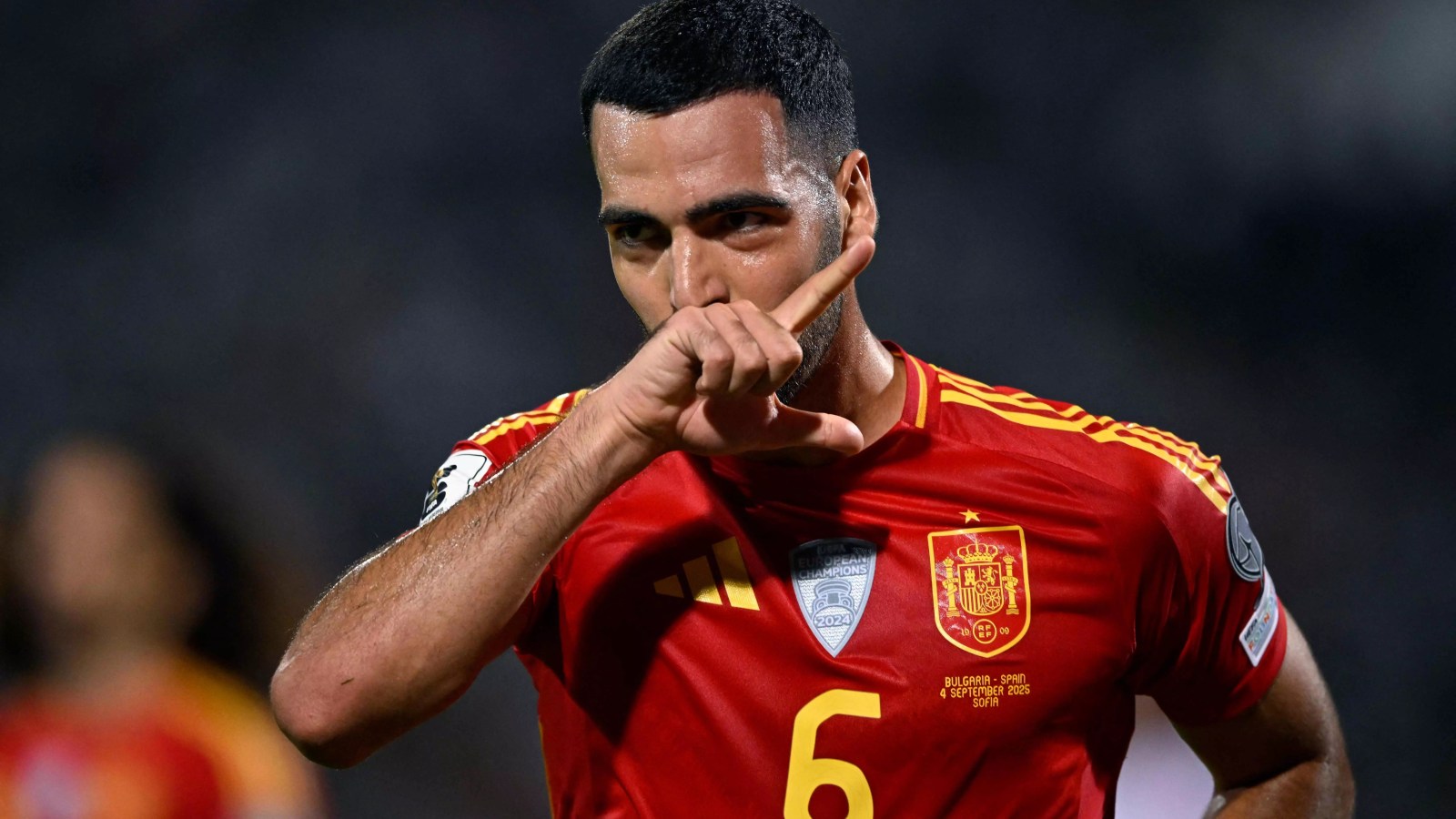
Spain booked their place in the 2026 FIFA World Cup quarter-finals with a 1-0 round-of-16 victory over Portugal at Dallas Stadium in Arlington, Texas, and Mikel Merino proved the decisive figure with the late goal that settled a tense Iberian showdown. In a match defined by fine margins and knockout-stage pressure, Spain found the breakthrough when it mattered most, turning a tight contest into a result that could shape the rest of their tournament. The win keeps Spain’s campaign alive and underlines their ability to come through high-stakes occasions even when chances are scarce. For Portugal, the defeat brings an immediate end to their run and adds a deeper sense of finality, as it also marks the close of Cristiano Ronaldo’s World Cup career.
- Spain defeated Portugal 1-0 in the 2026 FIFA World Cup round of 16 at Dallas Stadium in Arlington, Texas.
- Mikel Merino scored the winning goal for Spain late in the match, with indications it came in stoppage time.
- The result sends Spain through to the quarter-finals of the tournament.
- Portugal are eliminated from the World Cup following the defeat.
- The match marked Cristiano Ronaldo’s final World Cup appearance.
Spain find the decisive moment
Knockout football often strips a match down to nerve, discipline and one defining action, and that was exactly the shape of this encounter. Spain did not need a flood of goals to advance; they needed composure and one moment of precision, and Merino supplied it. A late winner in a round-of-16 tie carries enormous weight because it changes not only the scoreline but the emotional direction of the night, turning growing tension into relief for one side and devastation for the other. Spain’s reward is a place in the last eight, where belief and momentum can become almost as important as form.
The timing of Merino’s goal is especially significant. A strike that arrives late, with stoppage-time references attached to it, speaks to endurance and concentration as much as attacking quality. Spain stayed in the contest long enough to force the breakthrough, and that resilience is often what separates teams that merely compete from teams that make a deep run at a World Cup. Rather than allowing the match to drift away from them or toward extra time, Spain found the intervention that transformed a balanced contest into quarter-final qualification.
From Spain’s perspective, the result also says plenty about their tournament character. Winning 1-0 in the knockout rounds is rarely glamorous, but it is often the mark of a side comfortable with pressure and capable of managing a game with little margin for error. There is no suggestion here of a wild, open contest or a one-sided display; instead, the scoreline points to a match that had to be earned patiently. That kind of victory can strengthen a squad because it proves the team can handle a different challenge from the freer rhythm of the earlier rounds.
Spain’s progress was built on patience as much as quality. In a match where space was limited and the stakes were obvious, they remained composed and trusted that one opening would come. When it did, they took it. That ability to stay measured in a scoreless knockout tie is one of the clearest signs of a team with the discipline to survive deep into a tournament. Merino’s finish will be remembered as the decisive act, but the broader value for Spain lies in how they stayed mentally steady long enough to make it count.
Portugal’s exit and the end of an era
For Portugal, the defeat is painful on two levels. First, there is the immediate sporting disappointment of elimination in the round of 16, a stage where every mistake can become terminal and every missed opportunity lingers. Second, the result carries historic significance because it closes Ronaldo’s World Cup journey. Even without stretching beyond the confirmed facts, that alone gives the night a broader resonance, turning the match into more than a simple knockout loss and making it a landmark moment in the tournament.
That backdrop inevitably shaped the meaning of the final whistle. Portugal were not only trying to extend their stay in the 2026 competition; they were also trying to keep alive the World Cup chapter of one of the game’s defining figures. Instead, Spain’s late breakthrough ended both pursuits at once. The cruelty of knockout football is that it can reduce years of ambition to a single conceded goal, and Portugal experienced exactly that in Arlington as their campaign was ended by the narrowest possible margin.
The nature of a 1-0 defeat also sharpens the sense of what might have been. Portugal stayed close enough to remain fully in the contest deep into the match, yet they were unable to protect themselves from the decisive moment. In tournament football, that is often the hardest kind of elimination to absorb because it suggests survival was within reach until the very end. Spain’s ability to seize the late opening therefore stands as the central tactical and psychological difference between the teams: one side found the winning act under maximum pressure, while the other could not prevent it.
For Spain, that difference could matter greatly in the rounds ahead. Quarter-finalists are often judged not only by how they win, but by what those wins reveal. This result reveals a team capable of staying composed in a heavyweight matchup, absorbing the tension of a scoreless game and still producing the decisive contribution late on. Merino’s goal will dominate the headlines, but the broader significance lies in Spain showing they can navigate a match where control is fragile, space is limited and the consequences of every moment are magnified.
There is also a psychological edge to eliminating a major rival in the knockout phase. Spain now move forward with the confidence that comes from surviving a high-pressure contest against familiar opposition, and that confidence can become a powerful asset in a World Cup bracket that only grows more demanding. A late winner does more than settle one tie; it can reinforce trust within a squad, validate patience and sharpen collective belief. Those are intangible gains, but in tournament football they can be almost as decisive as any tactical adjustment.
Next for Spain is a quarter-final shaped by momentum and by the knowledge that they have already come through one severe test in Texas. They advance with Merino’s late goal as the defining image of the night and with the understanding that knockout matches can hinge on a single intervention. Portugal leave the tournament with the frustration of a narrow defeat and the finality of Ronaldo’s World Cup journey ending. Spain, by contrast, move on, one goal and one hard-earned victory closer to the last four.


Leave a Reply