

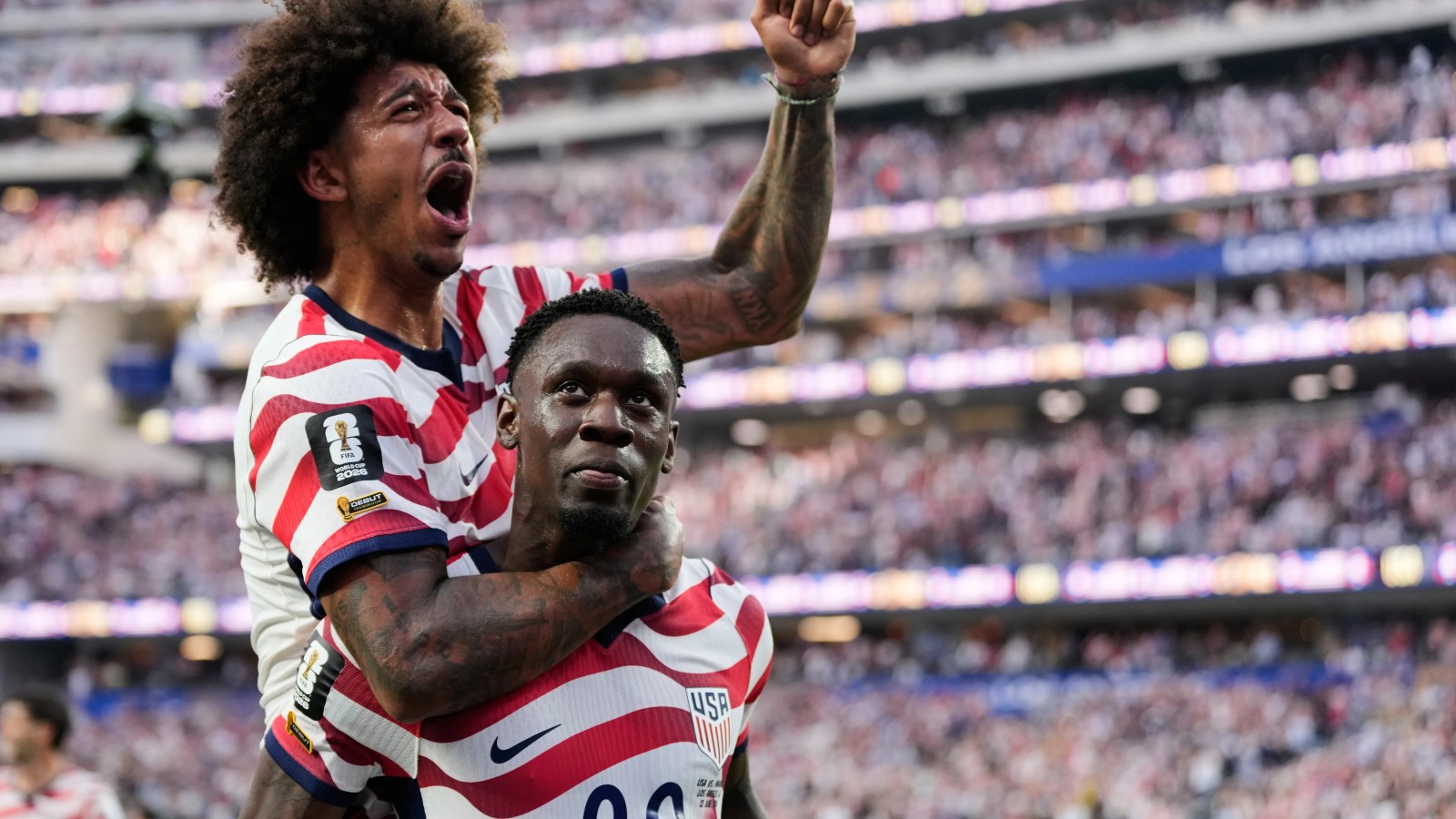
The United States’ FIFA World Cup 2026 meeting with Bosnia and Herzegovina in the round of 32 is established by the verified information available, but the central claims surrounding the match remain unconfirmed. There is no verified support for a reported 2-0 American win, no confirmation of any goalscorer, and no evidence to substantiate assertions involving Folarin Balogun as either a match-winner or a suspended absentee for the next round. That makes this less a story about a celebrated breakthrough and more one about the limits of what can responsibly be said when knockout football is moving quickly. Balogun is the standout figure here only because his name sits at the center of the unverified claims, not because the available record confirms any decisive contribution.
- The United States faced Bosnia and Herzegovina in a 2026 FIFA World Cup round-of-32 match.
- The available verified information does not confirm a 2-0 victory for the United States.
- No verified detail confirms any goalscorers from the match.
- There is no verified confirmation that Folarin Balogun scored in the game.
- There is no verified confirmation that Balogun was sent off or that he would miss a last-16 meeting with Belgium.
What is confirmed from the knockout tie
The one firm point is that the fixture itself took place in the round of 32, which is significant in its own right because it places the United States in the knockout phase of the tournament. Beyond that, the reporting has to remain disciplined. The scoreline, the flow of the contest, and the identity of any match-defining moments are not established by the verified material provided here. In a tournament where every result shapes the bracket and the emotional temperature around a team, that absence of confirmation matters as much as any dramatic claim.
That uncertainty also changes how the match should be interpreted in football terms. A reported knockout win would normally invite discussion about game management, attacking efficiency, defensive structure, and the ability to handle pressure in a single-elimination setting. Without a verified result, however, those conclusions would be speculative rather than analytical. The responsible reading is narrower: the United States were involved in a high-stakes elimination match against Bosnia and Herzegovina, and the publicly circulating details attached to that fixture are not sufficiently supported by the research available here.
That distinction is important because knockout football encourages instant judgments. Teams are often defined by a single result, a single goal, or a single disciplinary incident. Yet when the underlying facts are not verified, even basic narrative framing becomes unreliable. In this case, the confirmed existence of the fixture cannot be stretched into certainty about what happened within it. The match is real; the most consequential details attached to it are not established on the record provided.
Why the unverified details matter
Balogun’s name sits at the center of the uncertainty because several consequential claims depend on it. A goal in a knockout match would shape the narrative around his influence, his composure, and his importance to the United States in the decisive stages of the competition. A sending-off would be equally significant, because any suspension implication would immediately affect team selection, attacking balance, and the outlook for the next round. Yet none of those points can be treated as established fact on the basis of the verified material supplied.
The same caution applies to the suggestion of a last-16 meeting with Belgium. In tournament coverage, the identity of the next opponent often becomes part of the story as soon as a result is settled because it frames the scale of the challenge ahead and invites early tactical comparison. Here, though, that projected matchup cannot be presented as confirmed because it depends on unverified claims about the outcome of the round-of-32 tie and Balogun’s disciplinary status. Without that confirmation, the road ahead for the United States remains undefined in this account, even if the fixture against Bosnia and Herzegovina is itself real.
There is also a broader point about knockout football and the speed with which narratives harden before the underlying facts are fully established. A clean-sheet win, a breakthrough scorer, and a suspension ahead of the next round would together create a complete and compelling storyline. But a complete storyline is not the same as a verified one. For Real Doodle’s purposes, the correct approach is to separate the confirmed from the assumed: the match happened, it was a round-of-32 tie, and the rest of the headline-grabbing details remain unverified on the evidence provided.
That leaves the United States in an unusual reporting space, where the existence of the occasion is clear but its meaning cannot yet be fully defined. If later verified details establish the result, scorers, or any disciplinary action, the significance of the match will naturally become sharper. For now, the only defensible conclusion is that this was a knockout fixture involving the United States and Bosnia and Herzegovina at the 2026 World Cup, and that the major claims attached to it have not been substantiated here. In a tournament where every detail can alter perceptions of momentum, selection, and opportunity, accuracy is the most important result available.
What comes next depends on information that is not yet verified in the research provided. If the United States did progress, the identity of the opponent and the availability of key players would become the immediate focus, but those elements cannot be confirmed here. Until firmer details are established, this match should be understood as a confirmed round-of-32 fixture with unresolved reporting around its outcome and consequences. That may feel unsatisfying in the middle of a World Cup, but it is the clearest and most accurate account the verified record allows.


Leave a Reply