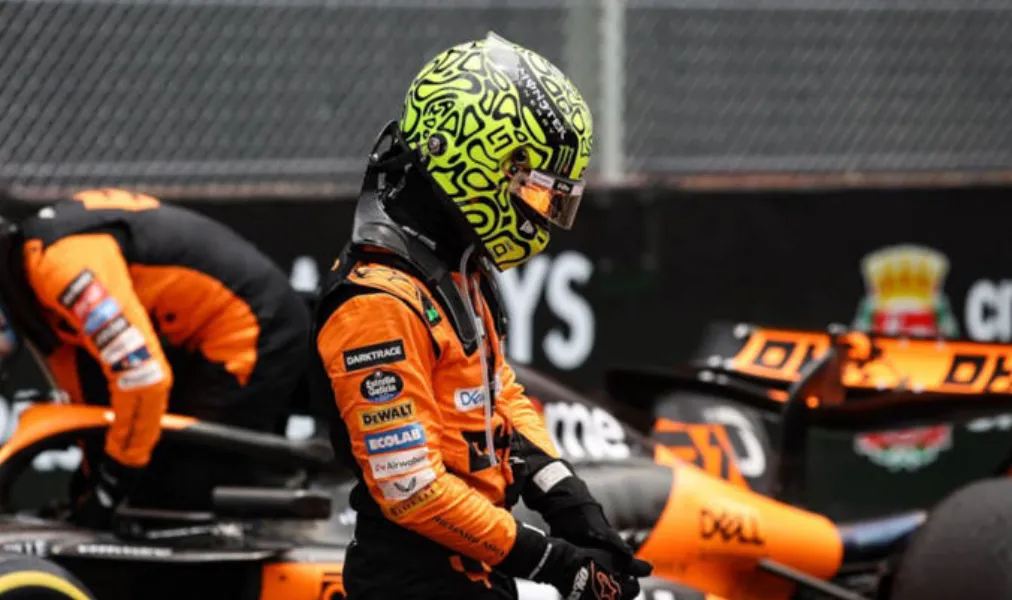
Brake Lock-Up Issues Impact Norris in Brazilian GP

McLaren has revealed that technical difficulties, specifically brake lock-up problems, played a crucial role in Lando Norris’s disappointing performance during the Brazilian Grand Prix, rather than driver errors under pressure.

Norris entered the race with a golden opportunity to narrow the gap in the championship standings, having secured pole position while his title rival, Max Verstappen, started from 17th on the grid. However, a series of misfortunes—including an aborted start, a sluggish getaway, and unfortunate incidents during the race—saw Norris finish in sixth place, as Verstappen ultimately triumphed.

This result leaves Verstappen poised to clinch his fourth championship title, possibly as soon as the upcoming Las Vegas Grand Prix, while Norris reflected on what could have been.

McLaren team principal Andrea Stella emphasized that Norris’s struggles stemmed from technical issues rather than mental pressure. He pointed to ongoing problems with brake lock-ups in specific conditions, which were evident throughout the race weekend. Both Norris and teammate Oscar Piastri experienced difficulties related to brake performance, underscoring a persistent challenge for the McLaren team.

“When we lock the tires, I’m not looking at the driver; I’m looking at why the car keeps locking the front tires in these conditions,” Stella explained. “Pressure was not a significant factor at all.”

Stella acknowledged the need for further investigation into the brake issues, noting their unpredictability and the challenges they pose for drivers attempting to adapt their strategies from lap to lap. He reiterated that this technical problem presents an opportunity for the team to improve rather than a fault of the drivers themselves.

Norris's

Strategic Missteps

In addition to the brake issues, Norris’s race strategy also played a role in his sixth-place finish. At a crucial juncture before a mid-race red flag, Norris lost position to Verstappen. While both Norris and race leader George Russell pitted for fresh inter tires during a Virtual Safety Car (VSC) period, Verstappen, Esteban Ocon, and Pierre Gasly opted to stay out. This decision ultimately paid off when a red flag was called following Franco Colapinto’s crash, allowing the three drivers to change to fresh tires and gain a significant track position advantage.

Stella noted that they deemed the decision to switch to new tires necessary at the time, given the worsening track conditions due to rain. “Both drivers recognized the need for new rubber, but the rain became increasingly intense, which, combined with the red flag, influenced our decision,” he stated. “In hindsight, without the red flag and with slightly less rain, the outcome could have been different for those who didn’t change tires.”

While Norris’s Brazilian GP experience fell short of expectations, McLaren is determined to address the technical challenges and refine their strategy moving forward, aiming for better results in the remaining races of the season.