

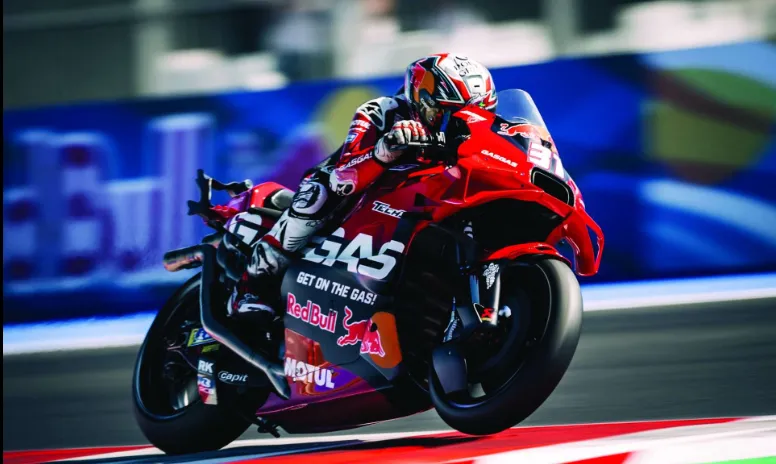
MotoGP rookie Pedro Acosta has voiced strong reservations about the potential introduction of helmet radios in the premier motorcycle racing class. Acosta bases his concerns on a mix of personal philosophy, technical issues, and safety considerations.
“I don’t believe much in these things,” Acosta stated firmly. “I prefer to rely on my own instincts and make my own decisions.” He expressed skepticism about the reliability of helmet radios, pointing out that even a brief movement can disrupt communication. “Our heads are constantly moving. Even a slight adjustment could cause a connection drop,” he added.
Acosta’s concerns extend beyond mere inconvenience. He has raised concerns about the potential safety risks of having electronic components inside the helmet. “If something is inside the helmet, it raises questions about whether any issues that arise could be related to the hardware,” he said. Acosta also noted that he has experimented with radio systems, including a recent trial in Qatar, but remains unconvinced. “The head is something important. If something goes wrong, we have to consider whether it could be linked to the equipment in the helmet.”
In addition to his concerns about helmet radios, Acosta is also skeptical about the integration of cameras into racing suits. “You can fix a broken collarbone with a plate, but the head is far more critical,” he emphasized. He noted that the vibration from devices mounted behind the ear, as seen in some systems, could be problematic. “In Formula 1, they use a cable inside the ear, but the system we tried had something vibrating against the bone, which is concerning.”
Acosta’s stance contrasts with that of his friend and soon-to-be-retiring rider Aleix Espargaro. A proponent of helmet radios, Aleix Espargaro has actively participated in their development during recent tests at Misano. When reminded of Espargaro’s support for the technology, Acosta joked, “Yeah, because he’s going home soon!”
Current world champion Francesco Bagnaia has also voiced strong opposition, stating he would prefer to pay a weekly fine, akin to Michael Jordan’s famous approach, rather than wear a helmet radio.
While two-way communication between riders and their teams remains a divisive issue, there is broader support for a one-way communication system that would allow Race Direction to send urgent safety messages directly to riders. The debate over helmet radios continues, with safety, reliability, and rider autonomy at the heart of the discussion.

Leave a Reply