

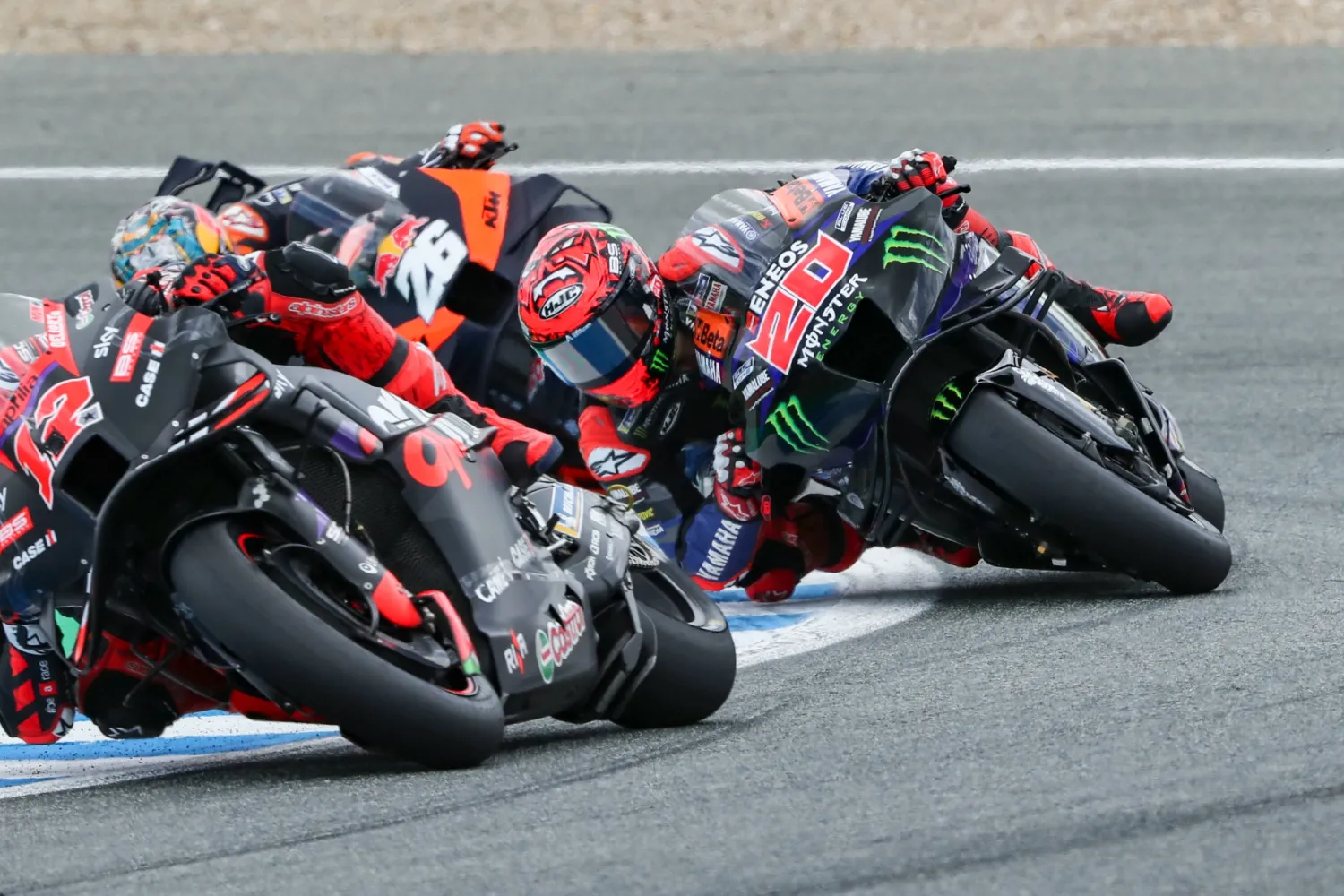
The quest for Yamaha to secure a satellite MotoGP team for the 2025 season remains uncertain, but Fabio Quartararo, Yamaha’s leading rider, emphasizes the significance of not only expanding the presence of M1 bikes on the MotoGP grid but also ensuring that they receive full factory-spec machinery.
Quartararo, who ascended to the official Yamaha team from the Petronas satellite outfit, which had access to only one factory-spec bike, highlights the crucial role of having a satellite team with comparable equipment and support.
“We – Yamaha and also myself – are working extensively to establish a satellite team. It’s incredibly important,” Quartararo emphasized. “Having more bikes on the grid allows for increased testing opportunities and feedback from multiple riders, which is essential for development.”
He advocates for satellite teams to operate as extensions of factory teams, equipped with factory bikes and support, believing it is beneficial not only for the riders but also for fostering internal competition and learning opportunities.
While Independent teams currently have the freedom to negotiate deals with manufacturers, Quartararo’s stance reflects a desire for parity and competitiveness among all teams, regardless of their official status.
Aleix Espargaro echoes similar sentiments, suggesting a cap on the number of bikes each manufacturer can provide to ensure a level playing field. He argues that an excessive number of bikes from a single manufacturer can create imbalances in competition.
However, implementing such regulations could pose challenges, especially considering the dwindling number of manufacturers in the premier class. Ducati’s current dominance, with eight bikes on the grid, underscores the need for careful consideration of future regulations to maintain competitiveness and diversity in MotoGP.


Leave a Reply