

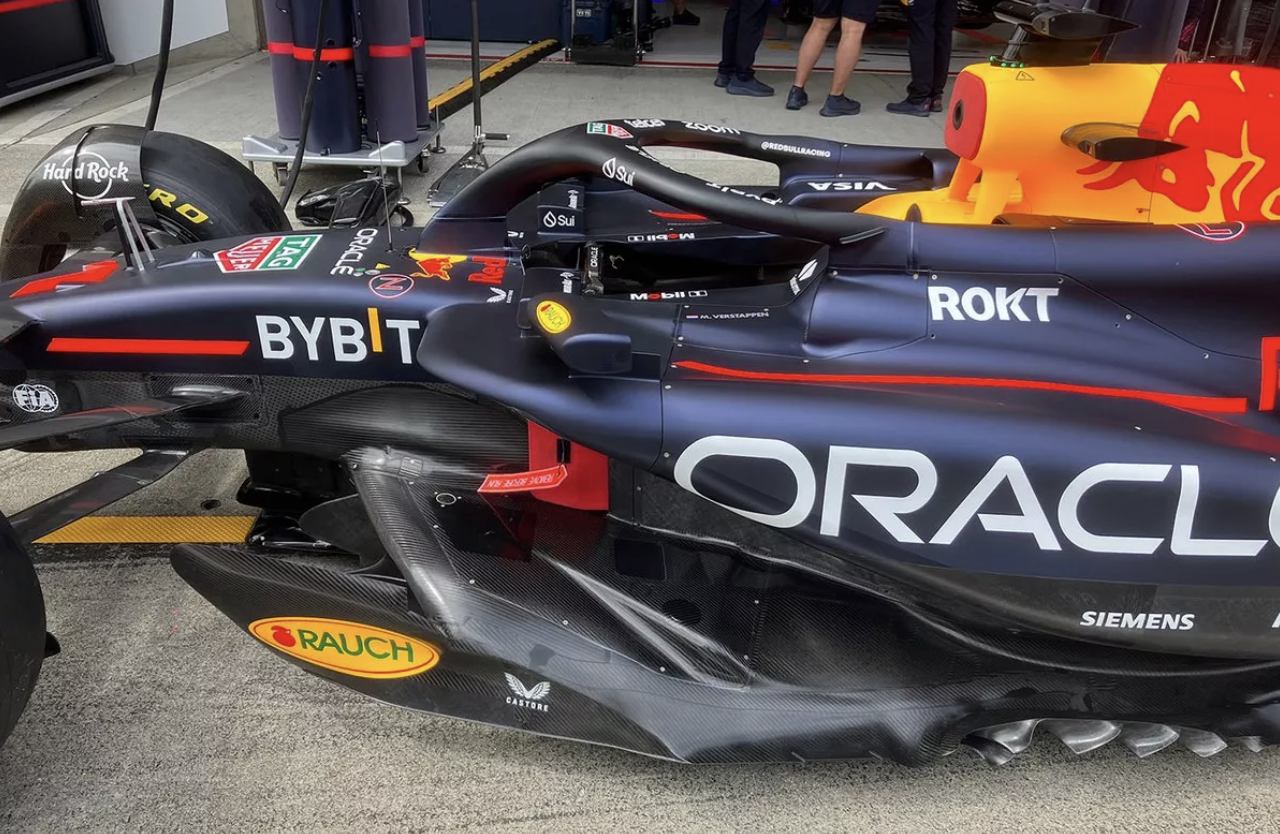
Red Bull Racing showcased notable upgrades for the Japanese Grand Prix, with a particular focus on enhancing aerodynamic efficiency and cooling solutions around the cockpit area.
While the team retained its distinctive sidepod design, featuring aggressive inlets behind the cockpit, a significant alteration was introduced near the cockpit region itself. A new inlet, marked by white arrows, appeared farther forward, aimed at optimizing airflow for the sidepod mounted primary heat exchangers.

Red Bull’s chief engineer, Paul Monaghan, highlight the meticulous selection of inlet locations to maximize pressure and cooling efficiency. This adjustment was not reactionary but part of a pre planned upgrade strategy, reflecting the team’s commitment to continuous improvement.
In addition to the cockpit area modifications, Red Bull made subtle revisions to the floor, enhancing surface contours and increasing camber to enhance airflow towards the floor edge wing. These refinements contribute to greater down force generation while ensuring stability.
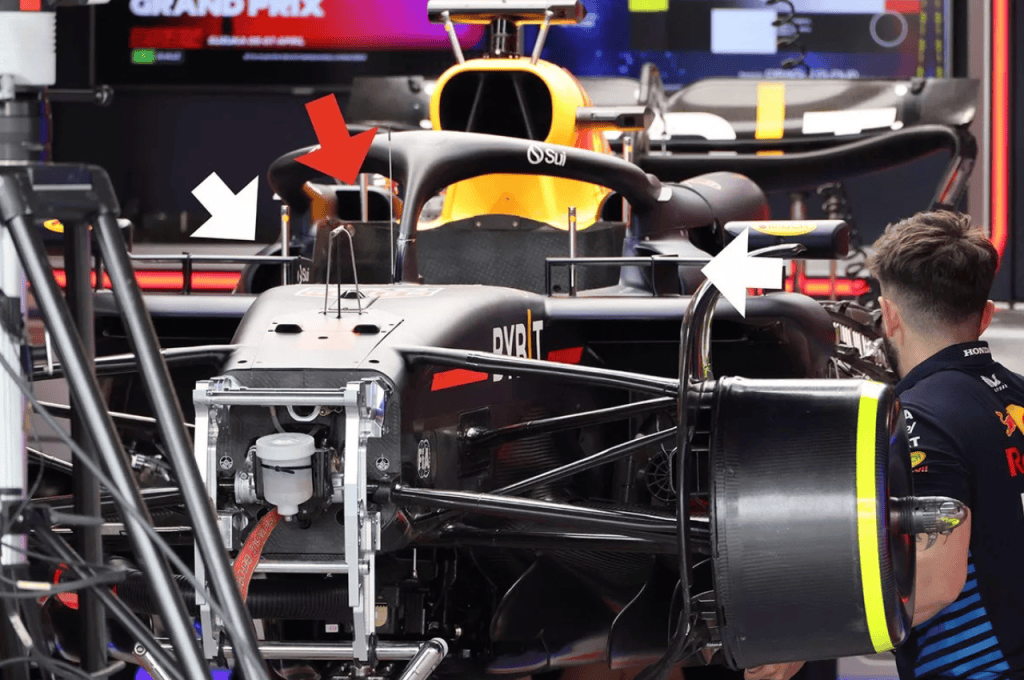
Moreover, Red Bull reduced the size of inlet and exit ducts for the front brakes, benefiting from Suzuka’s lower brake energy demands. This optimization reflects the team’s strategic approach to balance performance and efficiency.
Overall, Red Bull’s Suzuka upgrades signify a proactive pursuit of performance gains, under scoring the team’s dedication to staying competitive in the challenging F1 landscape.


Leave a Reply