

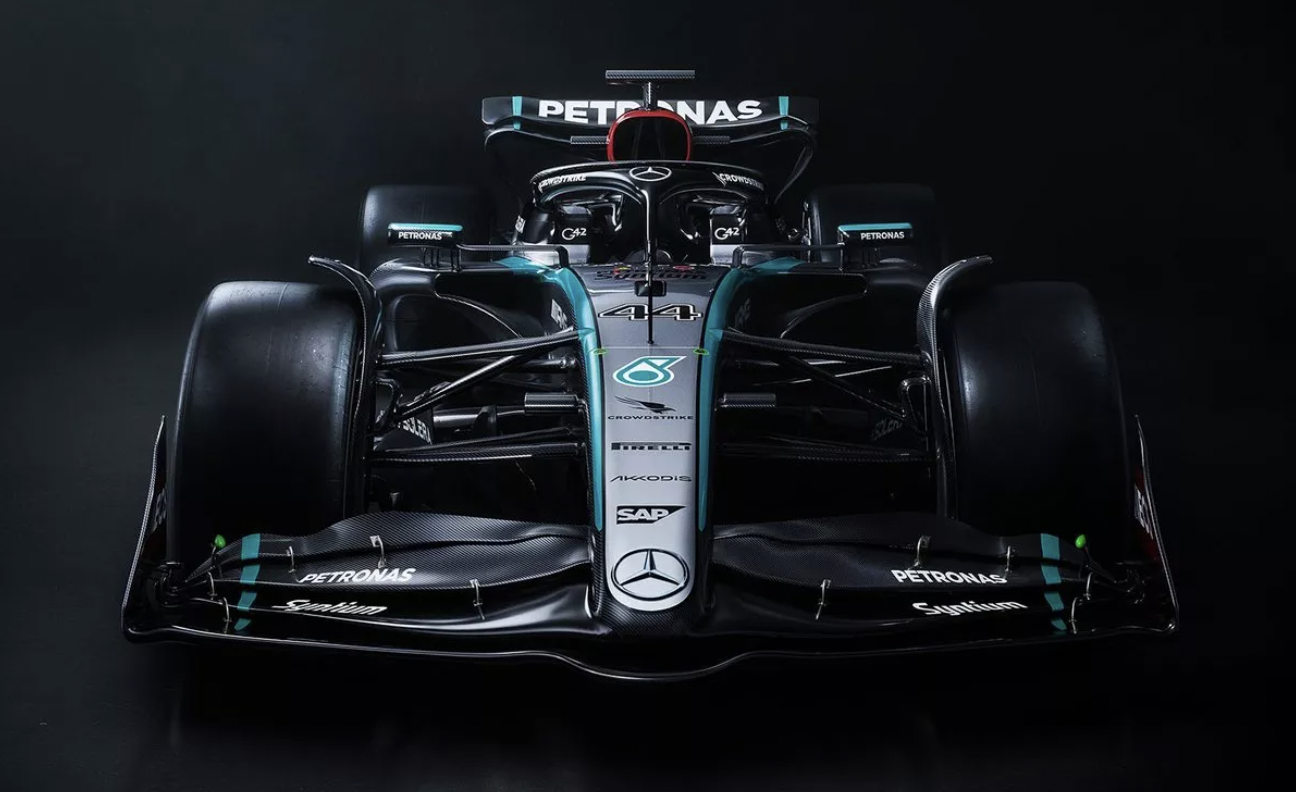
Mercedes continues to set its own path with the unveiling of its latest Formula 1 challenger, the W15, showcasing several distinctive design choices that set it apart from its competitors.
While the team has incorporated some observed trends from recent seasons, it has not simply followed suit with the inlet design seen on the Red Bull RB19. Instead, Mercedes has opted for a different approach, likely influenced by lessons learned from the B-Spec configuration of the W14.
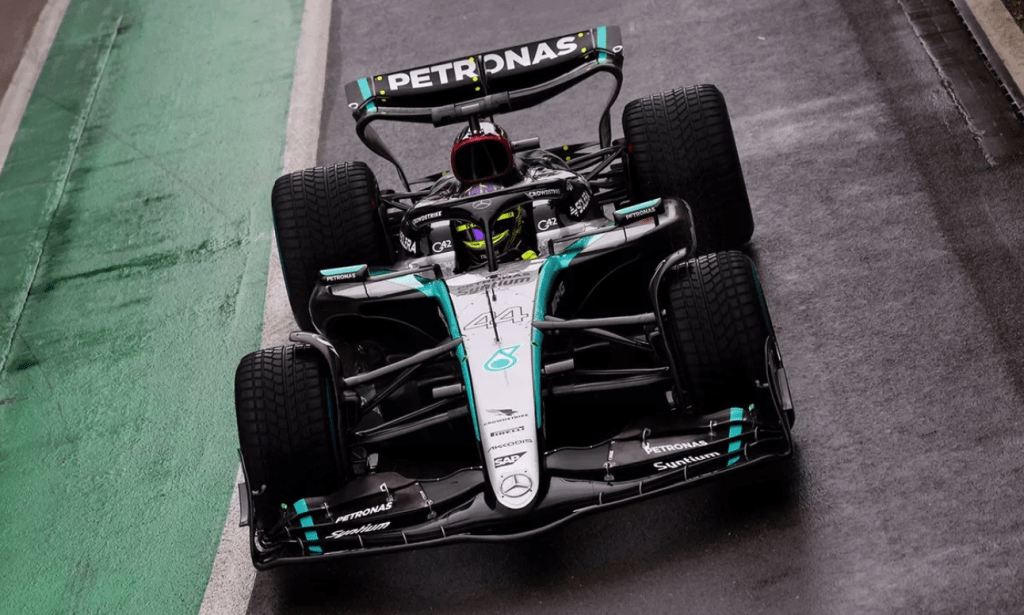
One notable change from last seasons design is the absence of the upper side impact spar (SIS) fairing, which previously extended forward of the sidepod and inlet. This adjustment also allowed the team to move the cockpit back by approximately 100mm, addressing concerns raised by driver Lewis Hamilton.
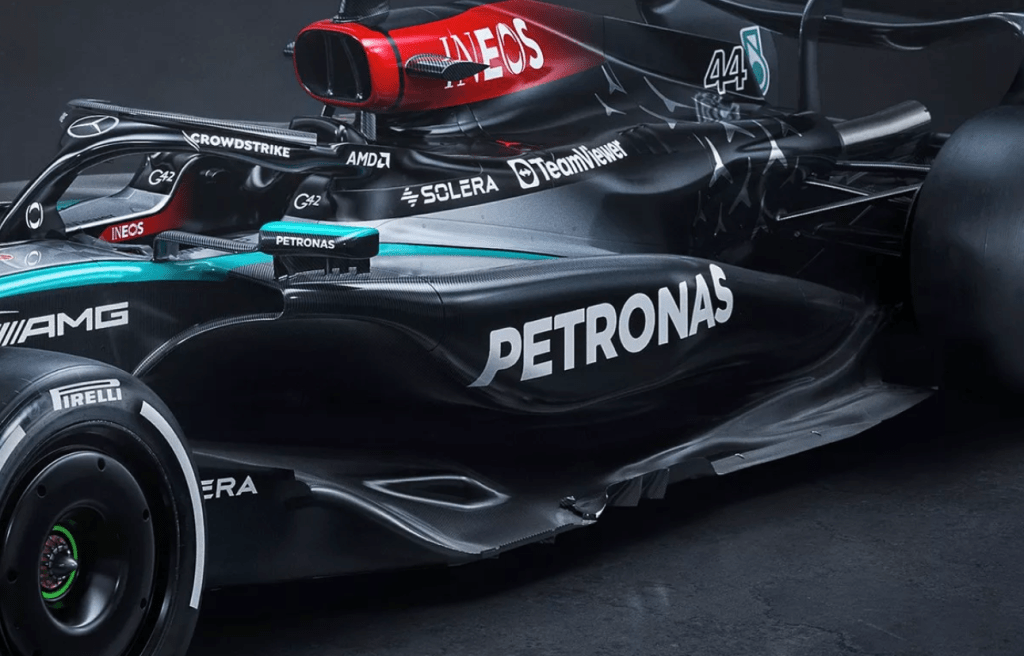
The W15 features a P-shaped sidepod inlet design, optimizing airflow and increasing available volume in the forward portion of the under floor.
The downsloping sidepod body work, reminiscent of the B-Spec arrangement from 2023, has undergone modifications to suit the new configuration.
Crucially, Mercedes has transitioned to push rod rear suspension for the W15, resulting in a comprehensive overhaul of the car’s mechanical and aerodynamic packaging at the rear. This change is expected to offer aerodynamic advantages that out weigh any minor mechanical inefficiencies.
Engineers have revamped the front wing assembly, incorporating outboard features to aid in generating outwash. Changes to the front suspension and refinement of fairings aim to optimize airflow through this region.
Additionally, Mercedes has abandoned the chassis blister arrangement seen on previous models. At the rear, engineers have altered the tip section arrangement of the rear wing to align with solutions introduced by other teams.
Overall, Mercedes’ approach with the W15 demonstrates a commitment to innovation and a willingness to depart from conventional design trends, setting the stage for another competitive season in Formula 1.

Leave a Reply