


Mercedes’ performance at the Canadian Grand Prix marked a significant improvement in their season, highlighted by George Russell’s pole position and third-place finish, just ahead of teammate Lewis Hamilton.
Benefiting from the smooth, newly repaved track in Montreal, Mercedes managed to optimize their car setup effectively, a trend observed across various circuits in recent seasons.
Mercedes Technical Director James Allison hinted at upcoming enhancements aimed at refining their car’s performance further. “We’re introducing new parts to ‘bully’ the car into shape,” Allison explained. “These changes are making our car better overall, which will be evident at every circuit we visit.”
Discussing the characteristics of different tracks, Allison acknowledged the challenges ahead. “Montreal’s layout made our car appear quicker than usual. At upcoming tracks like Barcelona, where cornering speeds are higher and temperatures hotter, we expect a stiffer test,” he said.
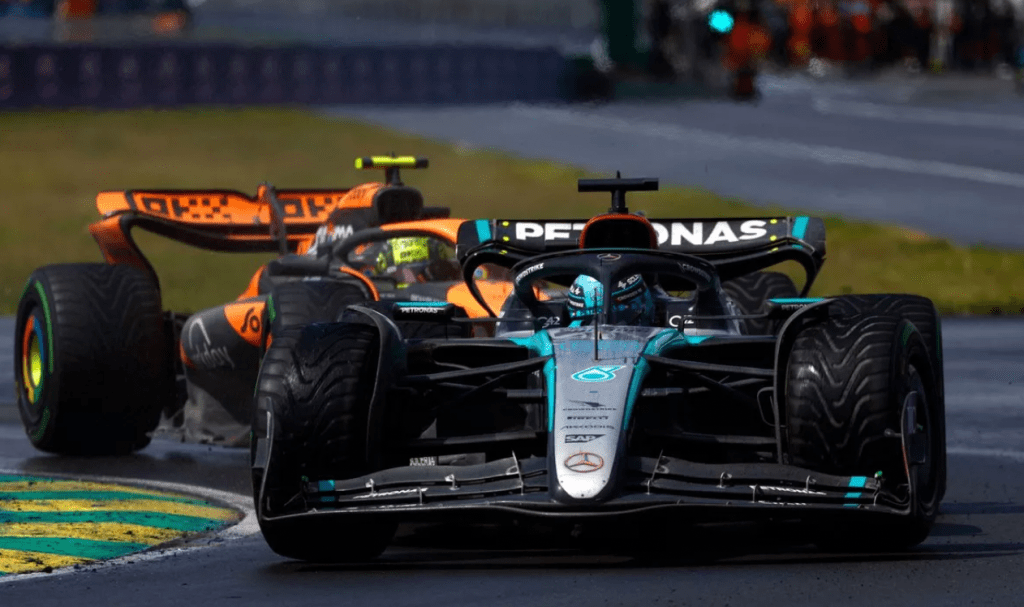
Despite these challenges, Allison expressed confidence in Mercedes’ progress. “We’ve significantly broadened the operating window of our car,” he noted. “This is crucial as we aim to maintain competitiveness across diverse track conditions.”
A pivotal upgrade for Mercedes has been a new front wing design, which proved effective in Canada. “The new front wing improved the car’s balance and made it more predictable for the drivers,” Allison commented. “It transformed the car into something the drivers can work with effectively, a stark contrast to earlier struggles this season.”
Looking ahead, Mercedes plans to continue their aggressive development pace to stay ahead of their competitors. “Our goal is to ensure our car performs as strongly as it did in Montreal or better, regardless of the circuit,” Allison emphasized.
As Mercedes strives for dominance under F1‘s ground effect regulations, Allison highlighted ongoing efforts to optimize their car’s performance while maintaining reliability and adaptability to varying track conditions.


Leave a Reply