

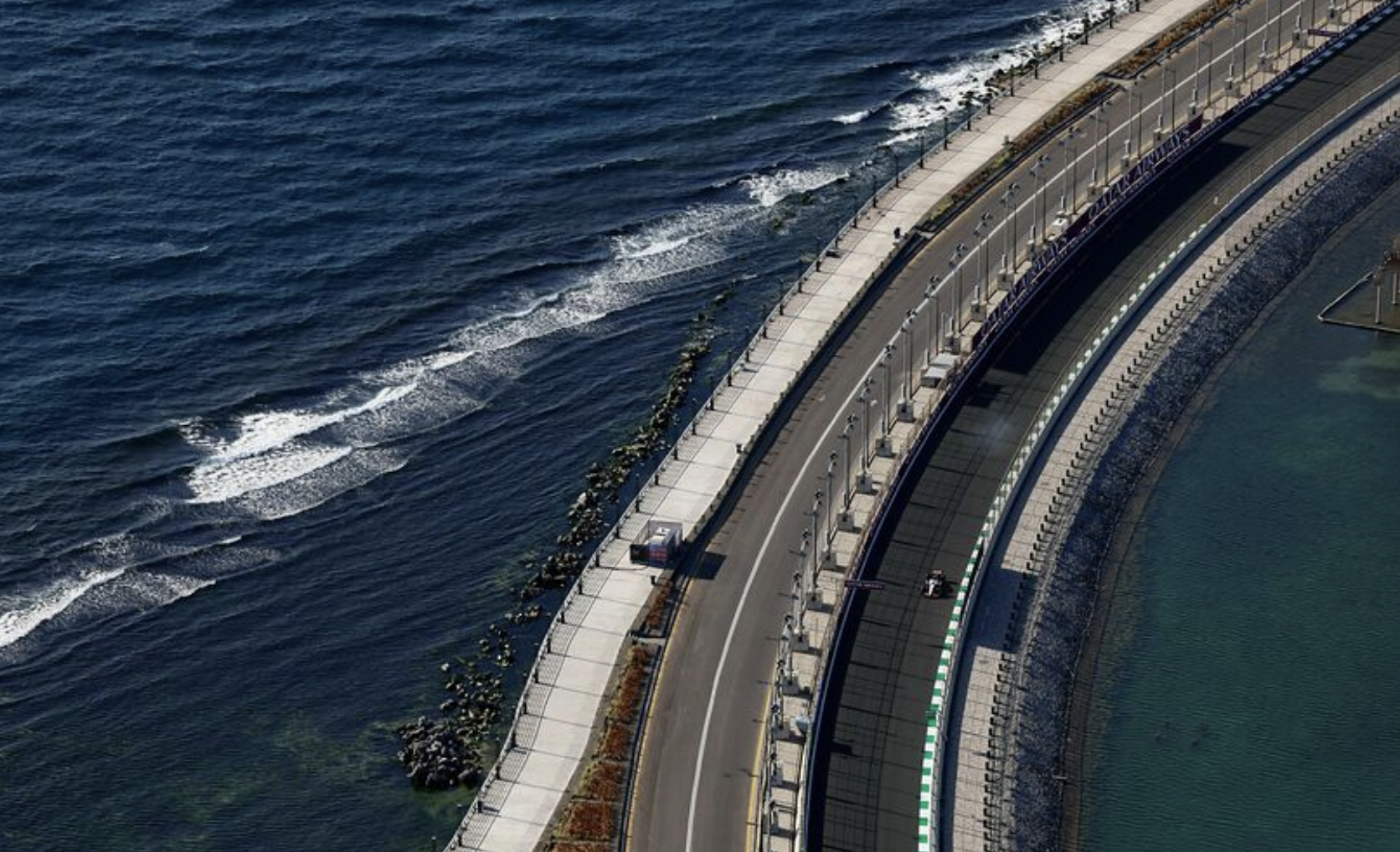
As Formula 1 transitions from the Bahrain Grand Prix to the Saudi Arabian Grand Prix, the focus shifts from the Bahrain International Circuit to the Jeddah Corniche Circuit, presenting a new set of challenges for teams and drivers. F1Technical’s senior writer Balázs Szabó provides an in-depth preview of the tyre dynamics for the upcoming race.
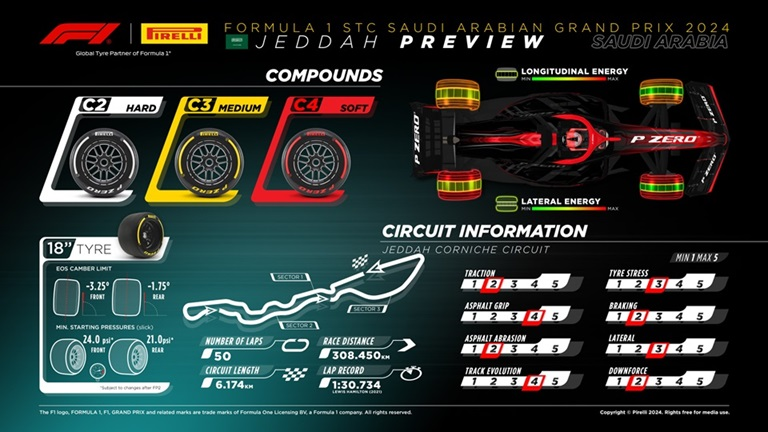
In contrast to Bahrain’s abrasive asphalt and high thermal degradation, the Jeddah Corniche Circuit offers a smoother surface and significantly higher speeds, ranking second only to Monza in terms of average lap speed. Spanning 6.174 kilometers with 27 corners, it presents a unique blend of high-speed sections and medium to high-speed turns, subjecting tyres to considerable lateral forces.
For the Saudi Arabian Grand Prix, Pirelli has opted for the mid-range tyre compounds, with the C2 designated as Hard, the C3 as Medium, and the C4 as Soft. With relatively high minimum starting pressures and specific camber limits, tyre management will be crucial, particularly given the circuit’s demand for high lateral grip.
Qualifying preparation at the Jeddah circuit differs from traditional circuits, requiring drivers to complete two warm-up laps to achieve optimal tyre temperature. This approach increases the likelihood of encountering traffic during qualifying sessions and emphasizes the importance of timing for optimal track conditions.
Despite the softer tyre compounds, Pirelli anticipates a one-stop strategy for the race, with drivers transitioning between Medium and Hard tyres based on grid positions. However, the circuit’s street circuit nature and limited run-off areas elevate the risk of accidents, potentially leading to Safety Car interventions or race stoppages.
As teams and drivers navigate the unique challenges of the Jeddah Corniche Circuit, tyre strategy and management will play a pivotal role in determining race outcomes, highlighting the intricacies of Formula 1 competition at this dynamic venue.


Leave a Reply