
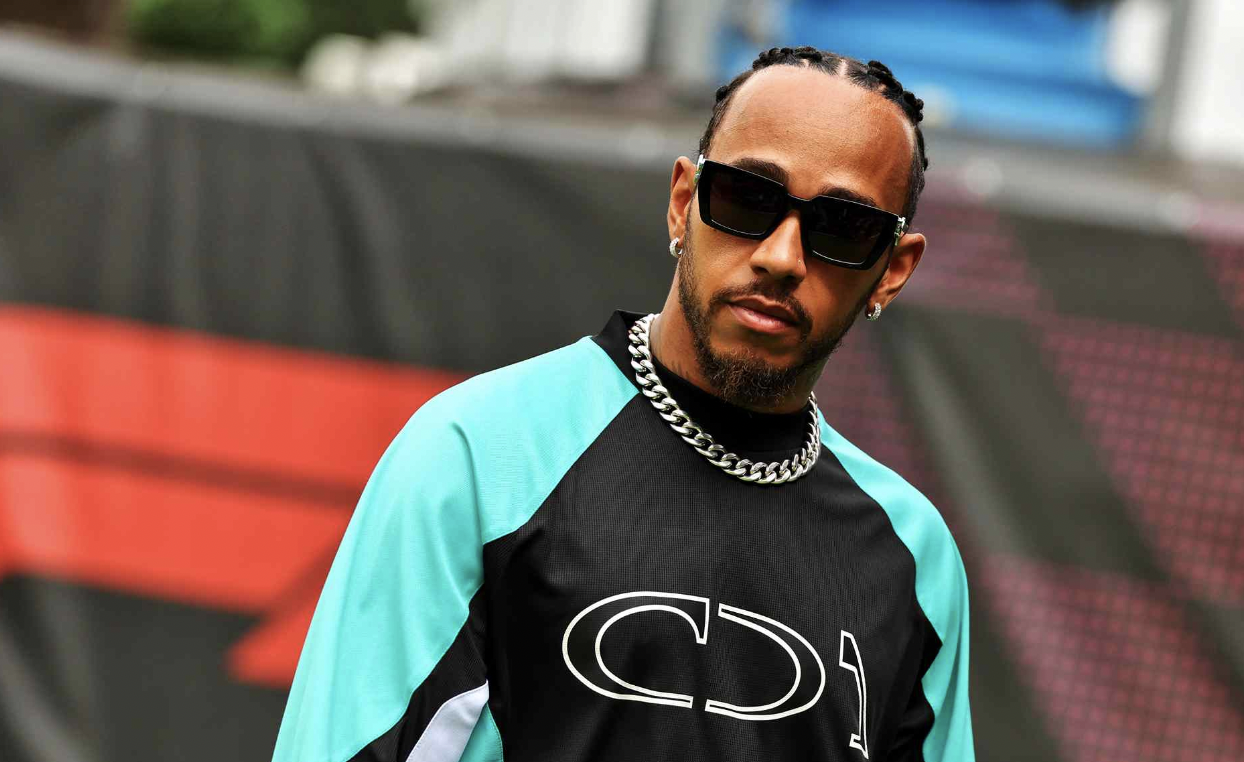
Shortly after the Canadian Grand Prix, I received an email claiming Lewis Hamilton was being “sabotaged” by his Mercedes team. The email was filled with misspellings, asserting that Hamilton had previously complained about his engine settings and suggesting I use my “browswer” to find evidence of Mercedes “sabotageing” him. While the email’s tone was easily dismissible, a glance at recent headlines shows some have taken such wild speculation seriously.
The core of these claims, echoed by a segment of F1 social media, is that Mercedes is deliberately undermining Hamilton. This theory supposedly gained traction after a Mercedes social media post referred to George Russell scoring the team’s first podium of the season in Canada, omitting Hamilton’s second-place finish in a sprint race in China. The Hamilton die-hards interpreted this omission as proof of bias, despite it likely being an innocent oversight.
This scenario feels like a rerun of 2016. Back then, Nico Rosberg started the season undefeated, while Hamilton faced technical issues in consecutive qualifying sessions. Hamilton’s fervent fans launched a barrage of online accusations against Mercedes. The team responded with a public statement. Asserting their equal treatment of both drivers: “There is no ‘A’ or ‘B’ team here.”
Mercedes would likely reiterate the same message today, but it seems futile to try convincing those who are determined to see conspiracy. Hamilton’s comments can sometimes fuel this agitation. For instance, after Monaco, he remarked, “I don’t anticipate being ahead of George in qualifying,” when Russell first used the team’s updated front wing. Mercedes clarified that the wing was limited in quantity, and Hamilton had volunteered to let Russell use it first.
Hamilton’s fans should heed his calls for restraint. Following the controversial end to the 2021 season, where Hamilton lost the championship on the final lap. Figures like Nicholas Latifi and former F1 race director Michael Masi received death threats. Encouragingly, Hamilton has begun urging his fans to stop attacking Russell.
Furthermore, Hamilton has been candid about his own mistakes. After the Canadian Grand Prix, he admitted he hadn’t driven well, calling it one of his worst performances, despite Zhou Guanyu’s slow Sauber impacting his race. Such admissions, however, are often overlooked by conspiracy theorists.
Ultimately, Hamil-ton’s dedicated fans should focus on his statements and actions rather than indulging in baseless theories. The sport is complicated enough without adding unnecessary drama.