

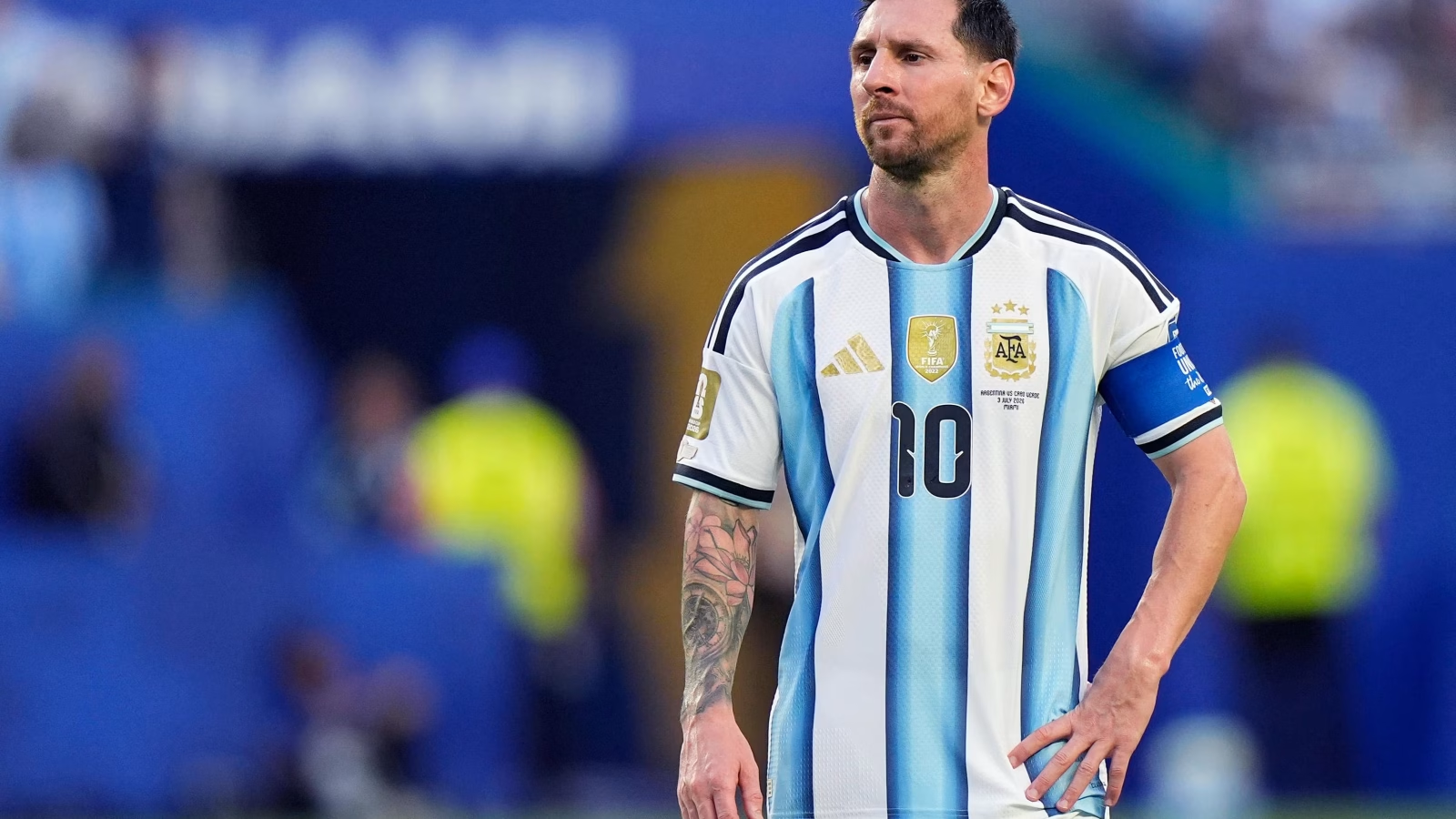
The 2026 FIFA World Cup has turned the penalty spot into one of the tournament’s most closely scrutinised pressure points, with the stuttered run-up facing renewed criticism after a series of high-profile misses. What was once seen as a composed, deceptive technique is now being judged far more harshly as failures in key moments continue to mount. The debate has sharpened because these misses have not been isolated incidents, but part of a broader pattern of poor execution from 12 yards across the competition. Lionel Messi’s missed penalty against Austria, followed later by a second miss in the same World Cup, has only intensified the focus on whether the balance between disguise and control is beginning to tilt too far in the wrong direction.
- The stuttered penalty run-up has come under major scrutiny during the 2026 World Cup after notable misses involving Germany and the Netherlands.
- The tournament has also produced broader concerns over penalty execution, with two shootouts already delivering 22 penalties and 10 misses.
- Lionel Messi missed a penalty against Austria before later recording a second missed penalty in the same World Cup.
- The ongoing pattern of misses has kept the stuttered approach at the centre of debate rather than bringing the discussion to an end.
Why the penalty conversation has become one of the tournament’s defining themes
Penalty-taking is usually framed as a duel between taker and goalkeeper, but this World Cup has made it feel more like a referendum on technique itself. The stuttered run-up is designed to disrupt a goalkeeper’s rhythm, forcing hesitation and creating a split-second advantage for the taker. In theory, that pause can open the goal by drawing the keeper early and allowing a calmer finish into the opposite corner. In practice, this tournament has shown how easily that same pause can disrupt the taker’s own timing, especially under the extreme pressure of World Cup football.
That is why the misses involving Germany and the Netherlands have resonated beyond the individual moments. They have fed a wider sense that the method may be losing some of its edge, not because deception no longer matters, but because the margins are so fine when the run-up is broken. Any interruption in momentum increases the demand for perfect coordination between body shape, planting foot and strike. At this level, even a slight loss of fluency can turn a carefully planned penalty into a save, a miss or a tame effort that gives the goalkeeper a chance. The conversation has therefore shifted from whether the stutter can work to whether it remains worth the risk in the biggest matches.
The wider tournament numbers add real weight to that concern. Two shootouts had already produced 22 penalties and 10 misses, a striking return that underlines how unreliable spot-kicks have looked in this competition. That figure does not prove that one specific run-up style is solely to blame, but it does show that penalty execution overall has been far from secure. In a tournament where knockout ties and group-stage momentum can hinge on a single kick, repeated failures naturally invite closer examination of every technical choice. The stuttered approach has become the focal point because it is the most visible expression of modern penalty-taking’s search for psychological advantage.
What the misses reveal about pressure, rhythm and tournament football
Messi’s experience has brought even greater visibility to the issue because of both his stature and the rarity of seeing him miss repeatedly from the spot on this stage. His penalty miss against Austria was already a major talking point, and the later confirmation of a second missed penalty in the same World Cup pushed the discussion into even sharper focus. When a player of that level fails twice, the reaction is never confined to the individual moment. It prompts broader questions about whether the environment of this tournament is making penalties unusually difficult, and whether techniques built around delay and disguise are becoming harder to execute cleanly. Even elite players can look vulnerable when timing deserts them for an instant.
There is also a tactical dimension to why this issue matters so much. Goalkeepers and analysts are more prepared than ever, and penalty routines are no longer treated as mysteries. A stutter can still be effective, but if a goalkeeper remains patient and balanced, the taker may suddenly find that the pause has removed the natural flow needed for a convincing strike. Instead of simplifying the decision, the technique can create an extra mental step at the worst possible time. That tension between control and uncertainty has been visible throughout the tournament, where penalties have often looked less like rehearsed certainties and more like unstable moments shaped by nerves.
For teams, the implications go well beyond a single miss. A failed penalty can alter match state, emotional momentum and even the strategic choices that follow, especially in knockout football or in tight group games where one goal changes everything. Coaches may now be forced to reconsider not only who takes penalties, but how those penalties are taken. A cleaner, more direct approach may appear less sophisticated, yet this World Cup is making a strong case for simplicity under pressure. When misses begin to cluster, the safest method often becomes the most attractive one.
At the same time, it would be premature to declare the stuttered run-up finished. The fact that this tournament has likely not heard the end of the penalty stutter is important, because football rarely abandons a technique completely after one difficult spell. Players trust routines that have carried them through years of high-level competition, and many will continue to believe that disguise remains essential from the spot. What this World Cup has done is expose the cost of getting that routine slightly wrong. The debate is no longer abstract or stylistic; it is being shaped by missed penalties in some of the sport’s most unforgiving moments.
As the tournament moves deeper into its decisive phase, every penalty will now carry an added layer of meaning. Each successful kick will be judged against the backdrop of the misses already seen, and each failure will strengthen the argument that the balance has shifted against the stuttered run-up. Teams still alive in the competition may not abandon their established takers or routines overnight, but they will know the margin for error has rarely looked thinner. With so many matches capable of turning on a single strike from 12 yards, the World Cup’s penalty debate is set to remain one of the defining tactical and psychological storylines of 2026.


Leave a Reply