

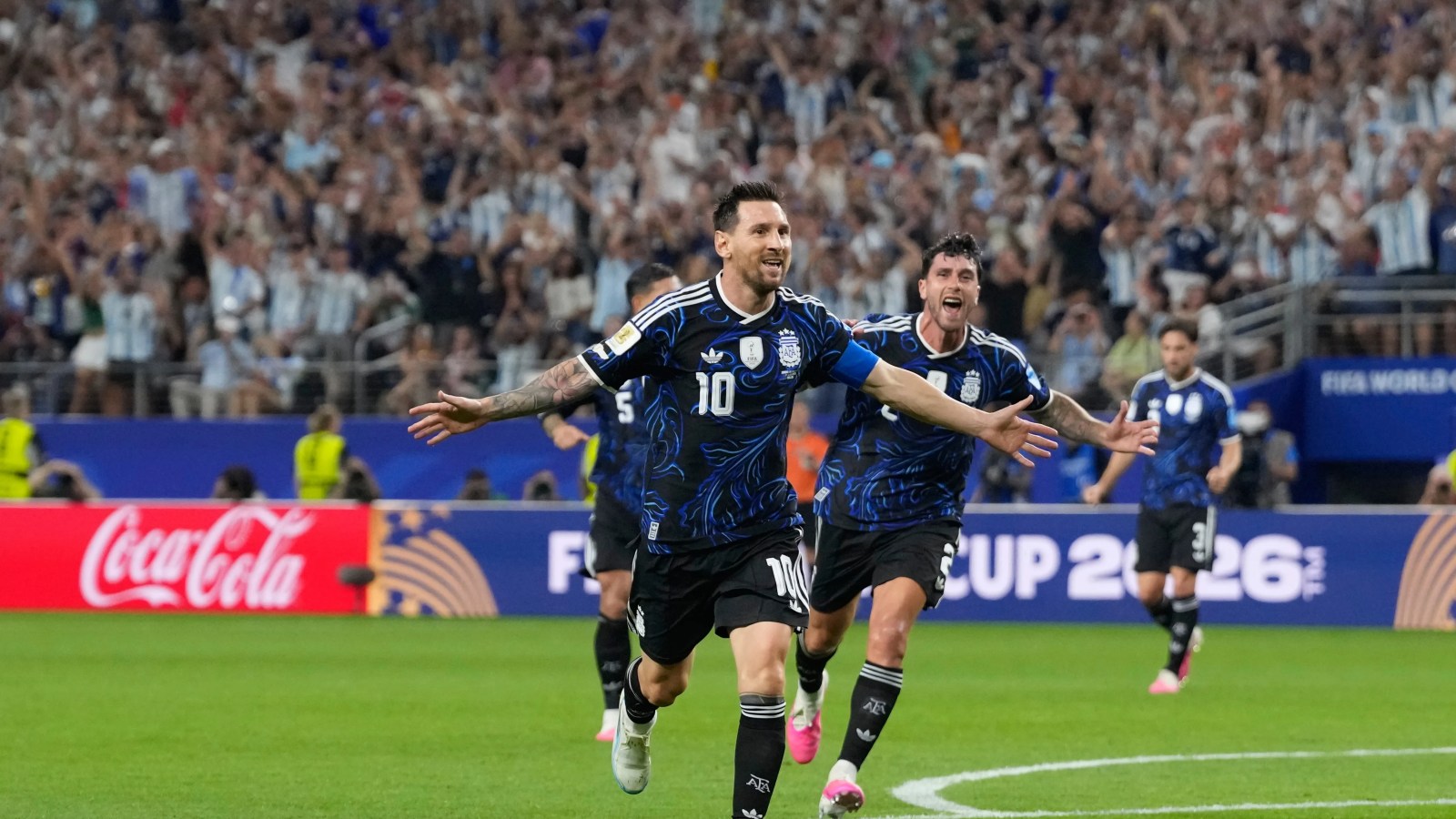
The FIFA World Cup 2026 knockout stage is coming into sharper focus, but the bracket remains incomplete, with three Round of 16 places still to be decided as the tournament moves toward its decisive phase. That matters because the next results will determine not only who advances but also how the path through the expanded competition begins to take shape ahead of the final on July 19 at MetLife Stadium in East Rutherford, New Jersey. With the first knockout matches scheduled to begin on June 28, the closing stretch of the group phase carries immediate significance for every team still involved. Argentina stand out among the nations still in action, joined by Australia, Cape Verde, Colombia, Egypt and Ghana as the remaining qualification picture continues to settle.
- The World Cup 2026 knockout stage runs from June 28 to July 19, with the final set for MetLife Stadium in East Rutherford, New Jersey.
- Three Round of 16 places are still up for grabs, meaning the bracket is not yet fully confirmed.
- Argentina, Australia, Cape Verde, Colombia, Egypt and Ghana are among the teams still in action as those remaining spots are decided.
- The 2026 tournament across Canada, Mexico and the United States features a 104-match schedule.
- The unfinished bracket adds extra significance to the final group-stage fixtures before the Round of 16 begins.
Knockout bracket still waiting on final pieces
The central development is straightforward: the tournament has not yet produced a fully settled knockout field. Instead of a completed group stage and a locked Round of 16 bracket, the picture remains fluid, with three places still available and several teams carrying meaningful stakes into the final set of games. That uncertainty changes the tone of the competition because the last qualification positions are often decided under maximum pressure, when margins are thin and every phase of play matters. It also means the broader knockout map cannot yet be read with confidence, since late qualification outcomes will shape both matchups and the overall balance of the bracket.
For the teams still involved, this is the stage at which tournament management becomes almost as important as pure quality. Sides chasing qualification must balance urgency with control, knowing that one rushed or disjointed performance can undo weeks of work, while teams in stronger positions still need the discipline to avoid letting the opportunity slip. The pressure is especially sharp in an expanded World Cup that stretches to 104 matches, because the scale of the event creates more pathways forward but also more opportunities for momentum to swing. Every remaining group-stage fixture now carries the feel of an elimination game, even before the official knockout rounds begin.
That is what makes an unfinished bracket so compelling this late in the group phase. The final places are not merely administrative details to be filled before the tournament moves on. They will influence who faces whom, which teams gain a more favorable route, and which contenders are forced into a more demanding path than expected. In tournament football, those details can shape the entire complexion of the knockout rounds, and with three places still unresolved, the competitive picture remains unusually open.
What the schedule means for the contenders
The schedule provides a clear framework for what comes next. The Round of 16 begins on June 28, marking the formal start of the knockout stage, and from there the competition runs through to the final on July 19. That timeline leaves little room for hesitation among the teams still trying to secure one of the last available places, because any uncertainty must be settled before the bracket shifts into direct elimination. Once the field is complete, the focus will move quickly from qualification calculations to matchup preparation, recovery and tactical adjustment.
Argentina, Australia, Cape Verde, Colombia, Egypt and Ghana are among the teams still in action as those final places are decided, and that list underlines the competitive range still present late in the group phase. Established contenders and ambitious challengers alike remain part of the equation, which is one reason the unfinished bracket carries so much intrigue. A late qualification place can alter the shape of the knockout rounds by introducing a team in strong form or by forcing a higher-profile nation into a more complicated route. Even without confirmed pairings, the significance is clear: the final entrants into the Round of 16 will not simply complete the bracket, they may reshape it.
The scale of the 2026 tournament adds further context to this moment. With 104 matches spread across Canada, Mexico and the United States, the competition is broader and longer than previous editions, demanding depth, consistency and adaptability from every squad. In that environment, reaching the knockout stage is both an achievement and a platform, because once direct elimination begins, momentum can become as valuable as reputation. Teams that squeeze through late often carry emotional energy into the next round, while those that advance more comfortably still have to prove they can handle the sharper edge of one-and-done football.
There is also broader significance in where the tournament is heading, both geographically and symbolically. The final at MetLife Stadium in East Rutherford, New Jersey, gives the competition a fixed destination even as the bracket remains unfinished, creating a contrast between certainty at the end point and volatility in the present. Every team still fighting for a place knows the route is narrowing toward that stage, and that awareness tends to intensify every tactical decision and every in-game adjustment. The closing group fixtures are therefore not merely a prelude to the main event; they are part of it, shaping who advances and what kind of knockout tournament follows.
From a competitive standpoint, the incomplete bracket keeps the World Cup alive on multiple levels at once. Supporters can follow qualification battles in real time, while coaches and players must prepare for different possible opponents and different possible routes through the last 16. That uncertainty is one of the defining features of tournament football, and it is especially pronounced here because three places remain unsettled so close to the start of the knockout rounds. The result is a closing stretch of the group phase loaded with consequence, not only for the teams on the edge but for the shape of the competition as a whole.
The immediate focus now is on the final matches that will decide those last three Round of 16 spots and complete the knockout bracket. Once those places are filled, attention will turn to the June 28 start of the Round of 16 and the run toward the July 19 final at MetLife Stadium. With 104 matches across three host nations, the tournament still has a long road ahead, but the margin for error is about to disappear. The next results will determine who stays on that road and who sees their World Cup end just before the knockout stage begins.

Leave a Reply