

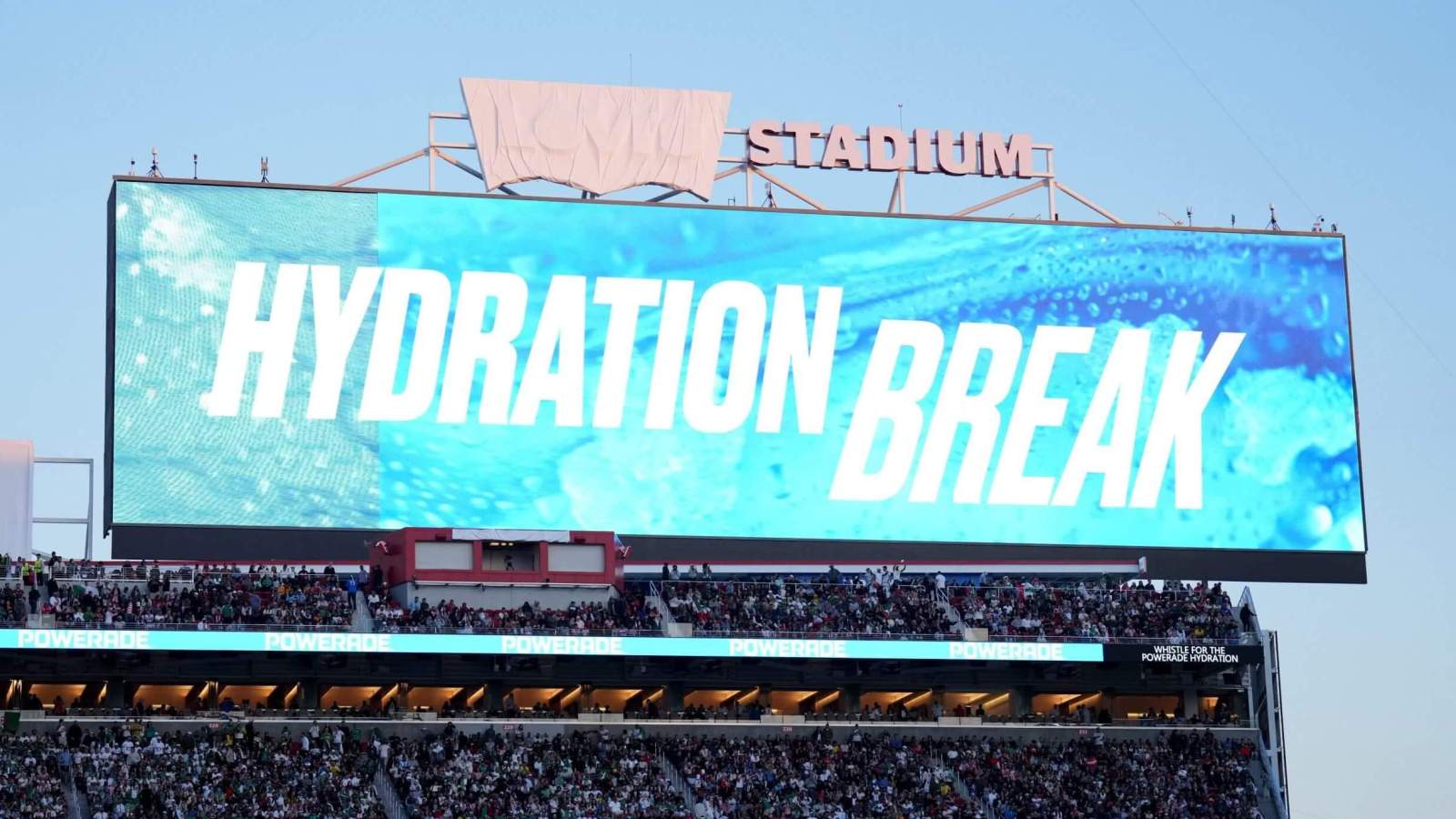
Mandatory hydration breaks at the 2026 FIFA World Cup are already emerging as one of the tournament’s most debated features, placing player welfare at the center of the discussion while also raising uncomfortable questions about commercial priorities. Matches will pause midway through each half, creating a rhythm that could alter the flow of games throughout the competition. What makes the issue especially significant is that the breaks are set to be used regardless of the weather, turning what might once have been a safeguard for extreme conditions into a standard part of the matchday structure. Coaches, players and supporters are now weighing the practical benefits of recovery and instruction against the sense that the tournament’s natural tempo may be repeatedly disrupted.
- World Cup 2026 matches will include mandatory hydration breaks in the middle of each half.
- The stoppages have been described as lasting about three minutes.
- The breaks are set to be implemented regardless of weather conditions.
- Criticism has focused on prominent advertising on stadium screens and commercial breaks during the pauses.
- The stoppages also give coaches additional opportunities to gather players, effectively breaking each match into four segments.
Why the policy is drawing such intense scrutiny
The argument in favor of the breaks is straightforward. A World Cup is physically demanding in any setting, and scheduled pauses give players a guaranteed chance to rehydrate, reset and manage exertion midway through each half. In a tournament expected to place enormous physical and mental strain on squads, that built-in recovery period can be presented as a sensible protective measure. Even without focusing on specific temperatures or venues, the idea of prioritizing welfare at the sport’s biggest event carries obvious appeal.
The controversy begins with the fact that these breaks are not being framed as occasional interventions reserved for difficult conditions. Instead, they are expected to be a mandatory feature of matches regardless of the weather, which changes the nature of the debate. Once the pauses become universal rather than situational, critics can reasonably ask whether they are still primarily a response to player needs or whether they now serve a broader tournament production model. That distinction matters because football has long prized continuity, momentum and the emotional build of each half. A scheduled interruption in every half does not simply protect players; it also reshapes the structure of the spectacle.
That is where the commercial criticism has become especially pointed. Advertising is expected to be highly visible on stadium screens during the stoppages, while television coverage can use the same moments for commercial breaks. The result is an unavoidable impression that the pauses create premium inventory for sponsors and broadcasters at fixed, predictable points in every match. Even if player welfare is part of the rationale, the visual and broadcast presentation risks making the breaks feel less like a medical safeguard and more like an integrated commercial window. For many observers, that perception sits at the heart of the issue.
The scrutiny is sharpened further by the scale of the tournament itself. The World Cup is not just another competition; it is football’s most visible stage, where every structural change is magnified. A policy that might draw limited attention elsewhere becomes far more contentious when applied across the sport’s biggest event. Because these stoppages are expected in every match, they are likely to become one of the tournament’s most recognizable patterns, and that visibility will only intensify the debate over whether the balance between welfare and commercial presentation has been struck in the right place.
How the breaks could change matches on the pitch
The tactical implications are just as important as the commercial ones. Mid-half stoppages give coaches a fresh opportunity to gather players, deliver instructions and correct problems that might otherwise have had to wait until halftime. In practical terms, that can turn a traditional 45-minute half into two shorter competitive phases, with each side able to make adjustments in between. A team struggling to play through pressure, defend wide areas or manage transitions suddenly gets an earlier checkpoint to reorganize. That could make matches more strategically controlled, but it may also reduce the value of in-game resilience and on-field problem-solving.
There is also a strong possibility that the breaks will affect momentum in ways that are difficult to predict. Teams that thrive on sustained pressure, emotional surges and a quick tempo may feel disrupted by a scheduled pause arriving just as they are building control. By contrast, sides under strain may welcome the interruption as a lifeline, using it to slow the game, recover composure and reset their defensive structure. In that sense, the breaks may not affect every team equally; they could subtly favor those who benefit from more frequent tactical pauses and more carefully managed rhythms. Over the course of a World Cup, those small shifts can carry meaningful consequences.
The psychological dimension should not be overlooked either. Footballers are accustomed to playing through long stretches with only brief natural stoppages, and the emotional intensity of a World Cup often depends on that uninterrupted pressure. A mandatory pause can cool a crowd, break concentration and alter the atmosphere inside the stadium at a delicate moment. It may also create a new management challenge for players, who must learn how to switch off just enough to recover and then immediately switch back on at full intensity. The teams that handle those transitions best could gain an edge that has little to do with pure technical quality.
All of this leaves the tournament balancing two competing truths. On one side, a guaranteed opportunity to take fluids and regroup can be defended as a modern safeguard in an event of enormous physical demand. On the other, the combination of fixed stoppages, visible advertising and broadcast commercial opportunities makes it difficult to separate the welfare case from the business case. The criticism is not simply that the breaks exist, but that they appear to have evolved into a standard feature with commercial advantages built into the presentation. That tension is likely to remain throughout the tournament, especially if the pauses become highly conspicuous moments in close or dramatic matches.
What comes next is not a question of whether the breaks will be part of World Cup 2026, but how they will be received once the tournament is underway. If players visibly benefit and matches retain their intensity, the policy may settle into the background as a new normal. If, however, the stoppages repeatedly interrupt key passages of play and feel dominated by advertising and television cutaways, the backlash is likely to grow louder. Either way, these mandatory hydration breaks are set to become one of the defining structural features of the competition, influencing not only recovery and coaching but also the wider debate over what the modern World Cup is meant to prioritize.


Leave a Reply