

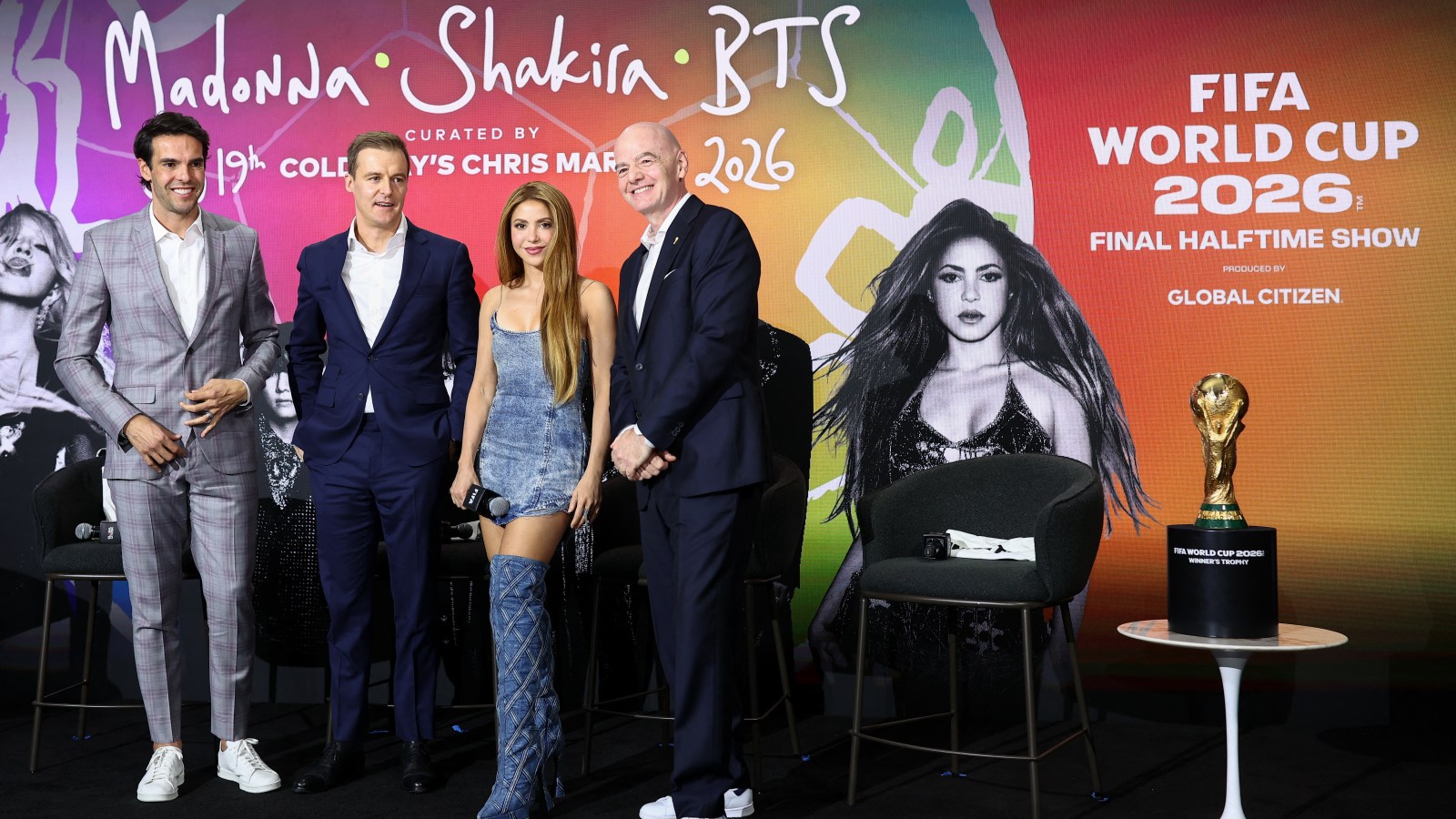
FIFA World Cup 2026 is set for a landmark entertainment moment, with Madonna, Justin Bieber, Shakira and BTS preparing to co-headline the first halftime show in the history of the men’s World Cup final. The event is scheduled for Sunday, 19 July 2026 at New York New Jersey Stadium, attaching a major musical spectacle directly to the biggest match in international football. That alone makes it a significant development for the tournament, but the scale of the lineup gives it even greater weight as FIFA pushes the final toward a broader global event. With four of the world’s most recognisable music acts sharing top billing, the halftime show immediately becomes one of the defining off-field storylines of the 2026 competition.
- Madonna, Justin Bieber, Shakira and BTS are set to co-headline the first FIFA World Cup final halftime show.
- The show is scheduled for Sunday, 19 July 2026 at New York New Jersey Stadium.
- The performance is tied directly to the FIFA World Cup 2026 final itself, marking a historic first for the tournament.
- Verified information does not support claims that Robbie Williams or Jennifer Hudson are part of the show.
- Verified information also does not support claims about the identity of the teams contesting the final.
A new layer to the World Cup final
The significance of this announcement lies not only in the star power involved, but also in what it says about the evolving presentation of football’s biggest occasion. The World Cup final has always carried enormous ceremonial weight, from the pre-match build-up to the trophy presentation, yet halftime has traditionally remained a sporting interval rather than a standalone entertainment event. By introducing a dedicated halftime show for the final, FIFA is reshaping that rhythm and adding a new showcase element to the matchday experience. In practical terms, it places the final in a different cultural space, one that stretches beyond football audiences and into mainstream global entertainment.
The lineup is central to that ambition. Madonna brings cross-generational recognition and a long history of stadium-scale performance, while Justin Bieber adds a contemporary pop presence with broad international appeal. Shakira’s inclusion feels especially resonant in a football context given her long association with major tournament culture, and BTS extends the event’s reach even further through one of the most powerful global fanbases in music. Taken together, the four acts represent different eras, markets and musical identities, suggesting a deliberate attempt to make the show feel genuinely worldwide rather than regionally focused. That approach mirrors the World Cup itself, a competition built on the idea of global participation and mass shared attention.
Why the setting matters
New York New Jersey Stadium is a fitting stage for such a first. As the scheduled host venue for the 2026 final, it will already sit at the centre of the tournament’s most-watched day, and the halftime show adds another layer of significance to its role. A final at that venue was always going to be about scale, visibility and symbolism, but this announcement reinforces the sense that FIFA wants the closing act of the tournament to feel like a singular global event rather than simply the last match on the schedule. The decision to anchor the first halftime show there gives the stadium an even more prominent place in the history of the competition.
The timing is equally important. A World Cup final on 19 July 2026 will command worldwide attention regardless of the teams involved, and the halftime show is clearly designed to capitalise on that concentrated audience. Because the performance is tied directly to the final, it becomes part of the match’s identity rather than a separate festival or companion concert. That distinction matters, because it means the entertainment is being woven into the central ritual of the tournament. The final is no longer only about deciding the champion on the pitch; it is also being framed as a broader global spectacle with football at its core.
There is also a clear message in what has not been confirmed. Verified information supports the involvement of Madonna, Bieber, Shakira and BTS, but it does not support claims that Robbie Williams or Jennifer Hudson are part of the show. In the same way, there is no verified basis here for naming the teams that will contest the final. That is an important reminder at this stage of the cycle, because World Cup narratives can quickly become crowded with speculation long before the football itself determines the finalists. The confirmed story is already substantial enough: the 2026 final will feature a halftime show for the first time, and it will do so with one of the most high-profile musical lineups ever attached to a football event.
For FIFA, the move reflects a broader balancing act between tradition and expansion. The World Cup final remains the sport’s most sacred competitive stage, and any change to its presentation will inevitably attract scrutiny. Yet the introduction of a halftime show does not alter the central purpose of the day; instead, it widens the event’s entertainment footprint and potentially deepens its appeal among viewers who may be drawn first by the music and then by the match. That crossover potential is powerful in a tournament designed to capture every possible segment of a global audience. If executed well, the halftime show could become a recurring feature of future finals, with 2026 remembered as the year the format changed.
There is football significance to that cultural shift as well. World Cups are often remembered not only for champions and defining goals, but also for the atmosphere, imagery and moments that shape how a tournament lives in public memory. By adding a halftime show of this scale to the final, FIFA is effectively creating another memory point built into the competition’s climax. The result could be a final day that feels more expansive and more layered than any before it, with the match and the performance feeding into the same sense of occasion. That is why this announcement matters now, long before a ball is kicked in the final itself.
What comes next is the gradual build toward a final that is already guaranteed a historic place in World Cup history. Attention will eventually turn to the teams that earn the right to play on 19 July 2026, but the entertainment framework for that day is now firmly in place. Madonna, Justin Bieber, Shakira and BTS give the event a headline-grabbing identity before the finalists are even known, underlining the scale of FIFA’s ambitions for the tournament’s closing act. As preparations continue, the first World Cup final halftime show stands as one of the clearest signs yet that 2026 is being shaped not just as a championship decider, but as a truly global spectacle.

Leave a Reply