

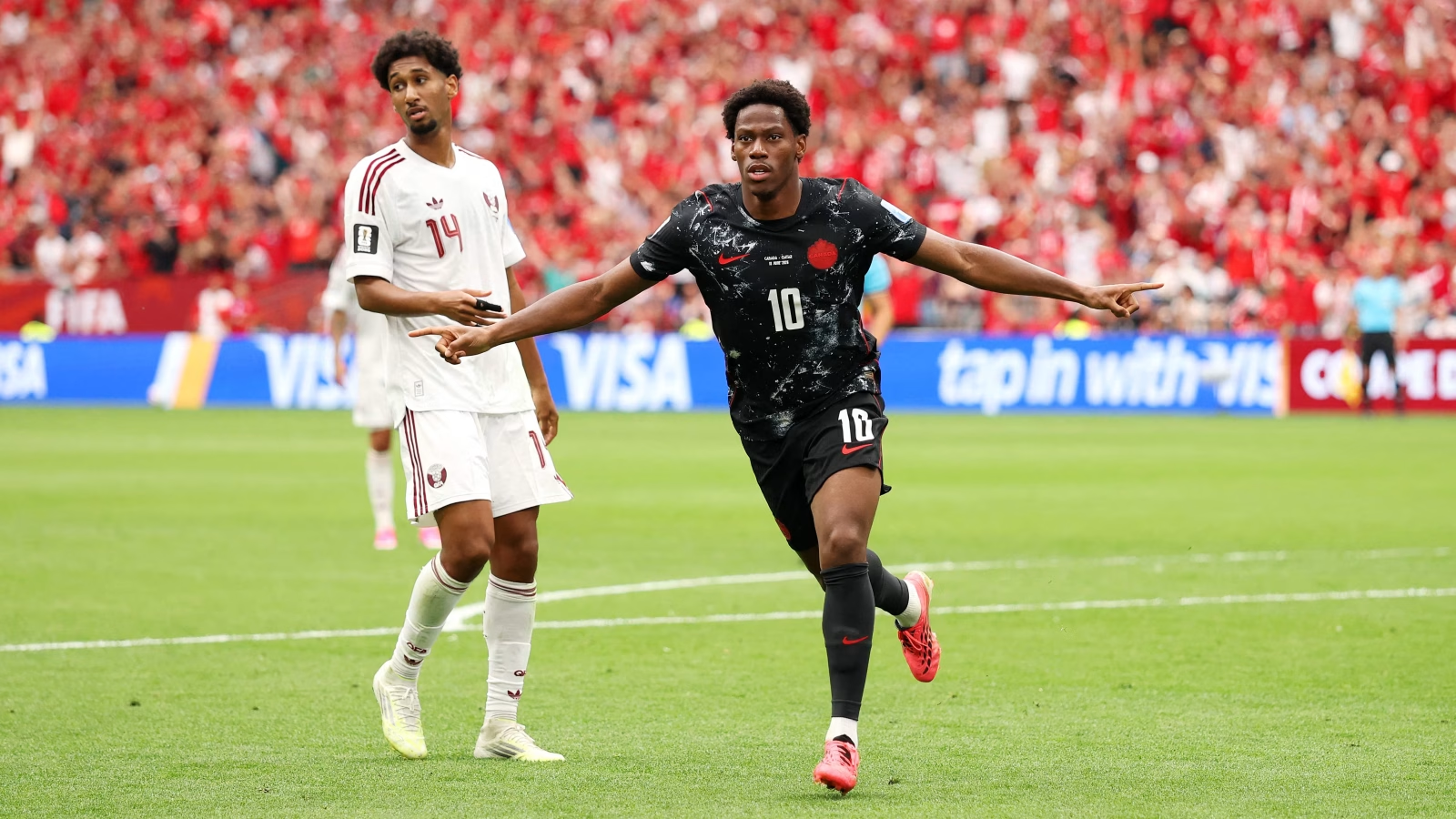
The 2026 FIFA World Cup is already defined by its unprecedented scale and structure. This edition will break new ground as the first men’s World Cup to feature 48 teams and the first to be co-hosted by three countries: the United States, Canada and Mexico. Those changes alone make this tournament a landmark moment, expanding the field and spreading the event across North America in a way no previous World Cup has attempted. Early storylines have also sharpened the picture, from Canada’s emphatic 6-0 win over Qatar in Vancouver, powered by a Jonathan David hat trick, to a U.S. defeat against Türkiye that highlights the pressure on one of the host nations. At the top end of the bracket, Spain and Argentina have advanced to the championship, setting up a final with clear weight and global appeal.
- The 2026 men’s World Cup is the first edition of the tournament to include 48 teams.
- The competition is also the first men’s World Cup to be co-hosted by three countries: the United States, Canada and Mexico.
- Canada recorded a 6-0 win over Qatar in Vancouver, with Jonathan David scoring a hat trick.
- The United States suffered a loss to Türkiye during 2026 tournament play.
- Spain and Argentina advanced to the championship, confirming the tournament’s finalists.
A tournament built on expansion and scale
The move to 48 teams is the defining structural shift of World Cup 2026, and it immediately changes the rhythm and reach of the competition. A larger field means more nations, more matches and a broader competitive map, giving the tournament a different texture from the outset. For established powers, it reshapes preparation and squad management because the path through the event is now framed by a wider and more varied field. For emerging nations, it creates fresh opportunity, making qualification and participation part of the central story rather than a footnote.
That sense of expansion is matched by the hosting arrangement. With the United States, Canada and Mexico sharing duties, the World Cup becomes not just a football tournament but a continental event spread across three national settings. That matters because hosting typically shapes atmosphere, logistics and emotional pressure around a team, and in 2026 those dynamics are distributed rather than concentrated in one country. It also gives the tournament a distinct identity, rooted in shared organization but informed by the different football cultures and expectations each host brings.
The broader significance is that this World Cup is being defined as much by format and setting as by individual results. Every major tournament develops its own narrative, but 2026 arrives with built-in historical markers before a ball is kicked. The first 48-team men’s finals and the first tri-nation hosting model ensure that every result sits within a larger conversation about adaptation, depth and endurance. That makes even isolated performances feel more meaningful, because they are judged against a backdrop of change on an unprecedented scale.
In that respect, the tournament’s structure is not merely administrative detail. It shapes how teams are measured, how momentum is interpreted and how the event will be remembered. Expansion increases possibility, but it also increases scrutiny, because success in a larger and more complex competition carries its own demands. The same is true of the three-country hosting model, which broadens the spectacle while also creating separate host experiences that do not necessarily move in the same direction.
What the early results reveal
Canada’s 6-0 victory over Qatar in Vancouver stands out as one of the clearest statements in the tournament record so far. The scoreline alone signals authority, while Jonathan David’s hat trick gives the performance a standout individual focal point. In tournament football, emphatic wins can do more than collect points or build momentum; they can establish confidence, sharpen belief and send a message about attacking quality. For Canada, doing it in Vancouver adds another layer, because such a commanding display on home soil strengthens the emotional connection between team and tournament.
Just as significant is the contrast provided by the United States losing to Türkiye. Even without additional match detail, the result carries weight because host nations are always judged against elevated expectations. A defeat in tournament play inevitably shifts the conversation toward response, resilience and whether a team can handle the scrutiny that comes with playing a World Cup at home. For the United States, the loss is a reminder that hosting does not reduce competitive pressure; if anything, it intensifies it by turning every performance into a measure of readiness and ambition.
Taken together, those two host-related results suggest that 2026 is unlikely to produce a simple or uniform story for the countries staging the event. Canada’s emphatic win points to confidence and attacking fluency, while the U.S. setback points to vulnerability and the need for adjustment. That divergence is one of the more compelling features of a tournament shared by multiple hosts: each team carries its own burden, its own momentum and its own public mood. Rather than one host narrative dominating the competition, the World Cup can generate several at once, each moving in a different direction.
At the top of the bracket, the advancement of Spain and Argentina to the championship gives the tournament a final of unmistakable stature. Even without additional match specifics, the presence of those two nations in the title match says plenty about quality, consistency and the ability to navigate a demanding competition. Finals are often decided by fine margins, but reaching one requires a sustained level that separates contenders from the rest of the field. Spain and Argentina therefore arrive not only as finalists, but as the teams that have handled the demands of this particular World Cup landscape most effectively.
There is also broader symbolic value in that championship pairing. In a tournament defined by expansion and novelty, the finalists provide a sense of elite footballing gravity, anchoring the competition with two globally significant names. That balance matters. The 48-team format and three-country hosting model introduce new dimensions, but the run to the title still depends on performance under pressure, and Spain and Argentina have supplied that. Their progress ensures that the tournament’s experimental scale is matched by a final with unmistakable competitive prestige.
What comes next is the completion of a World Cup already marked by firsts and sharpened by a handful of telling results. The final between Spain and Argentina will decide the champion, while the wider legacy of the tournament will be measured through the success of the 48-team structure and the three-country hosting arrangement. Canada’s commanding win over Qatar and Jonathan David’s hat trick remain among the clearest host-nation highlights on record, while the United States will be left to reckon with the disappointment of its loss to Türkiye. However the championship ends, World Cup 2026 has already established itself as a tournament of historic change, contrasting host experiences and a title match worthy of the stage.



Leave a Reply