
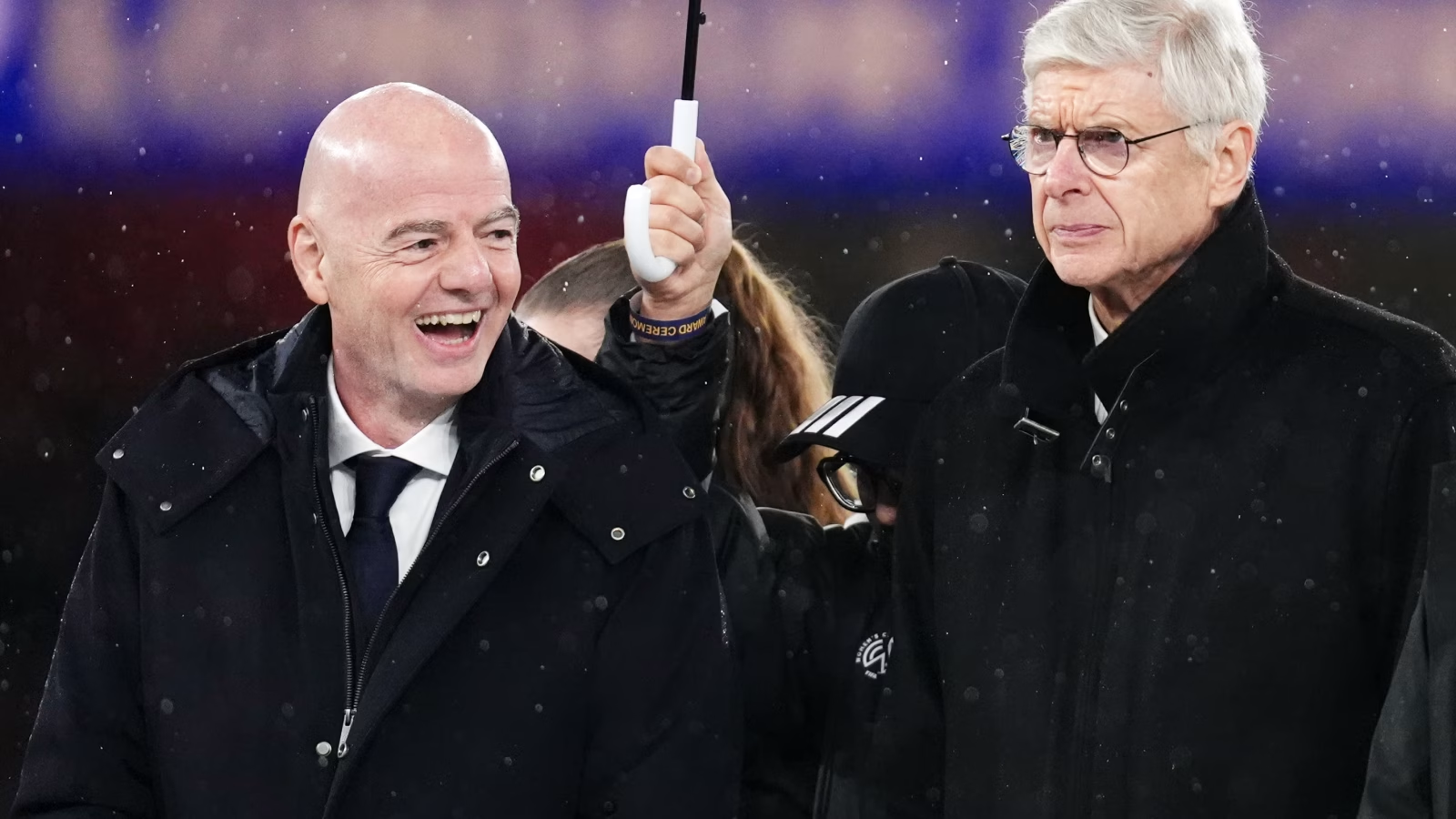
Arsene Wenger has backed FIFA president Gianni Infantino’s decision to abandon plans to sell stakes in a World Cup-related company to private investors, describing the reversal as “absolutely necessary.” The intervention from Wenger, one of the most recognisable senior figures in world football, adds considerable weight to a U-turn that had already gathered momentum amid widespread backlash. Wenger also made clear that he knew nothing about the reported $20 billion proposal before it was dropped, a detail that underlines how contentious and opaque the initiative had become within football’s governing structure. At a time when FIFA is shaping the commercial and political landscape around the 2026 World Cup, the collapse of the plan matters because it exposes internal unease over how the tournament and its associated assets should be managed.
- Arsene Wenger said Gianni Infantino’s decision to drop the World Cup investment plan was “absolutely necessary.”
- Wenger said he knew nothing about the reported $20 billion proposal before it was abandoned.
- The plan involved selling stakes in a World Cup company to private investors.
- The proposal was scrapped after widespread backlash, including criticism from within FIFA.
- FIFA secretary general Mattias Grafstrom distanced himself from the proposal.
Why the reversal matters for FIFA
The abandoned proposal goes to the heart of how FIFA intends to balance commercial ambition with institutional control as the 2026 World Cup approaches. Any move to sell stakes in a company tied to the sport’s biggest event would inevitably raise questions about governance, transparency and the long-term stewardship of football’s most valuable competition. Wenger’s support for the U-turn suggests that, from his perspective, the proposal had crossed a line that made retreat unavoidable. His choice of words, calling the decision “absolutely necessary,” frames the reversal not as a minor tactical adjustment but as a corrective step after a plan that had become too difficult to defend.
That matters because FIFA has spent years presenting the World Cup as both a sporting spectacle and a carefully managed global business. The 2026 edition, with its scale and commercial reach, sits at the centre of that strategy. In that context, even the outline of a proposal to bring in private investors through the sale of stakes in a World Cup company would have carried major implications for influence and control. The backlash that followed shows there were serious concerns about whether such a move aligned with the governing body’s broader responsibilities, and Wenger’s remarks reinforce the sense that resistance was not peripheral but substantial.
What Wenger’s comments reveal
Wenger’s admission that he knew nothing about the reported $20 billion proposal before it was abandoned is one of the most revealing details in the episode. He holds a prominent role in football development and is closely associated with high-level thinking about the future of the game, so his lack of prior knowledge points to a process that either remained tightly controlled or failed to secure broad internal understanding. In governance terms, that is significant. When a proposal of this magnitude surfaces without clear awareness or buy-in among major football figures, it naturally intensifies scrutiny over how the idea was developed and who was expected to support it.
The internal pushback is another crucial part of the story. The plan did not simply attract criticism from outside observers; it also faced resistance from within FIFA itself. That distinction matters because external criticism can sometimes be absorbed or managed, but internal concern is harder to dismiss when it touches on the organisation’s own decision-making culture. The fact that Mattias Grafstrom also distanced himself from the proposal adds to the picture of an initiative that struggled to command confidence at senior levels, making the eventual retreat look less like a surprise and more like the inevitable outcome of a plan that had run out of room to survive.
For FIFA, the episode is a reminder that the business of the World Cup cannot be separated from the politics of legitimacy. Commercial growth remains central to modern football administration, but the closer a proposal gets to the ownership structure or financial architecture around the World Cup, the more sensitive it becomes. The tournament is not just another asset; it is the defining event in the global game, and any suggestion of carving out stakes for outside investors is bound to trigger concern about precedent. Wenger’s intervention sharpens that point, because his public backing for the reversal signals that, at least in this case, preserving confidence in the institution took priority over pursuing a potentially transformative financial arrangement.
There is also a broader 2026 angle to consider. FIFA is entering a period when attention should increasingly be on tournament planning, competitive build-up and the presentation of the World Cup as a unifying global event. Instead, this abandoned proposal has opened a debate about internal alignment and strategic judgment. By stepping back, FIFA has reduced the risk of a prolonged dispute overshadowing preparations, but the episode will still leave questions about how major commercial ideas are tested before they reach the point of public controversy. Wenger’s comments do not answer those questions on their own, yet they do make clear that the retreat was viewed by him as necessary, not optional.
What happens next is likely to be shaped by how firmly FIFA closes the door on this specific idea and how carefully it handles future commercial initiatives around the 2026 World Cup. The immediate significance of Wenger’s stance is that it lends authoritative support to the decision to scrap the plan, while his claim of having no prior knowledge highlights the need for clearer internal coherence on major proposals. With the investment idea abandoned after widespread backlash and internal criticism, FIFA now has an opportunity to refocus on the tournament itself rather than a divisive financial restructuring. For an organisation preparing for the biggest event in world football, that reset may prove as important as the U-turn Wenger said was absolutely necessary.


Leave a Reply