

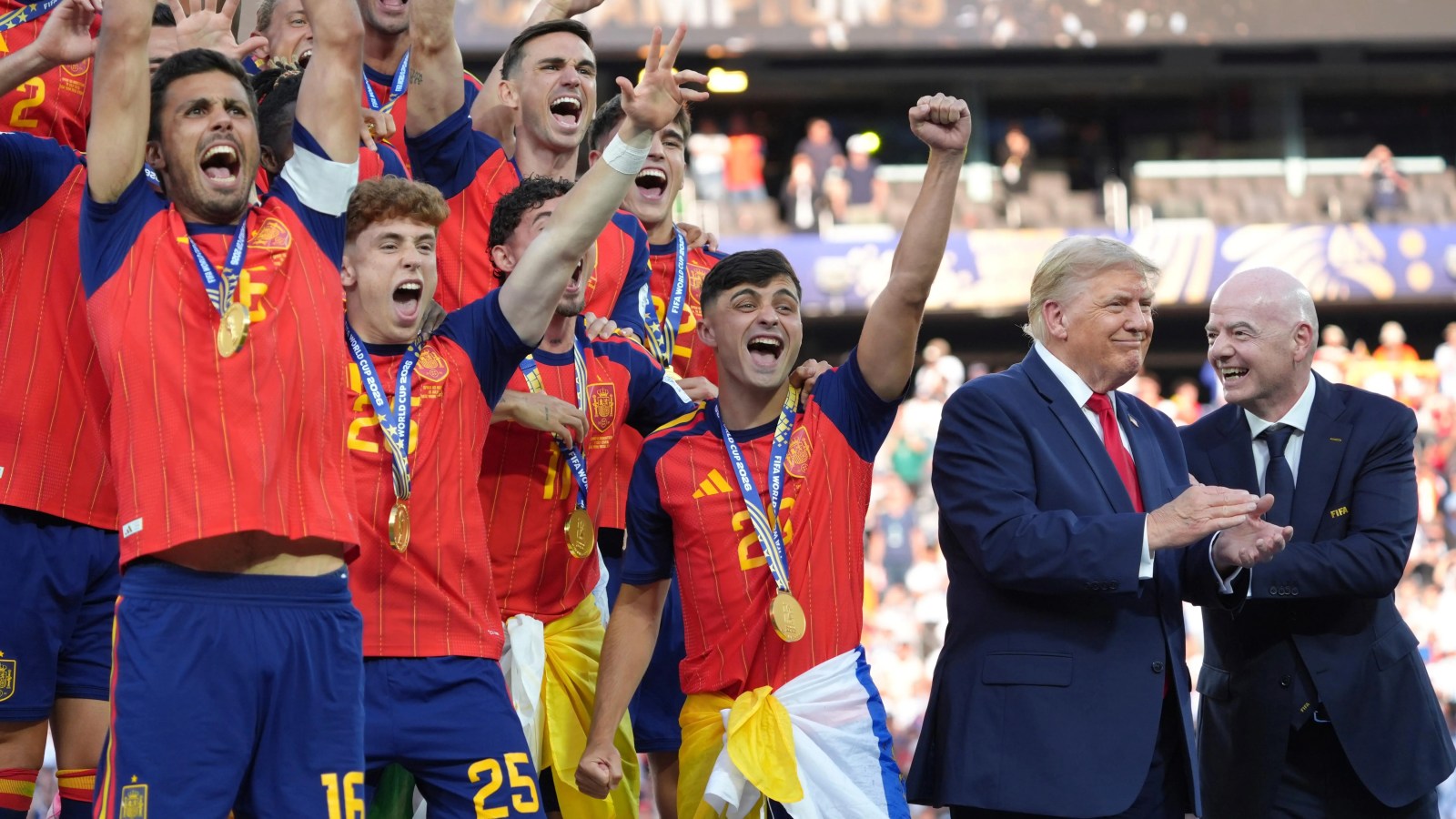
UEFA has reacted furiously to a reported FIFA proposal to seek private investment tied to its competitions, including the FIFA World Cup 2026, opening a fresh battle over control of the game’s biggest events. The dispute matters because it extends beyond a single financial idea and into a deeper argument over who has the authority to shape football’s commercial future. At the centre of the row is FIFA president Gianni Infantino, who is said to be exploring a plan involving the sale of minority stakes linked to the World Cup. UEFA’s response has been unusually sharp, framing the issue not merely as a business disagreement but as a matter of principle over stewardship of the sport.
- UEFA has strongly criticised a reported FIFA plan to seek private investment in its competitions, including the World Cup.
- The proposal is said to involve selling minority stakes linked to the World Cup to private investors.
- Gianni Infantino is said to be exploring the idea as part of FIFA’s thinking around its competitions.
- UEFA’s objection is explicit, stating that “it is not FIFA’s to sell”.
- UEFA also declared that “none of us are the owners of football,” underlining the wider governance issue at stake.
Why UEFA’s response matters
UEFA’s language is the clearest indication yet of how seriously it views the reported proposal. By saying “it is not FIFA’s to sell,” European football’s governing body has challenged the premise that commercial rights attached to a competition of the World Cup’s scale can be treated as a straightforward asset transaction. That wording goes well beyond routine institutional criticism and suggests UEFA sees the matter as one with long-term consequences for the governance of the sport. In practical terms, the statement transforms a reported investment discussion into a broader political confrontation between two of football’s most powerful organisations.
The second part of UEFA’s objection is equally significant. Its statement that “none of us are the owners of football” places the argument in moral as well as commercial terms, implying that the game’s leading bodies are custodians rather than proprietors. That distinction matters in a World Cup context because the tournament is not only FIFA’s flagship property; it is also one of the sport’s central shared institutions, carrying competitive, cultural and financial importance across every confederation. UEFA’s stance therefore presents the issue as bigger than balance sheets or deal structures. It is arguing that any move to package part of the World Cup for private investors risks crossing a line in how football understands itself.
That is why the response carries weight beyond the immediate dispute. UEFA is not simply objecting to a possible commercial model; it is challenging the idea that football’s most important competitions can be reshaped without a wider reckoning over legitimacy and responsibility. In doing so, it has elevated the issue from a reported internal FIFA discussion into a public test of authority. The sharper the language, the clearer the signal that UEFA believes the stakes reach far beyond one transaction.
What the proposal could mean for the World Cup
The reported plan involves selling minority stakes linked to the World Cup, but the available verified details go no further than that. Even with those limits, the implications are easy to understand. The World Cup is football’s premier event, and any proposal that introduces private investors into its commercial framework would inevitably raise questions about influence, decision-making and the future direction of the competition. UEFA’s anger reflects concern not only about the immediate proposal but also about the precedent such a move could set for future tournament management.
For FIFA, the attraction of private investment is implied by the scale and value of the World Cup as a global competition. A minority-stake model would suggest an attempt to unlock capital while retaining formal control, but UEFA’s argument is that the issue cannot be reduced to percentages or ownership structures. Once private money is tied directly to a competition of this stature, scrutiny naturally shifts to what investors expect in return and how those expectations might shape the event over time. That is why UEFA’s criticism lands with such force: it is contesting the principle before the details can become normalised.
The timing also gives the dispute added weight in the run-up to FIFA World Cup 2026. Any debate around the commercial architecture of the World Cup becomes more sensitive as attention builds toward the tournament itself, because the event sits at the centre of football’s global calendar and identity. UEFA’s intervention ensures that the reported proposal cannot be treated as a quiet internal exploration. Instead, it has become a public flashpoint over the boundaries of FIFA’s power and how far football’s governing bodies should go in monetising their competitions.
There is also a strategic dimension to UEFA’s public pushback. By responding so directly, it has signalled that resistance will not be confined to private conversations or procedural disagreement. The wording of its statement is designed to frame the debate in terms that resonate well beyond boardrooms, positioning UEFA as defending the collective nature of the sport against a more transactional vision of its leading competitions. Whether that hard line alters FIFA’s thinking remains to be seen, but it has already ensured that any next step on the proposal will be judged through the lens of legitimacy as much as financial logic.
For the wider football landscape, this episode underlines how the World Cup remains both a sporting spectacle and a battleground for institutional influence. FIFA’s competitions generate enormous prestige and shape the global game, which means any attempt to restructure their commercial foundations is bound to trigger resistance from major stakeholders. UEFA’s intervention makes clear that, in its view, the World Cup cannot be separated from broader questions of responsibility and shared ownership within football. That is why this story matters ahead of 2026: it is not about a technical funding mechanism alone, but about who gets to define the future of the game’s biggest stage.
What comes next will depend on whether FIFA presses ahead with the reported idea or whether UEFA’s fierce response slows momentum around it. The verified picture at this stage is limited to the reported minority-stake proposal and UEFA’s emphatic criticism, so many details remain unresolved. Even so, the clash has already exposed a major fault line ahead of FIFA World Cup 2026, with the tournament’s commercial future now part of a wider struggle over authority in football. If the debate continues, it is likely to remain one of the most closely watched off-field stories on the road to the World Cup.

Leave a Reply