

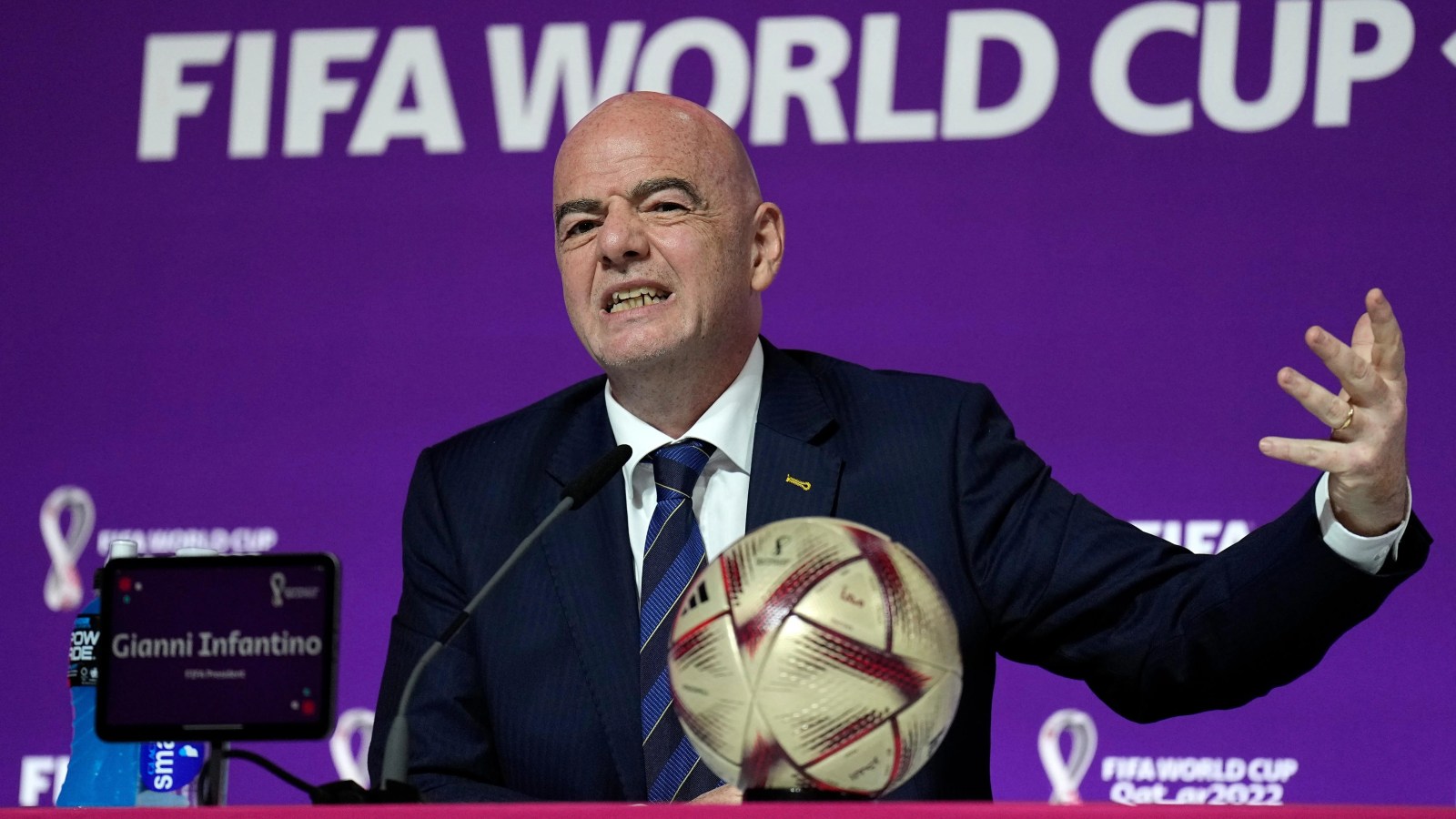
UEFA’s confirmation that it is aware of an allegation involving Gianni Infantino has added a new layer of scrutiny around the FIFA president at a sensitive moment for the global game, with preparations for World Cup 2026 unfolding against a backdrop of wider political and commercial tension. The allegation relates to the period when Infantino served as UEFA general secretary, and it carries weight because it touches on governance, accountability and trust at the highest level of football administration. UEFA’s acknowledgement does not in itself resolve the substance of the claim, but it places the matter firmly within the broader conversation about leadership in the sport. With Infantino already under pressure in separate disputes involving FIFA’s commercial direction, the development sharpens the focus on how football’s leading institutions are managing both reputational risk and internal conflict.
- UEFA has confirmed it is aware of an allegation involving Gianni Infantino from his time as UEFA general secretary.
- The claim relates to an alleged mistress and a reported six-figure payment by UEFA.
- The available verified information does not include any response from Infantino to the allegation.
- Infantino is already under wider pressure amid UEFA’s threat of legal action against FIFA over a failed plan to sell a stake in future World Cup revenues.
- The latest development increases scrutiny on football governance as World Cup 2026 moves closer.
Why the allegation matters now
The timing of UEFA’s confirmation is significant because World Cup 2026 is not just a sporting project but a vast commercial and political undertaking. Any controversy involving the FIFA president inevitably carries implications beyond the individual, particularly when the tournament is being shaped through relationships between confederations, sponsors, national associations and governing bodies. Even without a public response from Infantino in the verified material available here, the existence of the allegation and UEFA’s awareness of it are enough to intensify debate over transparency at the top of football. That debate becomes more important when the sport is asking stakeholders and supporters to place confidence in the institutions directing its biggest event.
The allegation also stands out because it reaches back to Infantino’s UEFA tenure rather than focusing only on his current role at FIFA. That distinction matters because it widens the frame from present-day FIFA politics to a longer examination of executive conduct and institutional oversight. If questions are being raised about decisions or payments made during an earlier phase of his career, the issue is no longer confined to one organisation’s immediate internal environment. Instead, it becomes part of a broader story about how football’s governing structures have operated across different periods and whether sufficient checks were in place when sensitive matters arose.
Governance pressure around FIFA and UEFA
This latest issue arrives at a time when relations between UEFA and FIFA are already strained, particularly over the failed plan to sell a stake in future World Cup revenues. That separate dispute matters because it points to a deeper disagreement over how the sport’s most valuable assets should be controlled, monetised and protected. UEFA’s threat of legal action against FIFA shows the tension is not merely rhetorical; it reflects a serious institutional divide over strategy and authority. In that context, any additional controversy involving Infantino is unlikely to be viewed in isolation and will instead be seen as part of a broader power struggle over the direction of the game.
For World Cup 2026, the significance is clear even if the allegation itself is not directly tied to tournament operations. Major competitions depend on administrative stability, and stability becomes harder to project when governance questions begin to accumulate around key decision-makers. Football’s leading bodies can often absorb political friction when events on the pitch dominate the agenda, but the World Cup is too large a project for off-field issues to remain entirely separate. Commercial planning, institutional trust and public confidence all shape the environment in which the tournament is delivered, so scrutiny of leadership inevitably becomes part of the World Cup story.
There is also a notable absence in the verified information: no response from Infantino is provided. That does not allow for any conclusion beyond the facts currently available, but it does leave an obvious gap in the public picture. In high-profile governance matters, silence or the absence of an on-record position often prolongs uncertainty rather than easing it, because the central figure’s account is a key part of how any allegation is assessed in the public arena. Until more is formally established, the story remains one of acknowledgement, pressure and unresolved questions rather than definitive findings.
For UEFA, confirming awareness of the allegation places the confederation in a delicate but important position. On one hand, it cannot ignore a matter that has entered the public domain and concerns a figure who once held one of its most senior executive posts. On the other, any step it takes will be interpreted through the lens of its already difficult relationship with FIFA over commercial and legal issues. That means UEFA must navigate both principle and perception, balancing its responsibilities on governance with the reality that every development will be read as part of a wider contest for influence in world football.
The broader lesson is that World Cup 2026 is increasingly being shaped by events far from the pitch. The tournament will ultimately be judged by its football, atmosphere and organisation, but the credibility of the institutions running it remains a vital part of the picture. When allegations, legal threats and strategic disputes converge around the same leadership circle, they create a climate in which every administrative decision attracts greater examination. That is why this development matters now: not because it changes the tournament schedule or format, but because it adds to the pressure on the people and bodies responsible for guiding the sport into its next World Cup cycle.
What happens next will depend on whether further formal detail emerges and whether any response is made by Infantino or the relevant governing bodies. For now, the confirmed position is limited but still significant: UEFA is aware of the allegation, the claim relates to Infantino’s period as general secretary, and the FIFA president remains under broader pressure in a separate dispute over future World Cup revenues. As preparations for World Cup 2026 continue, football’s leadership will be expected to manage not only the scale of the event itself but also the growing scrutiny surrounding governance at the very top of the game.
Leave a Reply