
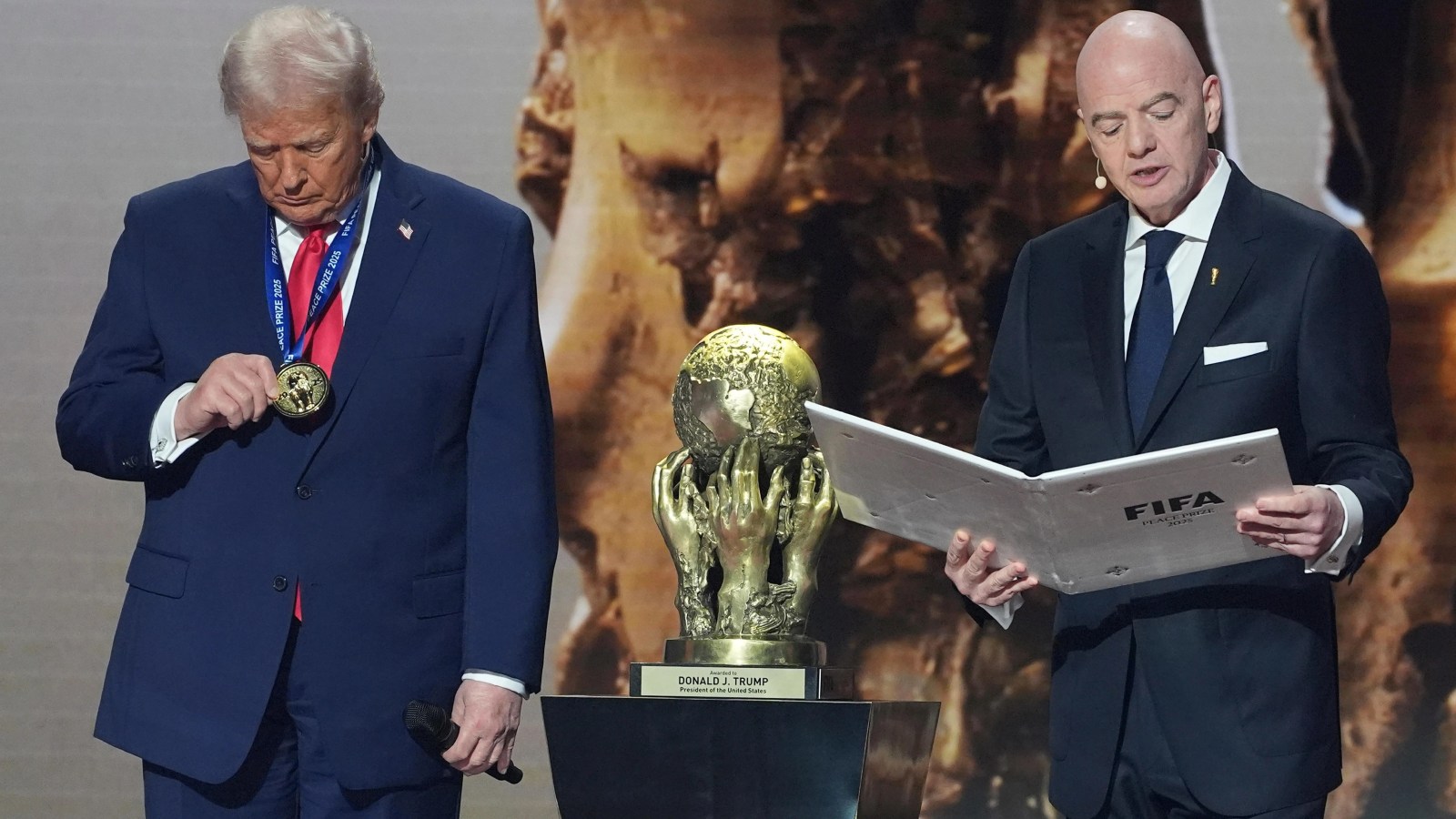
Donald Trump has said he did not speak to FIFA president Gianni Infantino about FIFA’s controversial plan to sell stakes in a new company linked to the World Cup, a notable intervention given how closely the two men have been associated with the build-up to the 2026 tournament. The statement matters because it addresses a sensitive issue hanging over the competition’s commercial landscape at a time when scrutiny of governance, influence and decision-making is intensifying. With the World Cup approaching and the event’s political visibility continuing to grow, any suggestion of direct discussion between key figures would have carried significant weight. Trump’s denial therefore stands as the central development, especially against the backdrop of his broader involvement around the tournament and his evident willingness to engage on football matters during the competition.
- Donald Trump said he did not speak to Gianni Infantino about FIFA’s controversial plan to sell stakes in a new company linked to the World Cup.
- The proposed sale has been described as hugely controversial, underlining the sensitivity surrounding the issue.
- No further verified detail is available on the structure or terms of the proposed plan.
- Trump and Infantino have worked closely around the 2026 World Cup, giving added significance to any public comment on FIFA-related decisions.
- During the tournament, Trump said he had personally asked Infantino to review a red card shown to United States striker Folarin Balogun.
A sensitive issue around the 2026 tournament
The significance of Trump’s comment lies not only in what he denied, but also in the context surrounding the denial. FIFA’s plan to sell stakes in a new company linked to the World Cup has already been cast as highly contentious, meaning even limited public remarks on the matter inevitably draw attention. Because no verified detail is available on the structure or terms of the proposal, the debate is shaped less by technical specifics than by the broader questions it raises about control, commercialisation and oversight. In that environment, distancing oneself from direct involvement becomes a story in its own right, particularly when the figures involved occupy such prominent positions around the tournament.
The 2026 World Cup is not merely a sporting event; it is also a political, commercial and diplomatic project of enormous scale. That makes the relationship between influential public figures and FIFA leadership especially important. Trump and Infantino have worked closely around the tournament, and that existing connection naturally sharpens interest whenever either man comments on FIFA business. Even without verified details of any internal process, the fact Trump addressed the issue publicly suggests an awareness of the sensitivity attached to the proposal and of the need to clarify his position.
There is also a broader governance dimension to this episode. When a plan is described as controversial but its mechanics remain unclear, uncertainty can become almost as significant as the proposal itself. Stakeholders around a World Cup want confidence in how tournament-linked assets are managed, who benefits from them and how decisions are reached. Trump’s statement does not answer those larger questions, but it does mark a clear attempt to separate himself from direct discussion of the stake-sale plan, a distinction that may matter as scrutiny of FIFA’s commercial strategy continues to build.
What Trump’s wider involvement reveals
Trump’s relationship with the tournament has not been distant or purely ceremonial, and that is what makes this latest comment more consequential. One verified example of that involvement came when he said he had personally asked Infantino to review a red card shown to United States striker Folarin Balogun during the tournament. That detail illustrates a willingness to engage not only with the event’s broader profile but also with an on-field disciplinary decision. It paints a picture of a figure prepared to involve himself directly in matters connected to the competition, which in turn makes his denial over the stake-sale discussions more pointed.
That contrast is central to understanding the current moment. On one hand, Trump has shown he is comfortable raising specific World Cup issues with Infantino, even when those issues concern a decision made during play. On the other, he has now said he did not speak to the FIFA president about a commercially and politically sensitive proposal linked to the tournament. Taken together, those two facts help define the boundary he appears keen to establish: visible engagement with the World Cup, but a rejection of any suggestion that he was involved in discussions over this particular plan.
For FIFA, the episode underlines how difficult it can be to separate football administration from the wider political theatre surrounding a World Cup of this scale. Every interaction involving senior figures is likely to be interpreted through multiple lenses, from governance and influence to optics and accountability. Because the available verified information does not set out the plan’s structure or terms, there is little basis for assessing its commercial merits in detail. What can be said is that the controversy alone has made the matter politically charged, and Trump’s denial ensures that his role, or lack of one, becomes part of the broader conversation.
There is also a practical implication for the road to 2026. The tournament’s organisers and associated leadership figures will want attention to remain focused on preparation, delivery and the football itself rather than on unresolved questions about commercial arrangements. Yet episodes like this show how quickly off-field issues can shape the narrative around a World Cup. Trump’s comment may close down one line of speculation by stating plainly that no such discussion took place, but it does not remove the underlying interest in how FIFA intends to manage World Cup-linked business decisions.
What comes next is likely to depend on whether further clarity is provided around the proposed new company and the planned sale of stakes linked to the World Cup. For now, the verified position is narrow but important: Trump says he did not discuss the plan with Infantino, despite their close work around the 2026 tournament and despite his previously stated intervention over Balogun’s red card. That leaves FIFA facing continued attention on the controversy itself, while Trump’s denial stands as the clearest immediate response to questions about his involvement. As the countdown to 2026 continues, the balance between football, politics and commercial strategy will remain one of the defining themes around the tournament.


Leave a Reply