
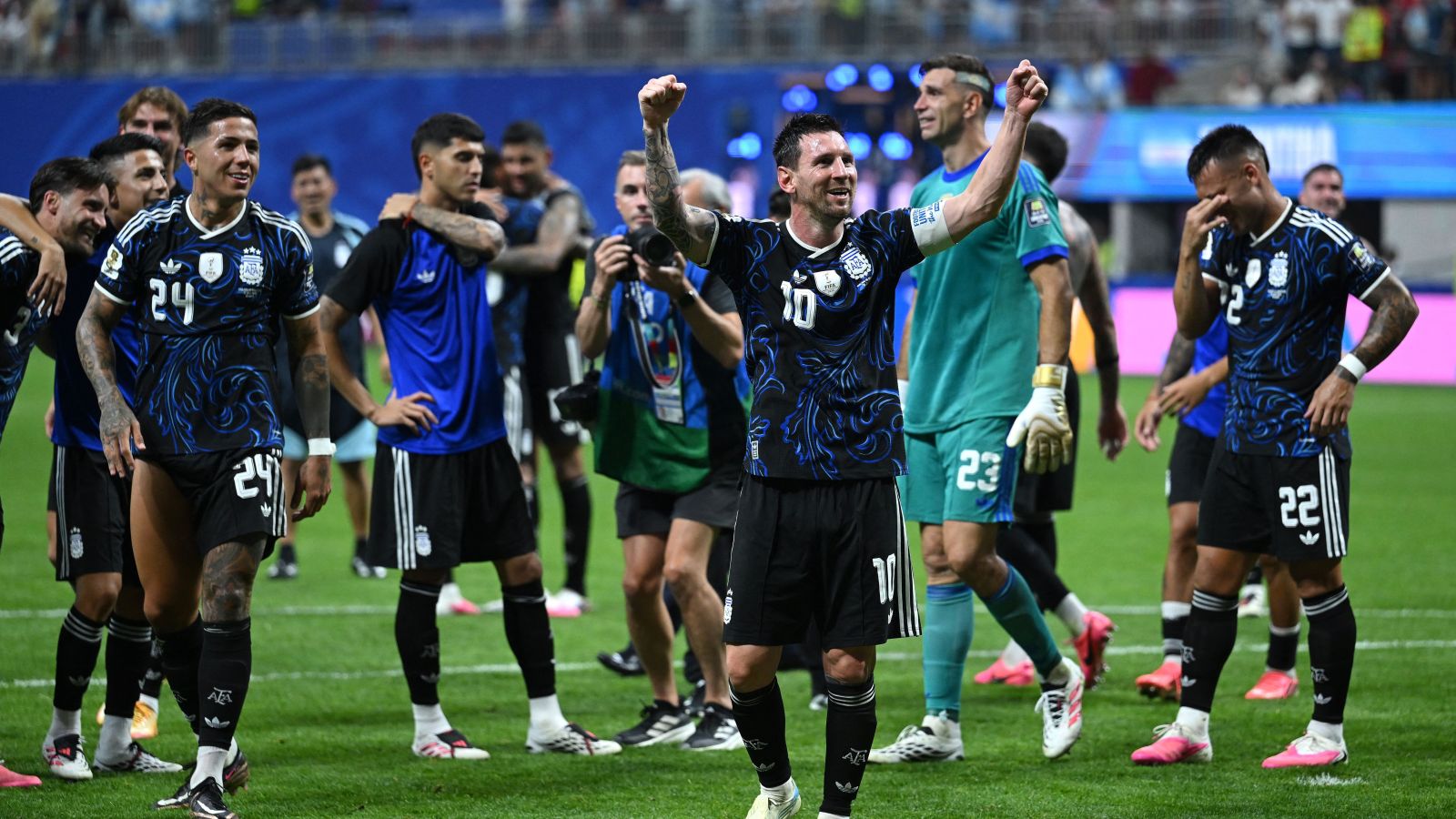
Spain and Argentina meet in the FIFA World Cup 2026 final on Sunday 19 July at New York New Jersey Stadium, with the biggest prize in the game framed by one defining question: how do Spain contain Lionel Messi? Argentina’s route to the final has been shaped above all by the tournament’s most productive attacking player, a forward who arrives with eight goals, four assists and 12 direct goal involvements. Those numbers do not merely identify him as Argentina’s standout figure; they establish him as the central reason Spain’s preparation must begin with one name and one problem. In a final where margins are expected to be fine and moments decisive, Messi’s ability to finish chances, create them and dictate attacking rhythm gives this contest its sharpest edge.
- Spain face Argentina in the FIFA World Cup 2026 final on Sunday 19 July at New York New Jersey Stadium, with kickoff set for 3pm ET.
- Lionel Messi reaches the final with eight goals, four assists and 12 direct goal involvements for Argentina.
- Messi is in prime position for the Golden Boot and has also led Argentina across multiple attacking categories during the run to the final.
- Only one player in the tournament has more assists so far, underlining Messi’s creative threat as well as his finishing.
- Messi is ranked No. 1 in the available tournament ratings with a 93.4 mark, reflecting how central he has been to Argentina’s campaign.
Argentina’s route to the final has revolved around one player
The clearest theme of Argentina’s tournament has been the scale of Messi’s influence. Eight goals and four assists would be headline numbers in any World Cup, but together they show a player shaping matches in more than one way. He has not simply been the man applying the final touch; he has also been the source of chances, the organiser of dangerous attacks and the figure around whom Argentina’s forward play has been built. That matters for Spain because limiting one part of Messi’s game is unlikely to be enough if the rest of his attacking range remains available.
Argentina’s attack has repeatedly been driven by Messi on the run to the final, and the tournament evidence makes that point impossible to ignore. His 12 direct goal involvements capture the end product, but they also hint at something broader: Argentina have consistently found their most decisive moments through him. One player can dominate a tournament by scoring freely, while another can dominate by creating for others; Messi has done both. For Spain, that creates a tactical dilemma before a ball is kicked, because the primary threat is not one-dimensional and cannot be reduced to a single pattern of danger.
The available tournament rankings strengthen that picture further. Messi sits at No. 1 with a 93.4 rating, a mark that reflects not just isolated flashes but sustained excellence across Argentina’s campaign. In a competition where every round raises the pressure and every opponent is prepared in detail, that ranking underlines how consistently he has found ways to decide games. Spain are not simply facing a famous name in the final; they are facing the most influential individual performer of this World Cup.
Why Messi is the defining tactical problem for Spain
What makes Messi especially dangerous in this final is the balance between his scoring and his creation. His eight goals place him in prime position for the Golden Boot, so Spain must treat him first as an elite finisher who punishes any lapse near goal. Yet the four assists are just as significant, particularly with only one player in the tournament having provided more. That statistic confirms that even if Spain reduce his shooting opportunities, he still has the vision and execution to hurt them by releasing others and turning controlled possession into decisive attacking moments.
That dual threat changes the shape of any defensive plan. A side can sometimes choose to crowd a prolific scorer, force the ball elsewhere and trust the rest of the structure to cope. Against Messi, that approach carries obvious risk because he is also one of the tournament’s most productive creators. Spain therefore face the challenge of managing not only where he receives possession, but also what happens immediately after: whether he can turn, whether he can combine, whether he can slip a pass through pressure and whether he can arrive in scoring positions after initiating the move himself.
The wider significance for Spain is that Argentina’s attacking identity in this tournament has been so closely tied to Messi’s influence. The evidence available does not point to a spread of equal threats sharing the load in the same way; it points instead to a team repeatedly driven by one extraordinary player. That does not make Argentina easier to stop. In some ways, it makes them more difficult, because when a side has such a clear attacking reference point, every team-mate understands where the game can be accelerated and where the most dangerous moments are likely to come from. Spain’s task is not merely to track a forward; it is to disrupt the connection between Argentina’s overall attacking control and the player who has provided it.
There is also a psychological dimension to his form. A player arriving at the final as the tournament leader in multiple attacking categories, the No. 1-rated performer and a leading Golden Boot contender brings obvious confidence into the biggest match. Spain will know that any World Cup final demands concentration for the full 90 minutes and beyond if required, but Messi’s tournament makes that concentration even more critical. His run to New York New Jersey Stadium has been defined by repeated decisive contributions, and that means Spain cannot afford periods when their defensive distances stretch, their pressure arrives late or their focus drifts around the edge of the box.
For all the broader narratives surrounding a World Cup final, the immediate football question remains straightforward. Argentina possess the tournament’s highest-impact attacking player, and the record of this competition shows he has been decisive by a clear margin. Spain may look to impose their own rhythm and authority, but any preview of this final must begin with the reality that Messi has been the outstanding force of Argentina’s campaign. If Spain can reduce his influence as both scorer and creator, they give themselves a platform; if they cannot, Argentina will carry into the final the same attacking power that has brought them this far.
Kickoff at 3pm ET now brings the tournament to its final stage, with Spain preparing to face an Argentina side powered by the most productive individual in the competition. The key watch will be whether Messi can find the spaces and moments that have defined his World Cup, or whether Spain can turn the final into a game played on different terms. His eight goals, four assists and No. 1 tournament rating make him the standout figure on the biggest day. That is why the final’s most compelling subplot is also its simplest: Spain versus Messi, with the world title on the line.


Leave a Reply