

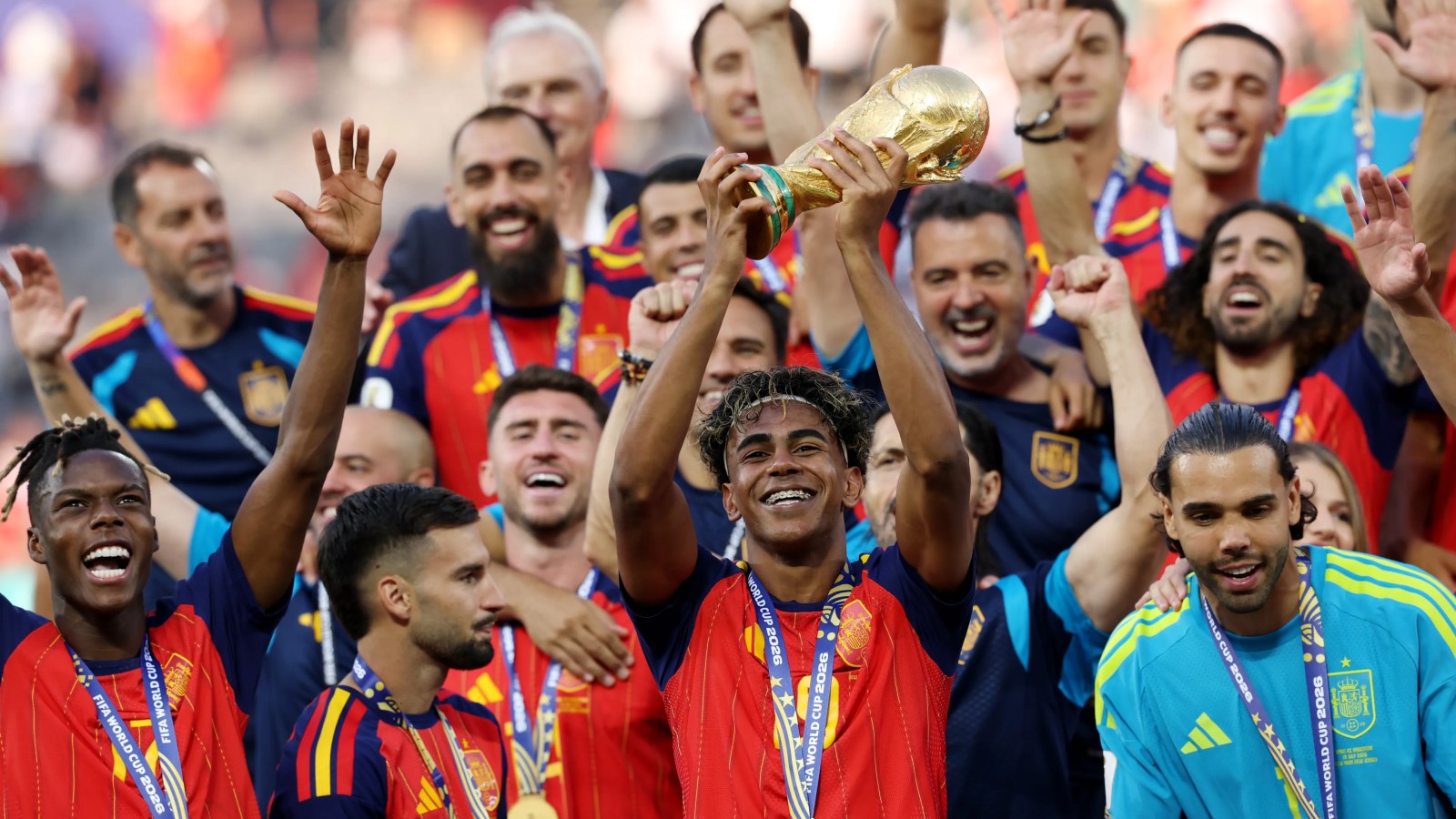
Spain are the 2026 FIFA World Cup champions after a 1-0 victory over Argentina in the final, a result that delivers the second men’s world title in the nation’s history and marks another landmark moment on football’s biggest stage. The defining fact of the tournament’s closing night is straightforward: Spain found the decisive edge in the final and held on to claim the trophy. The triumph immediately joins the 2010 success as one of the central achievements in Spanish football history. Just as importantly, it means Spain have now reached two men’s World Cup finals and won both, underlining an extraordinary level of efficiency when the stakes have been at their highest.
- Spain defeated Argentina 1-0 in the 2026 FIFA World Cup final to become world champions.
- The victory gives Spain their second men’s World Cup title, following their first triumph in 2010.
- Spain have now reached two men’s World Cup finals and won both of them.
- Argentina finish as runners-up after falling short by a single goal in the final.
Spain’s narrow margin, enormous reward
A one-goal final always carries a particular tension, and this result fits that pattern without any need for embellishment. The outcome tells the story clearly enough: Spain did what was required to separate themselves from Argentina and protect that advantage to the final whistle. In a World Cup final, the ability to turn a slim lead into a title is often as significant as the goal itself. Spain’s reward, therefore, is not only the trophy but also confirmation that they could navigate the most pressurised match in international football and emerge on top.
The significance of a 1-0 scoreline also lies in how little margin for error it leaves both teams. For Spain, every phase after taking the lead carried added importance, because one moment could have changed the entire direction of the final. For Argentina, the narrow deficit meant they remained within reach of extra time or a dramatic equaliser for much of the contest, yet they were ultimately unable to find it. That dynamic is part of what gives this final its weight: there was no room for comfort, only the need for control, resilience and execution in the moments that decide championships.
Spain’s second world title places this team in a rare and celebrated category within the country’s football history. Winning a World Cup once can define a generation; winning it twice reaches beyond a single era and becomes part of a national standard. The link to 2010 is unavoidable because that remains the only other time Spain had lifted the men’s World Cup before this victory. Now, with the 2026 title secured, Spain have added a new chapter that stands on its own while also strengthening the broader legacy of the national side.
What the title means for Spain and Argentina
There is added significance in the fact that Spain have now reached two men’s World Cup finals and won both. Finals are often remembered as the stage where strong tournaments can still end in disappointment, but Spain’s record shows the opposite. When they have advanced all the way to the last match, they have finished the job. That perfect return in finals gives this victory an even sharper historical edge, because it is not simply another deep run or another near miss turned into a lesson for the future; it is a continuation of a flawless record on the biggest occasion available.
For Argentina, the pain of defeat is intensified by how narrow the margin was. Losing a World Cup final by a single goal leaves little distance between glory and regret, and that is especially true in a match where one decisive moment separates the champions from the runners-up. Argentina’s tournament ends with the disappointment of falling at the final hurdle, yet reaching the final still represents a campaign of major substance. Even so, World Cup finals are usually judged in absolute terms, and the reality here is stark: Argentina came within one goal of the trophy but could not overturn Spain’s advantage.
It is also important to keep the meaning of this result anchored to what is firmly established. Spain are champions because they beat Argentina 1-0 in the final, and that alone is enough to define the night and its place in football history. Broader claims about the nature of the performance, stylistic vindication or the balance of play are not necessary to understand the scale of the achievement. The established facts already provide the essential conclusion: Spain were the team that found the winning margin, defended it successfully and walked away with the World Cup.
That restraint matters because the final’s historical value does not depend on dramatic overstatement. A World Cup title is measured first by the result, then by the permanence of what it changes. Spain now move from being a nation with one men’s World Cup crown to one with two, and that shift is substantial. It strengthens their standing in the global game, adds fresh prestige to the current side, and ensures that the 2026 tournament will be remembered in Spain as another year in which the national team reached the summit.
There is a wider legacy at work as well. The 2010 triumph had long stood alone as Spain’s singular men’s World Cup success, a reference point for every generation that followed. By adding the 2026 title, Spain have turned that isolated peak into a broader pattern of ultimate success at the tournament. Two titles across two final appearances is a remarkable conversion rate, and it gives Spanish football another enduring benchmark for excellence under the heaviest pressure the sport can offer.
What comes next is the long afterglow that follows any World Cup final, with Spain now carrying the status of world champions into the next phase of the international cycle. The immediate future will be shaped by celebration, reflection and the historical framing that always follows a title of this magnitude. For Argentina, the task is to absorb the disappointment of a final decided by the smallest of margins and assess a campaign that ended just short of the ultimate prize. For Spain, however, the final verdict is already secure and unforgettable: a 1-0 win over Argentina, a second men’s World Cup title, and a place at the top of world football once again.



Leave a Reply