

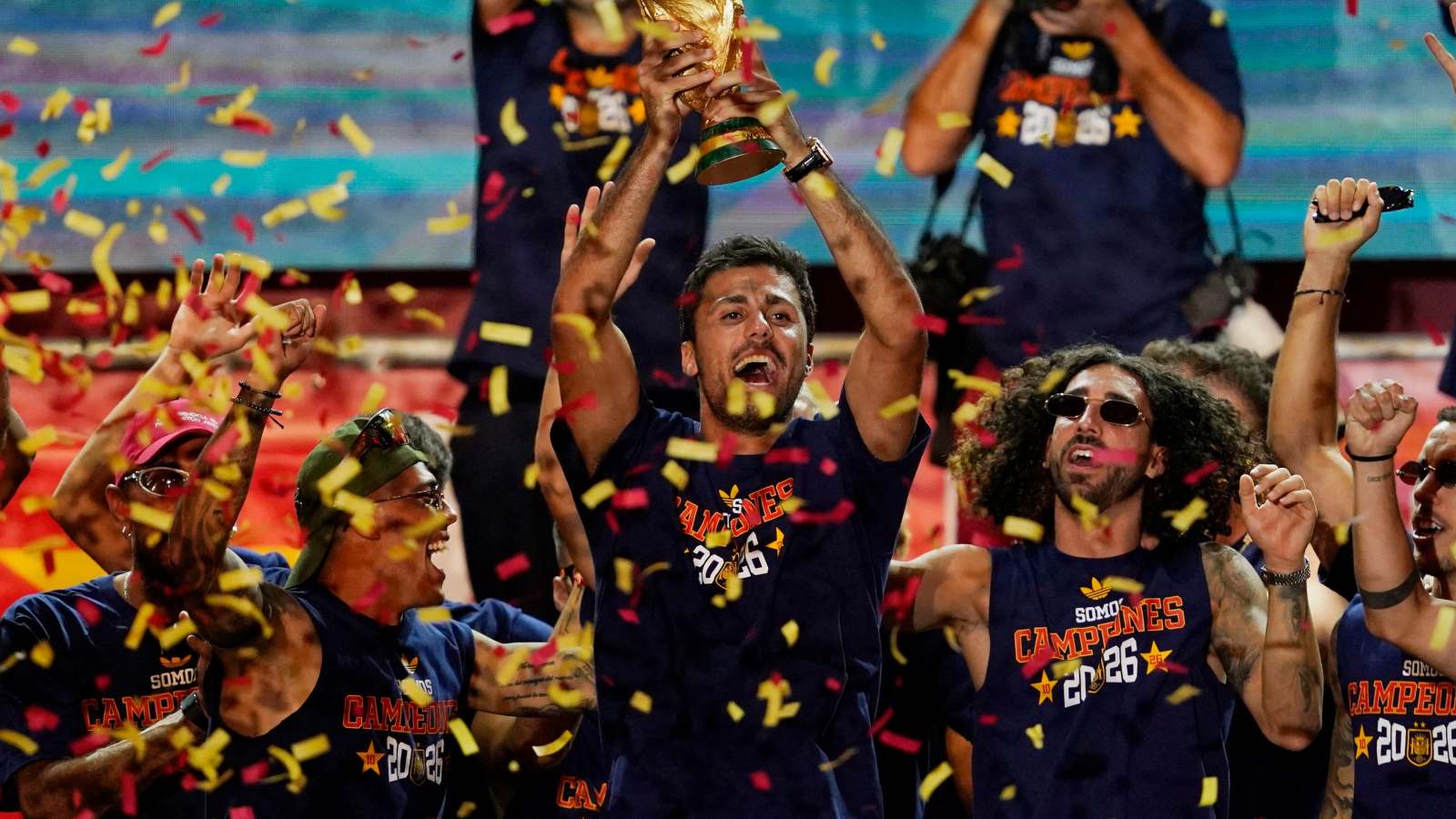
Rodri’s future has become one of the most significant stories shaping the road to the 2026 FIFA World Cup, with Manchester City determined to keep their midfield cornerstone while the player is being linked with a move to Real Madrid. This is about far more than a routine transfer discussion. Rodri’s influence on the pitch has made him one of the defining midfielders of his era, and City’s desire to retain him until at least the end of his current contract underlines how central he remains to their plans. At the same time, the indication that he wants the switch for football and family reasons gives the story real momentum, placing one of the game’s most important players at the centre of a potentially transformative decision.
- Rodri is being linked with a move from Manchester City to Real Madrid.
- Manchester City want Rodri to stay until at least the end of his current contract.
- Rodri has indicated that he wants to join Real Madrid for football and family reasons.
- Pep Guardiola wants Rodri to remain but would not block a move if the player is unhappy.
- City are widely viewed as a weaker side without Rodri because of his positioning, speed and decision-making.
Why Rodri’s Future Matters So Much
The importance of this story is rooted in Rodri’s unique tactical value. He is not simply another elite midfielder; he is the player who gives structure, calm and rhythm to one of the world’s most demanding possession systems. His positioning allows Manchester City to control territory, protect transitions and sustain pressure high up the pitch without losing their shape. When City are described as a better side with Rodri because of his positioning, speed and decision-making, it is not a throwaway line. It is a concise summary of the qualities that help hold together elite-level football.
That is why City’s stance is so firm. Their determination to keep him until at least the end of his current contract reflects both practical and competitive logic. Replacing a player of Rodri’s profile is not straightforward, because his value comes from a rare combination of game-reading, early movement into the right spaces and the ability to make the correct choice under pressure. Even in squads packed with technical quality, there are very few players who can dictate a match so subtly while also shielding the defence and setting the tempo from deep. For a club with the highest ambitions, losing that level of certainty would create a major tactical and emotional gap.
The Real Madrid angle adds another layer because it is easy to see why such a move would carry enormous weight. The indication that Rodri wants the switch for football and family reasons points to a decision shaped by more than contract terms or short-term opportunity. Situations like this often gather force because they connect career ambition with personal life, making them more difficult for clubs to resist if a player’s mind is truly set. That does not make an exit inevitable, but it does explain why this feels more serious than a passing rumour attached to a major name.
City’s Dilemma and the Wider World Cup Context
Pep Guardiola’s position is particularly revealing. He wants Rodri to stay, which is the natural response given the midfielder’s importance, but the suggestion that he would not block a move if the player is unhappy introduces a note of realism. Managers at the highest level understand that keeping a player against his will can create instability, even when that player remains fully professional. In Rodri’s case, the balance between competitive need and dressing-room harmony is especially delicate because he is so influential in the way City function from week to week.
From a football perspective, the concern for City is obvious. A side built on control can quickly look less secure when its best organiser in midfield is missing. Rodri’s speed is not simply about covering ground; it is about how quickly he recognises danger and gets into the right place before a problem fully develops. His decision-making is just as important because he knows when to recycle possession, when to break a line and when to slow the game to restore order. Those details often separate dominant teams from merely talented ones, and they help explain why City are widely viewed as weaker without him.
For Real Madrid, the attraction is equally clear even without moving beyond the established details. A player with Rodri’s intelligence and authority would naturally appeal to any elite side looking to strengthen the centre of the pitch with certainty rather than risk. His profile suits teams that want to control matches through possession but also need discipline when games become stretched. That combination of technical security and positional discipline is rare, which is why any genuine opening around his future would command immediate attention. Even so, the current picture remains defined by tension rather than resolution: City want to keep him, Guardiola values him deeply, and Rodri is being linked with a move he wants.
There is also a wider significance to all of this in a World Cup cycle. The 2026 tournament will place enormous focus on the players expected to shape the biggest matches for their national teams, and Rodri belongs firmly in that category. Stability at club level can sharpen a player’s rhythm and authority heading into an international tournament, while a major move can either elevate or complicate that preparation depending on how smoothly it unfolds. That is one reason this story matters beyond domestic competition. When a midfielder of Rodri’s stature faces a possible turning point, the consequences can ripple into the international game as well.
What happens next will depend on whether Manchester City can convince Rodri that his future still lies with them, or whether his desire to join Real Madrid becomes too strong to resist. City’s preference is clear, Guardiola’s admiration is clear, and Rodri’s importance is beyond dispute. Yet the personal dimension of the situation means this cannot be reduced to tactical necessity alone. As the next phase of the 2026 World Cup cycle takes shape, Rodri’s decision is shaping up to be one of football’s defining stories to watch.


Leave a Reply