

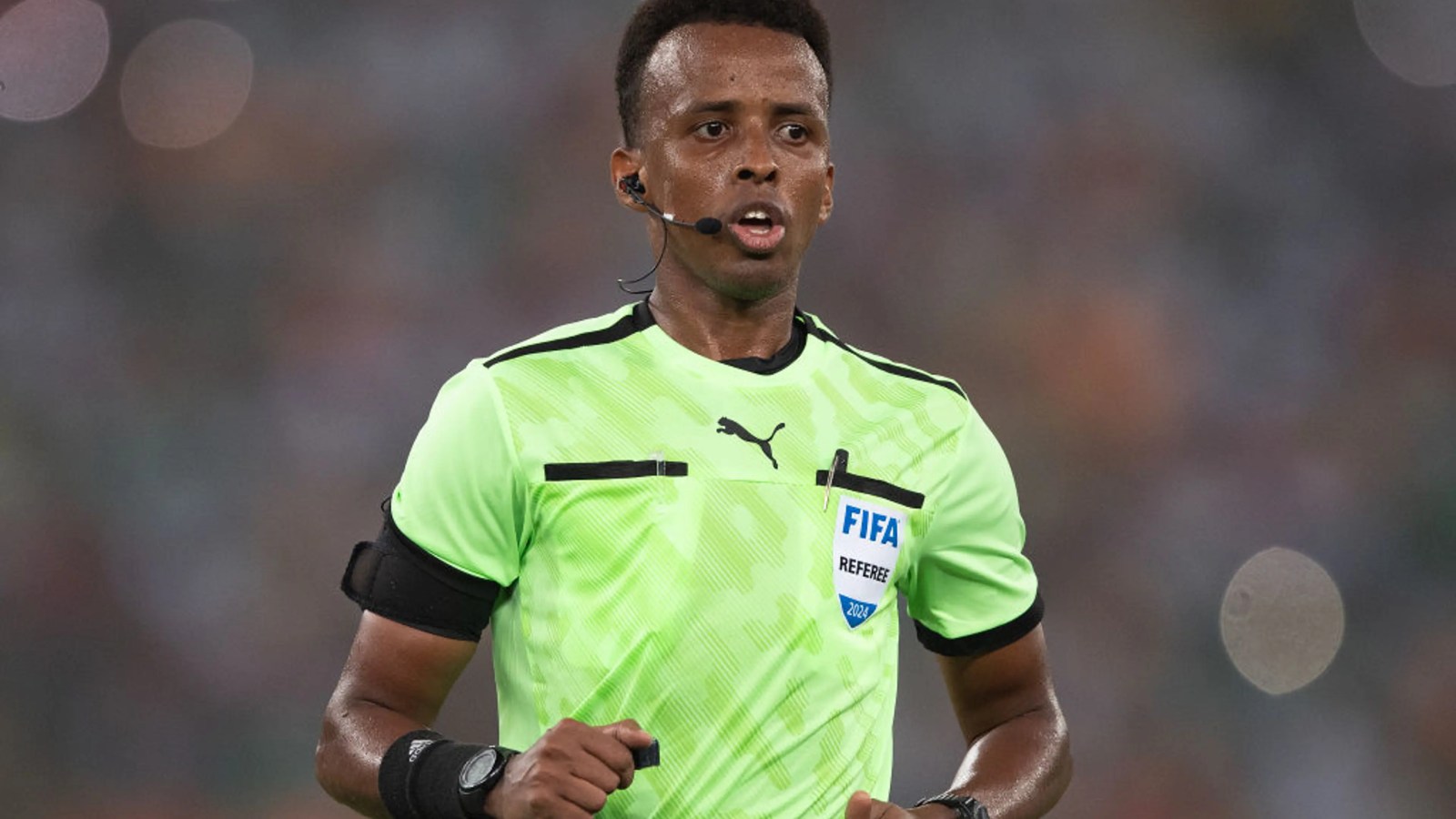
Omar Artan’s appointment as referee for the 2026 UEFA Super Cup final is a landmark moment in the game, arriving only weeks after he was denied entry to the United States and was therefore unable to work at the 2026 World Cup. The Somali official will oversee the meeting between Paris Saint-Germain and Aston Villa, transforming what had been a deeply frustrating World Cup outcome into one of the most notable refereeing assignments of the European club season. The significance extends well beyond a single fixture because it restores Artan to the highest level of the sport after a major professional disappointment. It also places him at the centre of a final that will naturally draw global attention, with two high-profile clubs contesting one of UEFA’s showcase curtain-raisers.
- Omar Artan has been appointed to referee the 2026 UEFA Super Cup final between Paris Saint-Germain and Aston Villa.
- Artan was unable to work at the 2026 World Cup after being denied entry to the United States in June.
- The Super Cup fixture is confirmed as Paris Saint-Germain against Aston Villa.
- Artan is set to become the first non-European referee to officiate the UEFA Super Cup final.
- The appointment gives Artan a major elite assignment soon after his World Cup exclusion.
A rapid return to the biggest stage
The significance of the appointment begins with its timing. Artan had been in line to be involved at the 2026 World Cup, only for that opportunity to vanish when he was denied entry to the United States in June. For any referee, missing a World Cup is a severe blow, as the tournament represents the highest level of international recognition and the culmination of years of work. To move from that setback to a UEFA Super Cup final in the same year is therefore a remarkable reversal, even if it cannot fully replace what the World Cup would have meant.
That contrast gives the story unusual weight. Referees often operate in the background, with their careers discussed mainly when controversy arises, but Artan’s path has become a major talking point because it touches on access, opportunity and the way football’s biggest events can be shaped by factors beyond the pitch. His new assignment does not erase the disappointment of missing the World Cup, yet it does return him to a position of trust for a match of substantial prestige. In practical terms, it means he remains firmly within football’s top officiating conversation rather than being defined solely by his exclusion from the tournament in North America.
The match itself adds to the importance of the moment. Paris Saint-Germain and Aston Villa are not obscure participants in a secondary fixture; they are clubs whose meetings bring intense scrutiny, tactical complexity and emotional charge. A Super Cup final may be a one-off game, but it is still a trophy match with immediate pressure and little margin for error. For the referee, that means every major decision is magnified, and the appointment signals clear confidence in Artan’s ability to manage a contest that will be watched closely from the opening whistle.
Why the appointment resonates beyond one final
Artan’s selection also stands out because he is set to become the first non-European referee to officiate the UEFA Super Cup. That detail gives the appointment a broader historical dimension and ensures it will be remembered for more than the circumstances surrounding his missed World Cup role. The Super Cup has long been one of UEFA’s symbolic season-opening events, and the choice of official says something about the competition’s view of elite refereeing standards. In that sense, Artan’s presence is not merely a personal recovery story but a milestone that broadens the frame of who can be entrusted with one of Europe’s marquee club fixtures.
There is also a strong football logic to why the final will test every part of a referee’s skill set. A game between Paris Saint-Germain and Aston Villa is likely to demand control in transitions, discipline in confrontations and consistency in the management of tempo. Super Cup finals can become emotionally charged because they sit at the intersection of celebration and expectation: one side wants to confirm its status, while the other wants to seize a defining title. That environment requires a referee who can impose calm without becoming the story, and Artan’s appointment suggests he is expected to deliver exactly that balance.
For Paris Saint-Germain and Aston Villa, the focus will understandably remain on the chance to win silverware, but the officiating appointment still forms part of the pre-match narrative because it shapes the atmosphere around the final. Players and coaches prepare for a game knowing the official must manage high stakes, strong personalities and the fine margins that often define a one-match final. The best refereeing performances in these settings are usually the least intrusive, allowing the contest to breathe while maintaining authority in key moments. Artan now has the opportunity to show that, despite the interruption to his World Cup year, he can still command one of the sport’s most demanding stages.
What should not happen, however, is for this development to be stretched into claims not supported by the verified facts. The confirmed picture is already substantial: Artan missed the World Cup after being denied entry to the United States, and he has now been appointed to the UEFA Super Cup final between Paris Saint-Germain and Aston Villa. That alone is enough to make this one of the most striking officiating stories of 2026. It is a narrative of setback followed by restoration, and of a referee moving from exclusion at the sport’s biggest international tournament to a historic assignment in one of Europe’s most visible club finals.
Looking ahead, the Super Cup will now carry an added layer of attention because Artan’s appointment gives the event significance beyond the trophy itself. Paris Saint-Germain and Aston Villa will meet with silverware on the line, while Artan steps into a role that underlines both his resilience and his standing within the elite refereeing pool. If he navigates the occasion smoothly, the final will be remembered not only for the result but also for the way one of football’s most difficult professional setbacks was followed by a groundbreaking return. For Artan, this is the chance to turn a painful World Cup absence into a defining chapter of his 2026 season.
Leave a Reply