

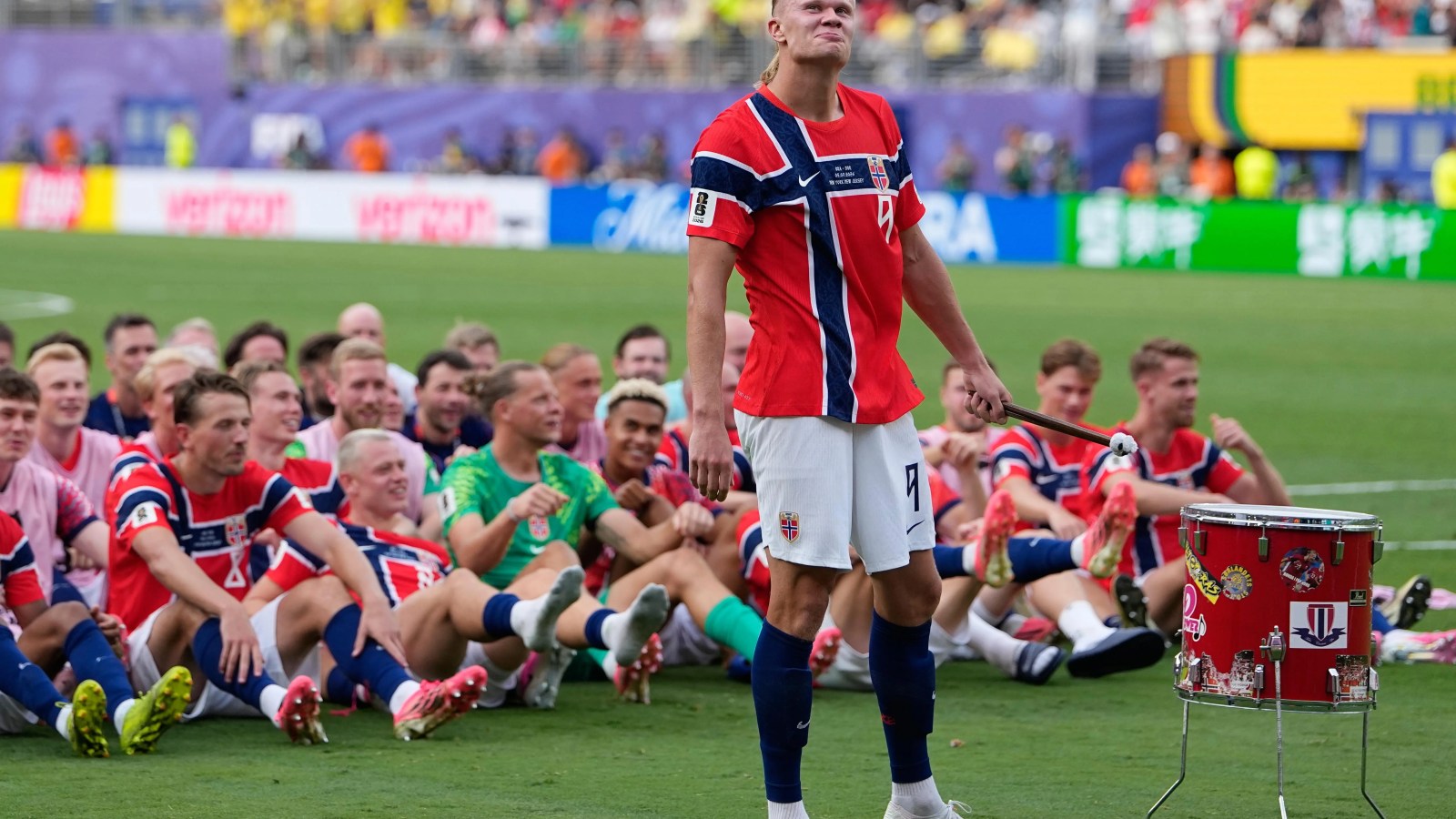
Norway’s 2026 FIFA World Cup journey came to an end with a 2-1 defeat to England on July 11, closing the chapter on one of the national team’s most significant runs on the tournament stage. The loss followed a 2-1 victory over Ivory Coast on June 30 in the knockout rounds, underlining that this was not a fleeting appearance but a campaign of genuine substance. What makes the run stand out is not only that Norway reached the knockout phase, but that it did so in a way that left a clear mark on the tournament. Even in elimination, Norway departs with the sense that this squad has moved the national team into a higher tier of World Cup relevance.
- Norway’s 2026 FIFA World Cup campaign ended with a 2-1 loss to England on July 11.
- Before that defeat, Norway beat Ivory Coast 2-1 on June 30 to advance in the knockout stage.
- The sequence of results confirms that Norway progressed beyond the group phase before being eliminated.
- Norway’s tournament has been described as one of the team’s best runs on the World Cup stage.
A campaign that changed the conversation
For Norway, the most important part of this story is the scale of the achievement before the final setback. Reaching the knockout rounds at a World Cup always changes the tone of a tournament because it means a team has moved beyond promise and into consequence. Norway’s 2-1 win over Ivory Coast on June 30 delivered the campaign’s defining result, establishing the side as more than a participant making up the numbers. It also created the platform for a deeper run and ensured that Norway remained part of the tournament conversation well into the business end of the competition.
That victory over Ivory Coast matters because knockout football is unforgiving, and any team that survives it has shown composure under pressure. A one-goal margin in that setting points to a match that demanded concentration and resilience, with little room for error. Norway found a way through, and that is often the clearest sign of a team that has developed real competitive maturity. Instead of seeing its campaign end at the first major hurdle, Norway turned a difficult occasion into the kind of result that can define a generation of players.
The eventual 2-1 defeat to England does not erase that progress. If anything, it sharpens the picture of where Norway now stands: close enough to compete in the latter stages, but still searching for the extra edge required to extend a World Cup run even further. Losing by a single goal to the team that ended its tournament suggests a contest that stayed alive deep into the occasion rather than a one-sided elimination. That narrow margin is often where the hardest lessons are learned, but it is also where future contenders are shaped.
Why the run stands out
There is also broader significance in the way Norway’s tournament will be remembered. This campaign has been framed as one of the best runs in the national team’s World Cup history, and that assessment reflects more than simple enthusiasm. It speaks to a side that produced meaningful results on the biggest stage and stayed in the competition long enough to build momentum and belief. At a World Cup, that kind of sustained relevance is difficult to achieve, and once a team reaches that point, expectations begin to shift.
From a competitive standpoint, Norway’s path showed a team capable of handling the transition from the early phase of the tournament into knockout football. That shift is one of the most difficult in international competition because the margins tighten, the emotional pressure rises, and every mistake carries greater weight. Norway’s win over Ivory Coast demonstrated that it could navigate that environment successfully, while the loss to England highlighted just how small the gap can be between advancement and elimination. Together, those two scorelines tell the story of a side that was firmly in contention rather than merely present.
For England, the 2-1 result meant progression. For Norway, it carried something more layered: disappointment in the moment, pride in the campaign, and evidence of a rising standard. Teams that make notable World Cup runs often leave with mixed emotions, especially when the exit comes in a close match after a significant victory in the previous round. Norway’s players and staff will know they were close enough to the latter stages to matter, and that realization can be both painful and motivating. It is painful because the opportunity was real, but motivating because the level required is now visible and tangible.
Another important part of Norway’s story is how quickly a tournament can reshape national perception. A side that reaches the knockout rounds, records a 2-1 win over Ivory Coast, and then falls 2-1 to England has produced a sequence supporters can measure and remember. These are not vague impressions; they are concrete results that place Norway in the serious end of the competition. In World Cup terms, that matters because reputations are built not only on trophies, but also on the ability to produce landmark performances under the most intense spotlight.
There is no need to overstate the ending to understand the achievement. Norway is out, and elimination always brings a final sense of what might have been. Yet the campaign as a whole stands as a reminder that tournament progress is often built in stages, with each breakthrough creating the conditions for the next. By advancing beyond the group phase, winning a knockout match, and remaining competitive in a 2-1 defeat to England, Norway produced a World Cup run that can serve as a benchmark for the future.
What comes next will determine whether this tournament is remembered as a high point on its own or as the foundation for something even bigger. Norway now has a recent World Cup run that proved it can advance, win in the knockout rounds, and push deeper into the competition than many expected. The challenge from here is to turn that experience into continuity so that this campaign becomes the standard rather than the exception. Even with the disappointment of the loss to England, Norway leaves the 2026 World Cup with momentum, credibility, and a tournament record that will carry weight long after the final whistle.

Leave a Reply