

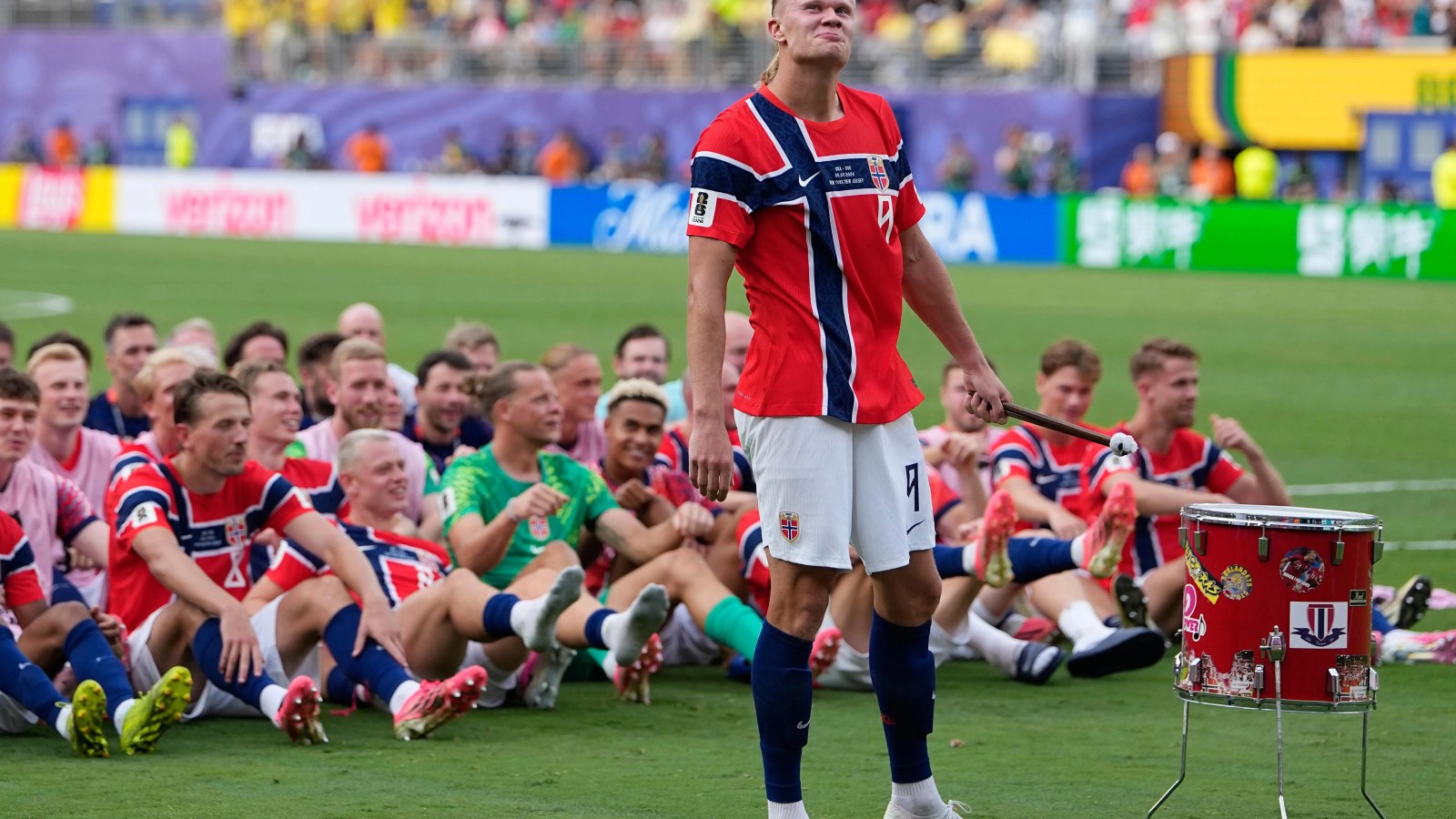
Claims that Norway are considering a formal complaint to FIFA over Folarin Balogun remain unverified on the available record, so the focus must stay on what can be established from the 2026 World Cup itself: Norway reached the knockout stage, beat Côte d’Ivoire 2-1 on 30 June 2026, and then saw their campaign end with a 2-1 defeat to England on 11 July 2026. In the absence of verified evidence for the complaint story, the most important development is that Norway’s tournament was defined by progress on the pitch rather than by any confirmed off-field dispute. That distinction matters because qualification for the knockout rounds marked a meaningful step in Norway’s World Cup journey, even if the campaign ultimately closed in defeat. With no substantiated details linking Balogun to a formal challenge, the reporting must remain rooted in the confirmed arc of Norway’s tournament.
- No verified information confirms that Norway are considering a formal complaint to FIFA about Folarin Balogun.
- Norway competed at the 2026 World Cup and progressed to the knockout stage.
- Norway beat Côte d’Ivoire 2-1 on 30 June 2026 in the knockout phase.
- Norway were eliminated after a 2-1 defeat to England on 11 July 2026.
- The complaint story remains unconfirmed and should not be treated as established fact.
What is verified and what is not
The central task in assessing this story is to separate documented tournament facts from claims that do not appear in the verified material. On the confirmed side, Norway’s presence at the 2026 World Cup is clear, as is their progress into the knockout rounds. Their 2-1 win over Côte d’Ivoire on 30 June 2026 stands as the key positive result of that phase, showing they were capable of handling the pressure of elimination football. Their subsequent 2-1 loss to England on 11 July 2026 then brought the campaign to an end, providing a clear closing point to the team’s run.
What is not established is just as important. There is no verified mention of Balogun in the supplied material, no confirmed indication of a dispute involving Norway and FIFA, and no substantiated evidence that a formal complaint was being prepared or considered. In a World Cup environment, where speculation can quickly overtake fact, that absence matters. It means any attempt to frame Norway’s tournament around a complaint would go beyond the available evidence and risk obscuring the actual sporting story.
This is why caution is essential. Tournament narratives can shift quickly when an off-field allegation begins to circulate, but responsible reporting depends on what can be confirmed rather than what is merely suggested. In this case, the confirmed record is limited but clear: Norway advanced, won a knockout match against Côte d’Ivoire, and were then eliminated by England. Beyond that, the alleged complaint remains unsupported by the material at hand.
That distinction is especially important because it protects the integrity of the tournament record. Norway’s results are established facts and form the basis of any fair assessment of their campaign. By contrast, the Balogun complaint claim has not been substantiated and therefore cannot be elevated to the same level of significance. The available evidence supports a football story, not a regulatory one.
Norway’s tournament in context
Reaching the knockout stage is a significant marker in any World Cup campaign because it reflects enough consistency and quality to survive the opening phase and move into direct elimination matches. For Norway, that progress gave the tournament a competitive edge that extended beyond simple participation. The 2-1 victory over Côte d’Ivoire suggests a side capable of managing a tight, high-stakes contest, where margins are often slim and a single moment can decide the outcome. Even without further verified details on scorers, lineups or tactical patterns, the result itself points to resilience and enough attacking threat to edge a difficult match.
The subsequent 2-1 defeat to England offers similarly useful context. Losing by a single goal in a knockout tie points to a competitive game rather than a one-sided exit, and it underlines how narrow the gap can be between advancing and going home at this stage of the tournament. Norway’s campaign therefore reads as one that contained both achievement and frustration: achievement in reaching the knockout rounds and winning once there, frustration in falling short of a deeper run. That combination often shapes how a national team’s World Cup is remembered, particularly when the final step is close enough to invite reflection on what might have been.
There is broader significance, too, in the way the unverified complaint claim intersects with Norway’s on-field accomplishments. When a team reaches the knockout stage, the natural story should centre on competitive progress, pressure moments and the standards required to stay alive in the tournament. An unconfirmed off-field allegation can distort that picture if it is repeated without evidence. In this case, the verified record supports a more grounded interpretation: Norway’s World Cup should be judged first by the football they played and the results they produced, not by a complaint narrative that does not appear in the confirmed material.
That matters for both the historical record and immediate analysis. A knockout-stage appearance followed by a 2-1 win and a 2-1 loss gives Norway a tournament profile that was active, credible and competitive. It suggests a side that was not merely present at the World Cup but capable of influencing the bracket and testing strong opposition. At the same time, the confirmed end point against England makes clear that Norway still fell short of the latter stages, leaving a campaign that can be viewed as encouraging without being complete. In tournament terms, it is the kind of run that can strengthen belief while also sharpening the sense that another level is still required.
For England, the verified result on 11 July 2026 shows they were the side that halted Norway’s progress, advancing at Norway’s expense in another tight contest. For Norway, that result closes the immediate competitive chapter but leaves behind evidence of a team that extended its stay into the knockout rounds and claimed a notable win along the way. Because there are no verified details on the alleged Balogun issue, there is no sound basis for attaching Norway’s elimination or wider campaign to any regulatory controversy. The clearest reading of the available facts is that Norway’s World Cup ended where many knockout campaigns do: in a close defeat to a strong opponent after an earlier success had kept the dream alive.
What comes next is a period in which Norway’s World Cup will be assessed on confirmed outcomes rather than speculation. The verified record shows a team that reached the knockout stage, defeated Côte d’Ivoire 2-1, and then exited after a 2-1 loss to England, making it a respectable but ultimately incomplete tournament run. Unless further substantiated information emerges, the supposed complaint involving Balogun should remain outside the core narrative. For now, Norway’s 2026 World Cup story is one of competitive progress, a hard-earned knockout win, and an exit that arrived with the campaign still within touching distance of something bigger.



Leave a Reply