

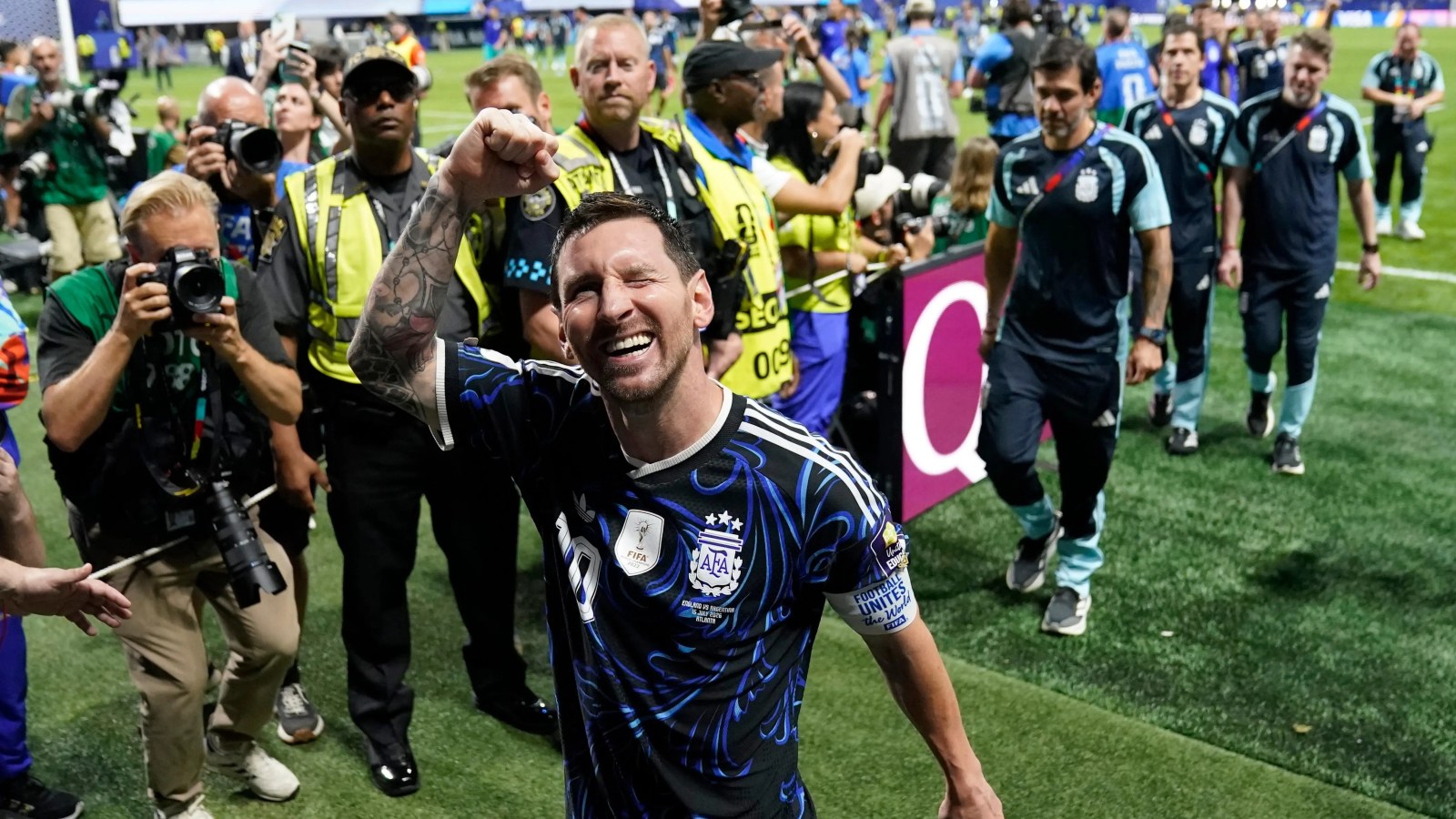
The FIFA World Cup 2026 final arrives on Sunday with a compelling central storyline: Lionel Messi, still deciding matches at the sharp end of his international career, against Lamine Yamal, the teenage breakout star now carrying Spain into the biggest game of all. Spain and Argentina meet at New York New Jersey Stadium with the trophy at stake, but the final’s most magnetic contest may be between the two players who have most clearly bent this tournament to their teams’ needs. Messi has been Argentina’s constant reference point from start to finish, while Yamal has emerged as the young face of Spain’s run. In a final where the margins are likely to be thin, the contrast between proven end product and rising influence gives the occasion its defining edge.
- Spain face Argentina in the FIFA World Cup 2026 final on Sunday 19 July at New York New Jersey Stadium, with kickoff set for 3 p.m. ET.
- Spain reached the final by beating France in the semifinal, while Argentina advanced by defeating England.
- Messi has scored eight goals in the tournament and added two assists in the semifinal against England as Argentina came from behind.
- Yamal has been Spain’s breakout young star and scored his first goal of this World Cup before the final.
- The headline theme is a generational clash between Messi’s established authority and Yamal’s emerging control of Spain’s attack.
A final framed by two different kinds of stardom
There is a reason this final feels bigger than a simple meeting of two elite national teams. It is also a collision of two footballing timelines, with Messi representing enduring mastery and Yamal symbolising the next era arriving in real time. Argentina’s route has continued to run through Messi’s decisions, movements and final actions, whether in front of goal or in the creative moments that shift knockout matches. Spain, by contrast, have watched Yamal grow into the tournament, his presence becoming more significant as the stakes have risen, with his first goal of the World Cup underlining his increasing authority.
That generational contrast matters because both teams have leaned heavily on their standout figure for more than isolated flashes of brilliance. Messi has not simply decorated Argentina’s campaign; he has driven it, with eight goals reflecting a level of production that places him at the centre of every defensive plan. His two assists in the semifinal against England offered another reminder that even when a game changes shape, he remains the player most capable of changing it again. Yamal’s influence has taken a different form, less about an established body of tournament numbers and more about the growing sense that Spain’s attack increasingly looks to him for imagination, tempo and the courage to decide difficult moments.
The result is a final with two stars affecting the game in distinct ways. Messi arrives with the weight of proven output and the knowledge that Argentina have repeatedly found answers through him. Yamal arrives with momentum, freedom and the intrigue that surrounds a teenager already trusted to lead Spain into a second World Cup final. The trophy will not be decided by one player alone, but it is difficult to escape the idea that the team whose talisman imposes himself most clearly may gain the decisive edge.
How Messi and Yamal could shape the match
Messi’s tournament has been defined by direct impact. Eight goals speak for themselves, but the semifinal against England also highlighted the breadth of his influence when Argentina needed a response after falling behind. Two assists in a comeback victory showed that his threat is not limited to finishing moves; he can also slow the game, draw defenders and create the final pass that opens a knockout tie. For Argentina, that makes him both the focal point and the release valve, the player teammates can find when the match becomes tense and the one opponents must track even when he appears quiet.
Spain’s challenge, then, is not only to contain Messi near goal but also to limit the moments in which he can dictate rhythm. Finals often become exercises in emotional control, and Messi’s greatest strength in this tournament has been his ability to make decisive actions feel almost inevitable. If Argentina can bring the ball into the spaces and phases where he becomes most influential, they gain more than a chance creator or scorer; they gain calm, belief and a sense of direction. That is why his duel with Spain is also a duel with the match’s overall tempo, because if he is allowed to orchestrate, Argentina can play the final on their terms.
Yamal offers Spain a different but equally important route to control. As the breakout young star of their run, he gives the side unpredictability and forward thrust, and his first goal of the tournament before the final suggests a player becoming more decisive at exactly the right time. Spain’s attack has leaned heavily on him for moments of creation on the biggest stages, which means his role is not merely decorative or developmental. He is already central to how Spain threaten opponents, and the final gives him the chance to show whether his emerging influence can stand up to the pressure of the sport’s grandest stage.
What makes Yamal so important in this matchup is the possibility that he changes the emotional balance of the game for Spain. Argentina know what Messi can deliver because he has delivered it throughout the tournament. Spain, though, may benefit from the freshness and fearlessness of a teenager whose rise has become one of the defining stories of this World Cup. If Yamal can force Argentina to defend deeper, react quicker or hesitate in one-on-one situations, Spain gain territory and confidence. In a final where every attacking sequence will feel precious, that kind of influence can be as valuable as any single finish.
The wider significance of this head-to-head is that it captures two different ways a team can be carried through a tournament. Argentina have relied on a legendary figure still producing at the highest level, with Messi’s goals and semifinal assists proving that his authority remains practical as well as symbolic. Spain have ridden the surge of a new star whose importance has grown with each round, turning promise into genuine responsibility. Sunday’s final will decide the trophy, but it will also offer a snapshot of international football’s changing landscape: one icon still deciding the biggest matches, and one teenager trying to seize one for himself.
As kickoff approaches at 3 p.m. ET at New York New Jersey Stadium, the final’s clearest question comes into focus. Can Messi’s established end product once again tilt the game toward Argentina, or can Yamal’s rising influence push Spain over the line on the grandest stage? Both teams have earned their place by beating heavyweight opposition in the semifinals, and both arrive with an attacking figure who has become essential to their identity. When the final begins, the world will be watching the chase for the trophy, but just as closely it will be watching the generational duel that could define it.


Leave a Reply