

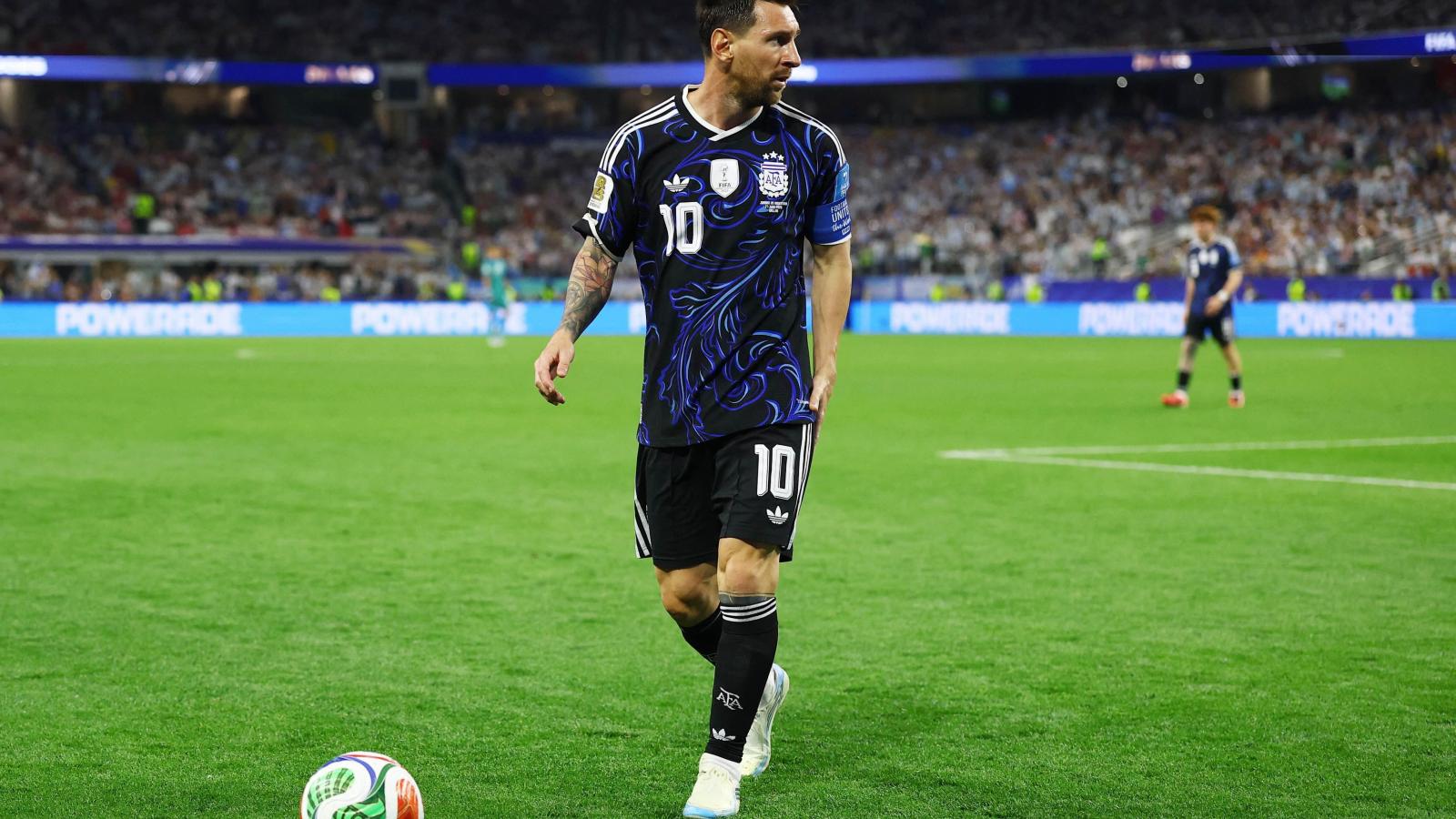
Lionel Messi kept Argentina’s 2026 World Cup campaign alive with a decisive contribution in a comeback against Egypt, delivering the defining moment of a match that threatened to end his tournament early. Argentina recovered from two goals down to avoid a potentially fatal result, and the significance stretched well beyond one night because it restored belief to a side that had been living dangerously in the group stage. Messi’s influence again sat at the heart of the story, a reminder that even at 39 he remains the central figure in Argentina’s biggest moments. In a tournament in which both his own standards and Argentina’s margin for error had come under scrutiny, this was the kind of intervention that changed the mood around the team.
- Argentina came from two goals down to avoid a potentially fatal result against Egypt and keep their World Cup campaign alive.
- Messi played the key role in the comeback, providing the standout contribution in Argentina’s fightback.
- The result reinforced Messi’s importance to Argentina during a difficult group-stage spell.
- Messi was 39 during the 2026 World Cup and had scored six goals in three group-stage matches.
- The comeback shifted the pressure around Argentina by preserving their hopes after a troubled start to the tournament.
Messi at the centre again
The most striking aspect of the night was not simply that Argentina survived, but that the escape once again revolved around Messi. Tournament football often turns on one player’s ability to impose order when a game is slipping away, and Argentina found that stabilising force in their captain. He helped keep the campaign alive, and that alone underlines the scale of his influence in a match of such consequence. When a team falls two goals behind in a World Cup game, the emotional challenge can be every bit as significant as the tactical one, and Argentina needed someone capable of changing both the tempo and the belief within the contest.
That is why the broader context around Messi matters so much here. He was not just producing in ordinary circumstances; he was doing so while defying time and responding to the scrutiny that had followed both him and the team through the tournament. At 39, he remains the reference point for Argentina’s attack, and six goals in three group-stage matches illustrate how extraordinary his output has been. Those numbers sharpen the contrast between the uncertainty that had surrounded Argentina and the reliability Messi continues to provide when the stakes rise. Even in a tournament in which questions had persisted, he still found a way to shape the game that mattered most.
There is a reason performances like this continue to define Argentina’s biggest nights. Messi’s value is not limited to goals or moments of technical brilliance; it also lies in the calm and conviction he brings when a match begins to tilt toward chaos. Argentina were facing the possibility of a damaging result, and the pressure attached to that situation could easily have overwhelmed them. Instead, their captain became the point around which the recovery formed. That pattern has repeated often enough over the years to feel familiar, but familiarity should not diminish its significance. In a tournament setting, where margins are thin and momentum is fragile, the ability of one player to reset the emotional direction of a match remains priceless.
What the comeback says about Argentina
Coming back from two goals down says something important about Argentina beyond the final result: for all their flaws and vulnerability, they still possess enough conviction to respond under extreme pressure. Falling behind by that margin in the group stage can create panic, especially when qualification hopes are already under threat. Instead, Argentina found a route back into the match and turned what looked like a collapse into a lifeline. That does not erase the concerns raised by going two goals behind in the first place, but it does show that the team’s competitive edge remains intact when elimination begins to loom.
There is also wider tournament significance to the result. Group-stage campaigns are often defined by swings in momentum, and this comeback has the potential to become the hinge point of Argentina’s World Cup. Rather than spending the rest of the competition confronting the consequences of an early exit, Argentina now move forward with their hopes preserved and with fresh evidence that they can withstand adversity. That psychological shift can be powerful, particularly for a squad that had been wrestling with inconsistency. A team that survives a crisis can sometimes become more dangerous than one that cruises through, because the experience hardens decision-making and deepens the sense of urgency.
For Egypt, the match will feel like a missed opportunity because taking a two-goal lead against a side under pressure should have placed them in a commanding position. The available details do not provide the specific sequence of goals or the tactical mechanics of how the lead was lost, so the focus remains on the scale of the swing rather than the precise route it took. Even so, surrendering that advantage against a player of Messi’s class always carries risk, because one intervention can alter the entire emotional balance of a game. Once Argentina sensed a way back, the contest shifted from a potential exit story into one of survival. That is the brutal nature of World Cup football: control can disappear quickly, and the teams with elite match-winners are often best equipped to exploit that shift.
Messi’s tournament record to this point adds another layer to the significance of the comeback. Six goals in three group-stage matches is a remarkable return in any era, but especially for a player operating at 39 on the sport’s biggest stage. It suggests that even if Argentina have not always looked secure collectively, they still possess the most valuable asset a tournament team can have: a player capable of deciding games almost on his own terms. That does not guarantee a deep run, and Argentina will know they cannot keep relying on rescue acts after falling into trouble. But it does mean that as long as Messi is producing at this level, opponents know no lead is entirely safe and no Argentina match is ever truly settled.
There is, then, a dual lesson in this result. On one hand, Argentina’s vulnerabilities were exposed by the fact they needed to recover from two goals down just to stay alive. On the other, the comeback confirmed that they still have the resilience and star power to change the course of their tournament in a matter of moments. Those two truths can coexist, and they are likely to define how Argentina are viewed for the rest of the group stage. They remain dangerous because Messi remains decisive, but they also remain under pressure because the margin between revival and elimination has already proved alarmingly thin.
What comes next is now shaped by possibility rather than regret. Argentina have kept their campaign alive, Messi has once more stamped himself on the tournament, and the group-stage picture remains open enough for this comeback to carry lasting value. The challenge for Argentina is to turn one dramatic escape into a more stable platform, reducing the need for emergency recoveries while continuing to feed the player who has carried them through the crisis. For Messi, the night adds another chapter to a World Cup run that is already remarkable for both its productivity and its defiance of age. For Argentina, it offers the chance to believe that this tournament can still become something far more significant than it looked when they were two goals down against Egypt.



Leave a Reply