

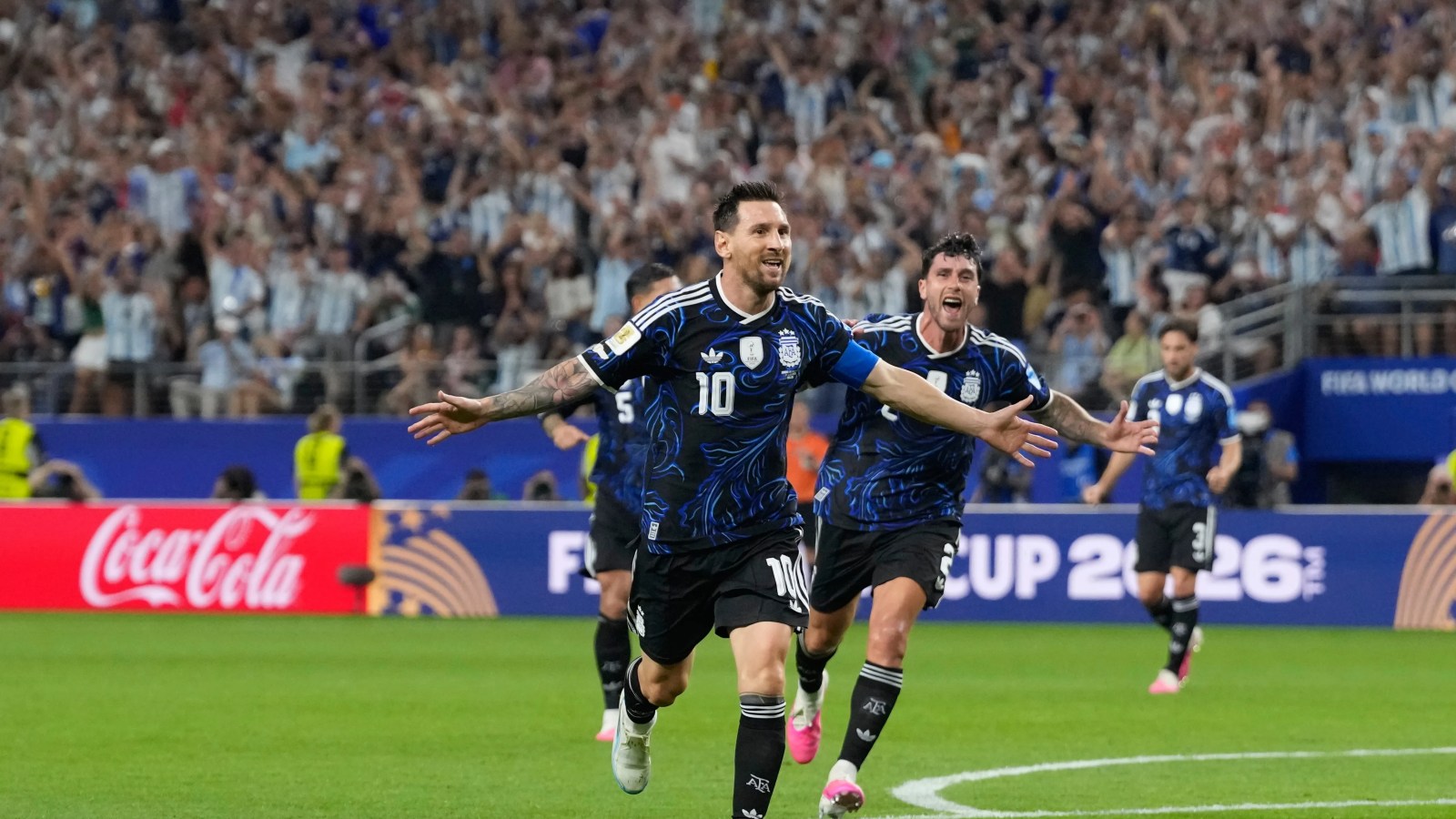
Lionel Messi produced the standout moment as Argentina faced Cape Verde in the 2026 FIFA World Cup, scoring to put his side 1-0 ahead in a match that was completed and later followed by published highlights. That confirmed contribution from Argentina’s captain remains the central verified detail from a fixture that naturally drew attention because of the contrast between one of the tournament’s established powers and a nation aiming to make its mark on the biggest stage. Even with limited confirmed information beyond the fixture itself and Messi’s goal, the significance of his intervention is unmistakable: when Argentina needed a breakthrough, their most influential figure delivered it. In a tournament where margins are often narrow and pressure rises with every matchday, that kind of decisive contribution remains the clearest measure of control, quality, and composure.
- Argentina played Cape Verde in the 2026 FIFA World Cup.
- Lionel Messi scored during the match to put Argentina 1-0 ahead.
- The match was completed.
- Highlights from the game were published after the final whistle.
- No further decisive details from the result are confirmed here beyond Messi’s goal and the completion of the match.
Messi supplies the defining moment
Messi’s goal stands as the match’s most important verified incident because it altered the scoreboard and gave Argentina the lead. In World Cup football, the opening goal can shape everything that follows, influencing tempo, risk, and the emotional balance of a contest. By putting Argentina 1-0 in front, Messi gave his team a platform from which to manage the game with greater authority, while forcing Cape Verde to respond to a deficit against one of international football’s most experienced tournament sides. That dynamic alone explains why his contribution carries such weight, even without a broader set of confirmed match details.
For Argentina, Messi’s intervention also reinforces a familiar pattern from so many major tournament nights. When matches tighten and space becomes scarce, elite sides often rely on their most gifted players to create the separation that structure and possession alone cannot always provide. Messi’s ability to deliver that breakthrough remains central to Argentina’s attacking identity, and this match offered another confirmed example of his influence. Even a single verified scoring moment is enough to show how much of the emotional and tactical burden of a World Cup game can rest on one touch, one movement, or one finish from a player of his stature.
That is what makes the goal resonate beyond the bare fact of Argentina moving ahead. In a competition defined by pressure, the players expected to decide matches are judged on whether they can do so when chances are limited and the stakes are high. Messi’s record has long placed him in that category, and this fixture added another instance in which his involvement directly shaped the course of events. Without extending beyond what is confirmed, the available record still points clearly to one conclusion: Argentina’s advantage came from the intervention of their captain, and that intervention became the defining act of the game.
What the game suggests for both teams
From Cape Verde’s perspective, the confirmed facts still point to a night of serious examination against top-level opposition. Facing Argentina at a World Cup is a test of concentration, defensive organisation, and belief, and conceding the opening goal to Messi would have demanded an immediate mental reset. Teams in that position must decide whether to chase an equaliser quickly or remain compact and trust that another opening will arrive later. While the exact tactical response is not confirmed here, the central challenge is unmistakable: once Argentina move ahead, the burden on their opponents increases sharply because they must balance ambition with the danger of leaving more room behind.
That is where the broader significance of the fixture comes into focus. Argentina entering a World Cup match against Cape Verde carries expectations of control, but World Cup football rarely allows any side to relax on reputation alone. A lead is valuable, but it is not definitive, and the fact that the completed match generated post-game highlights suggests there were enough notable passages to sustain attention beyond the opening breakthrough. Without moving beyond the verified record, it is still fair to say that Messi’s goal gave Argentina the initiative, while Cape Verde’s task became one of resilience and response against a side accustomed to managing high-stakes situations.
The limited verified details make one point especially important: restraint matters when assessing a World Cup match. There is no confirmed basis here for stating a final score beyond the fact that Argentina led 1-0 when Messi scored, and there is no confirmed support for claims involving extra time, an own goal, or wider knockout implications. That leaves the safest and most accurate reading of the game centred on what is certain rather than what may be inferred. Argentina played Cape Verde, Messi scored to put Argentina ahead, and the match reached its conclusion. That is enough to frame the event honestly while still recognising its competitive significance.
For Argentina, that confirmed sequence still carries meaningful weight in tournament terms because every World Cup outing contributes to a larger effort to build rhythm, authority, and confidence. A side with championship ambitions needs its leaders to make defining contributions, and Messi doing so in this match reinforces the sense that Argentina can still turn to him in pivotal moments. For Cape Verde, the experience of competing in a completed World Cup fixture against opposition of this calibre remains significant in itself, particularly in the way such matches test discipline and reveal the standards required at the highest level. Even where the full statistical or narrative picture remains incomplete, the fixture still offers a clear snapshot of how one decisive action from a world-class player can shape the entire tone of a contest.
What comes next is that both teams move on from a match remembered, on the verified record available here, for Messi’s goal and Argentina’s spell in front. Argentina will take encouragement from seeing their captain make the difference in a World Cup setting, while Cape Verde can reflect on the demands of facing one of the tournament’s most prominent sides. As the competition continues, this game stands as a reminder that World Cup stories are often driven by moments of individual quality as much as by broader narratives. In this case, the clearest confirmed chapter belongs to Messi, whose goal supplied the defining act of Argentina’s meeting with Cape Verde.


Leave a Reply