

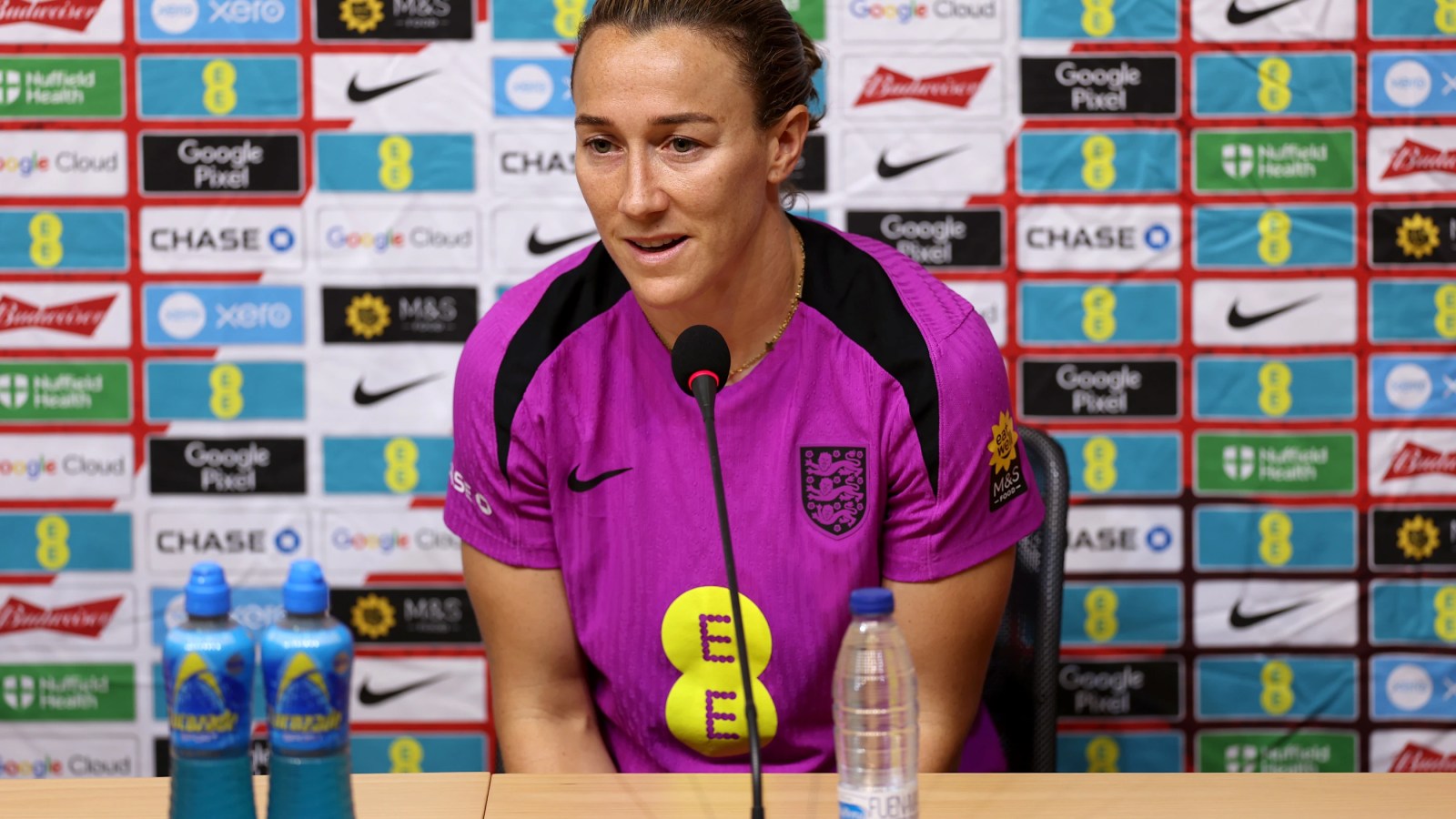
Lucy Bronze has backed a potential UEFA boycott of FIFA competitions, adding a high-profile player voice to one of the most significant political disputes hanging over the 2026 FIFA World Cup and the wider international game. Her stance matters because it frames the issue not merely as an administrative clash, but as a question of what leading players believe is necessary to protect football’s future. Bronze made clear that a boycott would be the right step if it safeguards the sport, aligning herself in principle with growing resistance to plans to sell stakes in the World Cup to private investors. With UEFA having already voted to boycott all FIFA competitions if those plans are approved, the disagreement now carries serious implications for both the men’s and women’s World Cups.
- Lucy Bronze has backed a potential UEFA boycott of FIFA competitions if it is required to protect football.
- The dispute centres on plans to sell stakes in the World Cup to private investors.
- UEFA has voted to boycott all FIFA competitions if those plans are approved.
- The boycott threat would cover all 55 European member associations.
- The potential fallout would extend to both the men’s and women’s World Cups, placing major future tournaments under a cloud.
Why Bronze’s intervention matters
Bronze’s comments are significant because they bring a player’s perspective into a debate that might otherwise appear confined to boardrooms and governing bodies. When a player of her stature says a boycott would be the right move if it protects football, it gives the dispute greater weight and broadens the conversation beyond institutional power. She did not announce any separate action of her own, but her endorsement of the principle behind UEFA’s stance is notable given the scale of what is under discussion. A European boycott of FIFA competitions would not be a symbolic protest at the margins; it would strike at the competitive and commercial core of the international calendar.
At the heart of the dispute is the proposal to sell stakes in the World Cup to private investors, a plan that has prompted a sharp response from UEFA. That response has already moved beyond warnings, with UEFA voting to boycott all FIFA competitions if the plans are approved. The breadth of that threat is what makes the issue so consequential in a World Cup context. If all 55 European member associations are included, the consequences would extend across qualification pathways, tournament fields, commercial planning and the overall credibility of the competitions involved.
Bronze’s intervention also matters because it helps shift the argument from institutional politics to stewardship of the game. By backing a boycott only if it is necessary to protect football, she places the emphasis on principle rather than confrontation for its own sake. That framing is important in a dispute of this size, because it suggests the resistance is not simply about power between governing bodies but about who should control the future direction of the sport’s biggest tournament. When a leading player adopts that position, it becomes harder to dismiss the issue as a purely executive-level disagreement.
There is further significance in the fact that Bronze is one of the most recognisable figures in the women’s game. Her support underlines that this is not a debate affecting only the men’s side of the international calendar. Instead, it reinforces the idea that the governance concerns at the centre of the dispute are being felt across the sport. That wider relevance adds to the pressure surrounding any decision on the proposed investment plans and increases the sense that the issue now reaches well beyond internal football politics.
What it could mean for the 2026 World Cup
For the 2026 FIFA World Cup, the dispute introduces uncertainty over the shape and status of the tournament if the standoff is not resolved. Europe’s place in the World Cup is foundational to the event’s sporting identity, and any scenario involving a collective UEFA boycott would transform the competition. The issue is not only about who would or would not take part, but whether the tournament could retain its usual balance of elite teams, historic rivalries and global attention under those circumstances. Bronze’s backing of the boycott in principle underlines that concerns about protecting football are resonating beyond executives and administrators.
The significance extends further because the boycott threat covers both the men’s and women’s World Cups. That makes this more than a single-tournament dispute and turns it into a challenge to FIFA’s broader competition model. Bronze’s involvement is especially notable in that context because she is one of the most prominent figures in the women’s game, and her comments connect the women’s World Cup directly to the same governance concerns affecting the men’s event. The message is clear: this is a football-wide issue, not one confined to a single branch of the sport or a single competition cycle.
From a tactical standpoint, UEFA’s public position and Bronze’s support suggest an effort to increase pressure before any final decision on the investment plans is carried through. A boycott is the strongest lever available because it threatens the value, prestige and sporting legitimacy of FIFA competitions all at once. By saying such a step would be right if it protects football, Bronze reinforces the idea that the argument is being framed around stewardship rather than short-term politics. That matters because it shifts the debate toward principles of control, ownership and the long-term direction of the World Cup, rather than leaving it as a narrow dispute over commercial strategy.
For FIFA, the challenge is clear even from the limited confirmed details available: any proposal involving World Cup stakes now faces not only formal institutional opposition but also visible support for that opposition from leading players. For UEFA and its member associations, the strength of the threat means the next phase will be judged by whether unity holds and whether the boycott remains a negotiating instrument or becomes a concrete course of action. Bronze’s comments do not open a new front in the dispute, but they do strengthen the sense that the concerns carry credibility within the game itself. That is often the point at which governance disputes become harder to contain, because they begin to affect the public legitimacy of the decisions being made.
The road ahead depends on whether the plans to sell stakes in the World Cup to private investors are pushed forward or reconsidered. If they are approved, UEFA’s vote sets up a direct confrontation that could reshape the landscape of international football, including the build-up to the 2026 World Cup. If there is movement away from those plans, Bronze’s intervention may come to be seen as part of a broader effort that helped harden resistance at a crucial moment. Either way, the story has moved beyond an abstract governance debate: with Europe threatening to withdraw and one of the game’s biggest names backing that stance in principle, the future direction of FIFA’s competitions is now under intense scrutiny.
Leave a Reply