

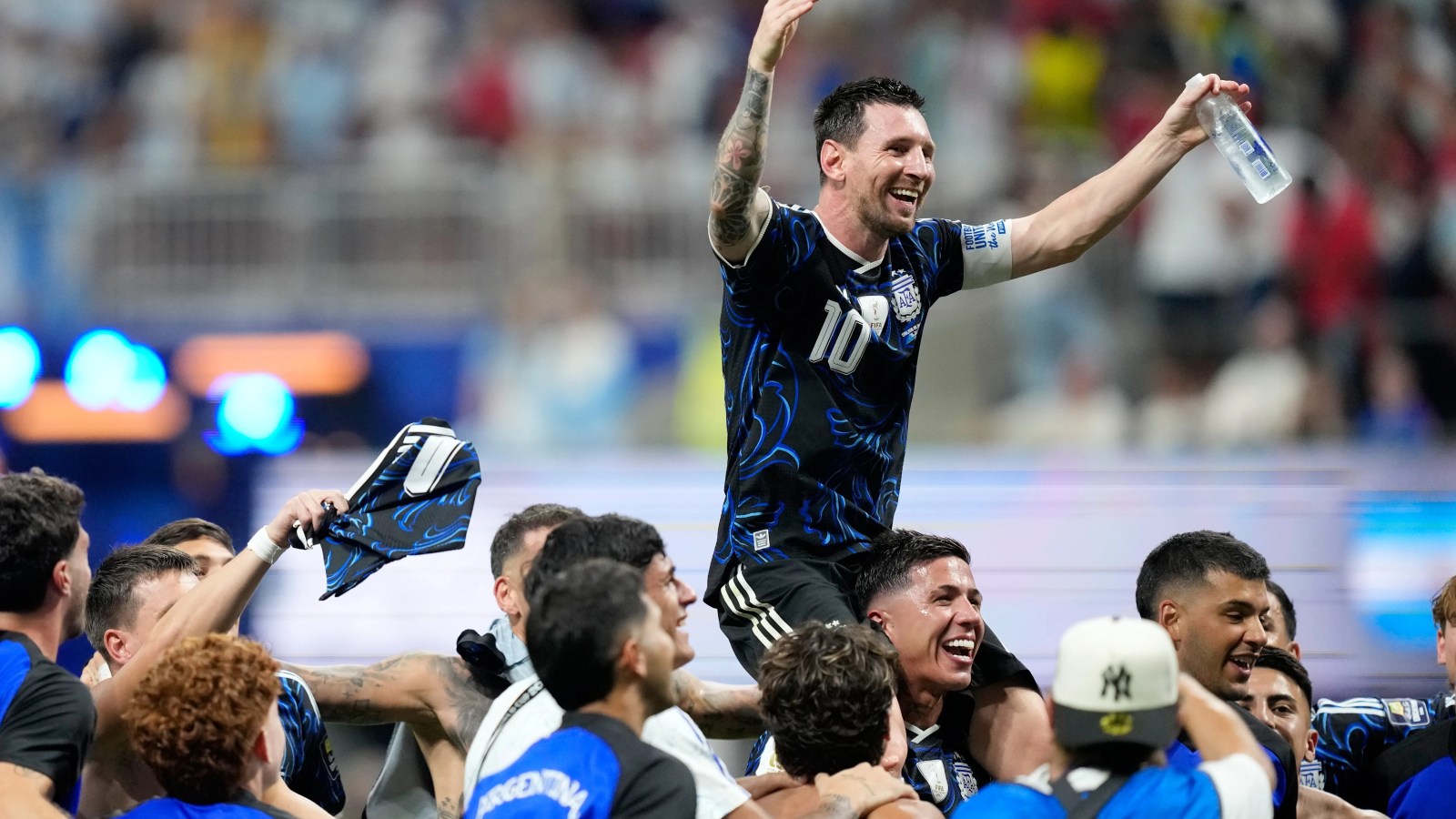
Lionel Messi’s latest World Cup 2026 milestones have added another layer to an already extraordinary tournament, with the Argentina forward moving past Kylian Mbappé, Pelé and Diego Maradona across key statistical categories. The central figure is Messi himself, not because of one isolated number, but because of the breadth of benchmarks he has now cleared as the competition has unfolded. His latest surge has underlined both his enduring influence and his ability to shape the biggest matches deep into the tournament. In a World Cup defined by elite attacking output, Messi has once again placed himself at the center of the story.
- Messi has reached 12 career World Cup knockout-stage goal contributions, made up of six goals and six assists.
- That total moves him past both Pelé and Mbappé in knockout-stage goal contributions.
- The headline comparisons shown during the tournament include Messi 33-25 Mbappé, Messi 10-4 Pelé, and Messi 99-71 Maradona.
- He has been tied for the most goals in this World Cup with eight, alongside Mbappé.
- He has also been tied second for assists in the tournament with four.
Messi’s latest milestones in tournament context
The significance of these numbers lies in the company Messi is keeping, and then moving beyond. Passing Mbappé matters because it places one modern World Cup giant ahead of another in a tournament that has repeatedly invited direct comparison between the two. Overtaking Pelé carries a different kind of weight, because any statistical movement beyond one of football’s foundational World Cup figures immediately becomes part of the sport’s broader historical conversation. Surpassing Maradona adds another deeply resonant layer, especially given what Maradona represents in Argentina’s football identity and in the mythology of the World Cup itself.
The clearest milestone in this latest sequence is Messi reaching 12 career World Cup knockout-stage goal contributions, split evenly between six goals and six assists. That balance is revealing because it captures the full scope of his influence. He is not only a finisher in decisive matches, but also a creator capable of controlling the direction of knockout football, where margins are thin and moments often decide everything. In practical terms, it means Messi’s imprint on elimination games has been sustained, varied and consistently productive over time.
The wider headline figures shown during the tournament reinforce the scale of that progression. Messi 33-25 Mbappé, Messi 10-4 Pelé, and Messi 99-71 Maradona are not simply abstract comparisons; they frame how far his body of work has stretched against some of the most celebrated attacking standards in World Cup history. Even without going beyond the verified figures, the pattern is clear: Messi is not merely adding to his own totals, he is reshaping the all-time leaderboard in categories that matter most to how tournaments are remembered. These are the numbers attached to match-defining influence, longevity and repeated delivery under pressure.
What the numbers say about his influence now
Messi’s standing in the current tournament is just as striking as the historical milestones. He has been tied for the most goals at this World Cup with eight, level with Mbappé, which places him at the top of the Golden Boot race. He has also been tied second for assists with four, a combination that shows he is affecting games in multiple ways rather than relying on a single route to production. That dual threat is especially important in a World Cup, where opponents adjust quickly and where a player who can both score and create tends to be the hardest to contain across several rounds.
From a tactical standpoint, those totals point to a player still dictating the rhythm of attacks even against the strongest opposition. Goals in a tournament can come in bursts, but adding four assists alongside eight goals points to a broader command of attacking phases. It indicates involvement in the final action and the move before it, whether through the decisive pass, the finishing touch, or the ability to draw defenders and create space for others. In knockout football, where defensive structures are tighter and transitions are sharper, that kind of layered contribution becomes even more valuable.
For Argentina, the implications are obvious and substantial. A side built around collective balance still gains a major competitive edge when its leading attacker is delivering at the top of both the scoring and creative charts. Messi’s numbers provide not only output but also assurance, because they suggest Argentina can trust him to influence different types of matches. If a game becomes stretched, his scoring threat is there; if it turns into a tactical chess match, his passing and decision-making remain central. That flexibility is often what separates contenders from champions in the latter stages of a World Cup.
For the wider tournament picture, Messi’s latest benchmarks sharpen the sense that World Cup 2026 has become a stage for a defining statistical duel as well as a battle for the trophy. Mbappé’s presence alongside him in the goals standings gives the race immediate drama, while Messi’s movement past him in another category adds a historical edge to the comparison. At the same time, the fact that Pelé and Maradona are part of these updated leaderboards shows that this is no short-term narrative driven only by current form. It is a reminder that every further contribution by Messi now carries two consequences at once: it changes the next match and it changes the historical record.
What comes next is simple to understand, even if the stakes are immense. Every additional goal or assist from Messi in this tournament has the potential to strengthen his position at the top of the current charts while pushing his all-time World Cup legacy even further beyond some of the game’s most iconic names. Argentina will continue to look to that influence as the tournament goes on, knowing that the smallest opening can become decisive when it falls to a player operating at this level. For Messi, the story is no longer only about adding to a great career; it is about continuing to redefine what elite World Cup production looks like, one milestone at a time.

Leave a Reply