

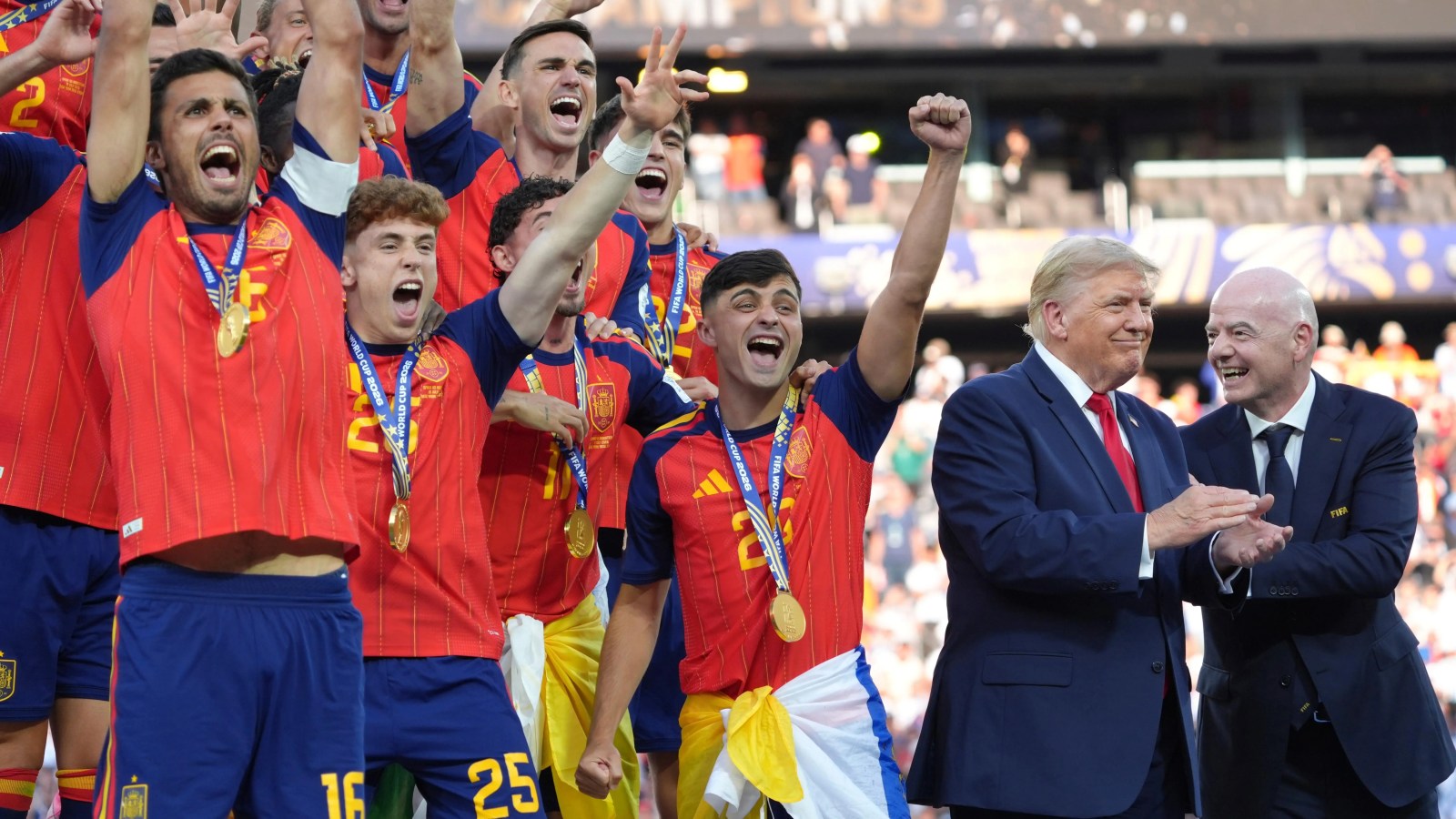
Gianni Infantino’s plan to sell stakes in a World Cup company to private investors has collapsed after a fierce backlash, turning what had appeared to be a major commercial initiative into a damaging political setback for FIFA’s president. The proposal carried huge significance because it touched the financial engine of the World Cup, the tournament that underpins much of global football’s funding model, and because it immediately raised questions about governance, transparency and control over the sport’s most valuable asset. Rather than attracting broad support, the idea drew criticism from inside and outside FIFA, with senior officials objecting to how the process had been handled and arguing there had not been enough openness in its development. The fallout has now extended beyond the abandoned plan itself, with the dispute also harming Infantino’s standing with UEFA and exposing renewed tension over trust at the top of the game.
- Gianni Infantino pursued a plan to sell stakes in a World Cup company to private investors.
- The proposal sparked strong internal and external backlash over how it had been developed.
- Senior FIFA officials criticized the lack of openness and said staff had been deceived during the process.
- The investment plan was scrapped after the backlash intensified.
- The dispute damaged Infantino’s standing with UEFA, with confidence in his leadership affected by the failed plan.
- Infantino argued that World Cup revenue helps sustain football in 150 countries.
Why the proposal became so contentious
At the heart of the dispute was not simply the idea of attracting private investment, but the sensitivity of applying that model to the World Cup. FIFA’s flagship competition is more than a commercial property; it is the financial pillar supporting a much broader ecosystem across the sport. Any move to carve out stakes in a company tied to that tournament was always likely to invite intense scrutiny, especially if key stakeholders felt they had not been fully brought into the process. That appears to have been the decisive issue here, as criticism centered heavily on the lack of openness surrounding how the proposal had been developed.
The reaction from senior FIFA officials made clear that the resistance went well beyond routine disagreement over strategy. Complaints that staff had been “deceived” pointed to a far deeper rupture, one rooted in process, trust and internal accountability. In governance terms, that can be more damaging than opposition to the commercial concept itself, because it creates the impression that major decisions are being advanced without sufficient consultation or clarity. Once that perception takes hold, even a potentially transformative financial proposal can become politically impossible to sustain.
That helps explain why the plan was ultimately scrapped. Its withdrawal was not merely a pause for reconsideration, but the result of a backlash strong enough to stop the project altogether. For Infantino, that matters because it transforms an attempted strategic initiative into a visible retreat, and visible retreats in football politics often carry lasting consequences. A failed proposal involving the World Cup invites questions not only about judgment, but also about whether the president can still build consensus around major structural ideas.
The controversy also underlined how differently the World Cup is viewed from other commercial assets in sport. Because it sits at the center of FIFA’s financial and political power, any attempt to reshape its ownership or revenue structure is bound to be judged through a wider lens. This was never likely to be treated as a straightforward investment exercise. It was always going to be seen as a test of how FIFA governs its most important competition, who gets consulted and how much control the organization is willing to share over the asset that drives so much of the global game.
What it means for FIFA, UEFA and the road to 2026
The wider significance lies in what this episode says about the balance between commercial ambition and institutional legitimacy at FIFA. Infantino’s defense of the broader principle was rooted in redistribution, arguing that World Cup revenue helps sustain football in 150 countries. That point is central to FIFA’s self-justification whenever it seeks to expand revenues or reshape competitions, because the organization presents its commercial strength as the mechanism that funds development across the global game. Yet the backlash shows that even arguments framed around solidarity can fail if the method appears opaque or if stakeholders believe they are being asked to accept too much, too quickly and without adequate explanation.
The damage to Infantino’s standing with UEFA adds another important layer. Relations between FIFA and European football’s governing power are always significant because of Europe’s influence over elite clubs, major leagues and many of the sport’s most powerful national associations. If confidence has been eroded by the failed investment plan, that weakens Infantino at a time when alignment with UEFA remains crucial on the biggest issues surrounding the international calendar and the World Cup’s future commercial direction. In practical terms, strained trust can make every subsequent negotiation more difficult, even when the subject is unrelated to the original dispute.
For FIFA itself, the episode is a reminder that the World Cup cannot be treated as an ordinary business asset without provoking resistance. The tournament’s value is precisely what makes it politically sensitive. Stakeholders are likely to accept that the competition funds football far beyond the traditional power centers, but they also expect any proposal affecting ownership, control or revenue pathways to be handled with exceptional clarity. The criticism over openness suggests that threshold was not met, and once that became the dominant narrative, the plan’s commercial rationale was overwhelmed by governance concerns.
There is also a broader message in the build-up to the 2026 World Cup. Even though the scrapped proposal concerned investment structure rather than events on the pitch, disputes of this kind can shape the atmosphere around the tournament by influencing confidence in FIFA’s leadership. A governing body heading into its showcase competition typically wants momentum, unity and a sense of strategic control. Instead, this controversy has highlighted internal dissatisfaction and external skepticism, creating an avoidable distraction around the stewardship of the sport’s signature event.
What comes next is likely to be defined as much by repair as by strategy. FIFA will need to steady confidence internally, while Infantino faces the task of restoring trust among officials and addressing the strain in his relationship with UEFA. The abandoned plan leaves unresolved questions about how aggressively FIFA may seek to reshape the commercial architecture around the World Cup in the future, but it also delivers a clear warning about the costs of moving without broad confidence in the process. As the road to 2026 continues, the lesson from this episode is unmistakable: in football’s biggest boardroom battles, control of the narrative matters almost as much as control of the asset itself.
Leave a Reply