

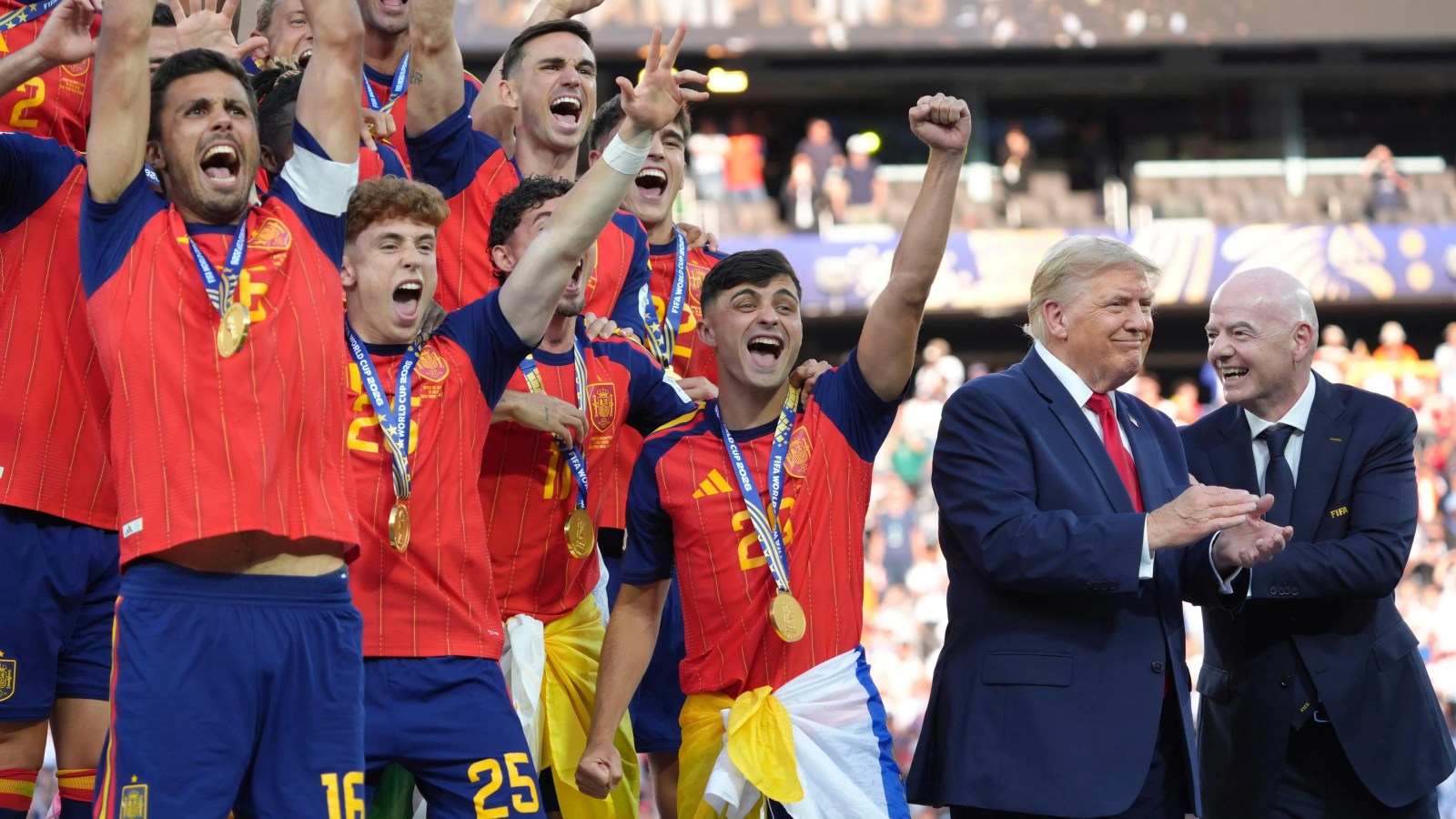
Gianni Infantino is facing mounting pressure at FIFA after European football’s governing body declared a loss of confidence in the organization’s leadership and warned that no option should be off the table, a dramatic escalation in the debate over governance ahead of the 2026 World Cup. The immediate flashpoint was a plan tied to selling stakes in the World Cup to private investors, an idea that provoked a fierce backlash and has now been abandoned. That retreat does not end the wider crisis; instead, it highlights the scale of resistance building around FIFA’s current direction. With scrutiny also sharpened by criticism of Infantino’s public response to complaints about the 2026 tournament, and by anger over competition decisions such as hydration breaks, the FIFA president has become the central figure in a dispute that extends far beyond one withdrawn proposal.
- European football’s governing body has declared a loss of confidence in FIFA’s leadership and said no option should be off the table.
- The immediate dispute centered on a proposal tied to selling stakes in the World Cup to private investors.
- That private-investment plan has now been ditched, marking a significant retreat by FIFA.
- Pressure on Gianni Infantino has also intensified because of criticism over his public response to complaints about the 2026 World Cup.
- Anger over tournament decisions, including hydration breaks, has added to the strain on FIFA’s leadership.
Why the pressure has intensified
The significance of this moment lies in the combination of political resistance and operational controversy. A loss of confidence from Europe’s governing body is not a routine disagreement over scheduling or tournament administration; it is a direct challenge to the authority and judgment of FIFA’s leadership at a time when preparations for the 2026 World Cup should be entering a more settled phase. Even without any confirmed formal move to remove Infantino, the language about keeping every option available shows that dissatisfaction has moved beyond private frustration. It suggests the concerns are broad enough to reach the way FIFA is being led, not merely the merits of a single policy.
The abandoned private-investment plan appears to have become the clearest symbol of that dissatisfaction. Selling stakes in the World Cup to private investors would have touched the commercial core of FIFA’s flagship competition, and the backlash points to deep unease about how far the organization should go in reshaping control of its most valuable tournament. FIFA’s decision to drop the plan matters because it demonstrates that the opposition carried real weight. Rather than closing the issue, however, the reversal raises fresh questions about how the proposal advanced to such a contentious stage in the first place and whether FIFA misread the mood among major stakeholders.
That is why the current pressure cannot be viewed as a single-issue flare-up. The private-investment dispute has acted as a catalyst, but the broader picture suggests an accumulation of frustration around the leadership. Criticism of Infantino’s public response to complaints about the 2026 World Cup has added another layer, because public messaging during a sensitive period can shape confidence just as much as formal policy. When concerns about tournament planning are met in a way that leaves important constituencies dissatisfied, every subsequent decision is judged more harshly and trust becomes harder to restore.
The result is a more volatile environment around FIFA at a point when clarity and stability should be taking precedence. Once doubts form over leadership judgment, even decisions that may once have been treated as ordinary administrative matters begin to carry greater political weight. That appears to be the position FIFA now faces: not simply defending one abandoned commercial proposal, but responding to a broader challenge over how decisions are made, communicated and justified in the run-up to the game’s biggest event.
What it means for the 2026 World Cup
Anger over tournament decisions such as hydration breaks has further intensified the atmosphere. On their own, such decisions might be defended as practical or necessary, but in the current climate they are being interpreted through a wider lens of governance and responsiveness. That matters for a World Cup because the tournament is judged not only by what happens on the pitch, but also by whether the organizing authority appears coherent, consultative and in control. Once confidence begins to fray, even technical or welfare-related decisions can become symbols of a larger disconnect between leadership and the football community.
For FIFA, the immediate implication is that dropping the private-investment plan may buy time, but it does not guarantee stability. The available facts support the view that Infantino’s position is under serious strain, yet they do not confirm any formal removal or a broader reset at FIFA. That distinction matters. It means the pressure is real and politically significant, but the next phase is likely to be shaped by whether FIFA can calm tensions through clearer governance, more careful communication and fewer avoidable flashpoints as the 2026 World Cup approaches.
For the tournament itself, the stakes are obvious. Preparing for a World Cup requires confidence among governing bodies, commercial partners, organizers and the wider football public, and leadership disputes can distract from that work even when they do not immediately alter the competition structure. The retreat on private investment removes one source of conflict, but it also leaves FIFA needing to show that major strategic decisions around the World Cup will not be pushed forward without broad support. In practical terms, the organization now faces a test of credibility: whether it can demonstrate that the tournament’s future direction is being managed with enough transparency and sensitivity to prevent further erosion of trust.
There is also a personal dimension for Infantino, because the criticism now appears to connect style and substance. Questions are no longer limited to a single commercial idea or one tournament rule; they extend to judgment, tone and the ability to carry key football constituencies. When a leadership challenge develops in that way, simply withdrawing one proposal rarely ends the scrutiny. Instead, every next move becomes part of a wider assessment of whether the president can restore confidence before the 2026 World Cup enters its decisive final stretch of preparation.
What happens next will depend on whether FIFA can turn this retreat into a broader reset in approach, even if no formal reset has been confirmed. The immediate danger for the organization is that unresolved frustration over governance, communication and tournament management continues to build around future decisions. For now, the clearest facts are that Europe’s governing body has openly lost confidence, the World Cup private-investment plan has been abandoned, and Infantino remains under serious pressure. The road to 2026 remains intact, but FIFA’s leadership has entered a critical period in which every decision will be judged for what it says about control, credibility and the direction of the sport’s biggest tournament.

Leave a Reply