

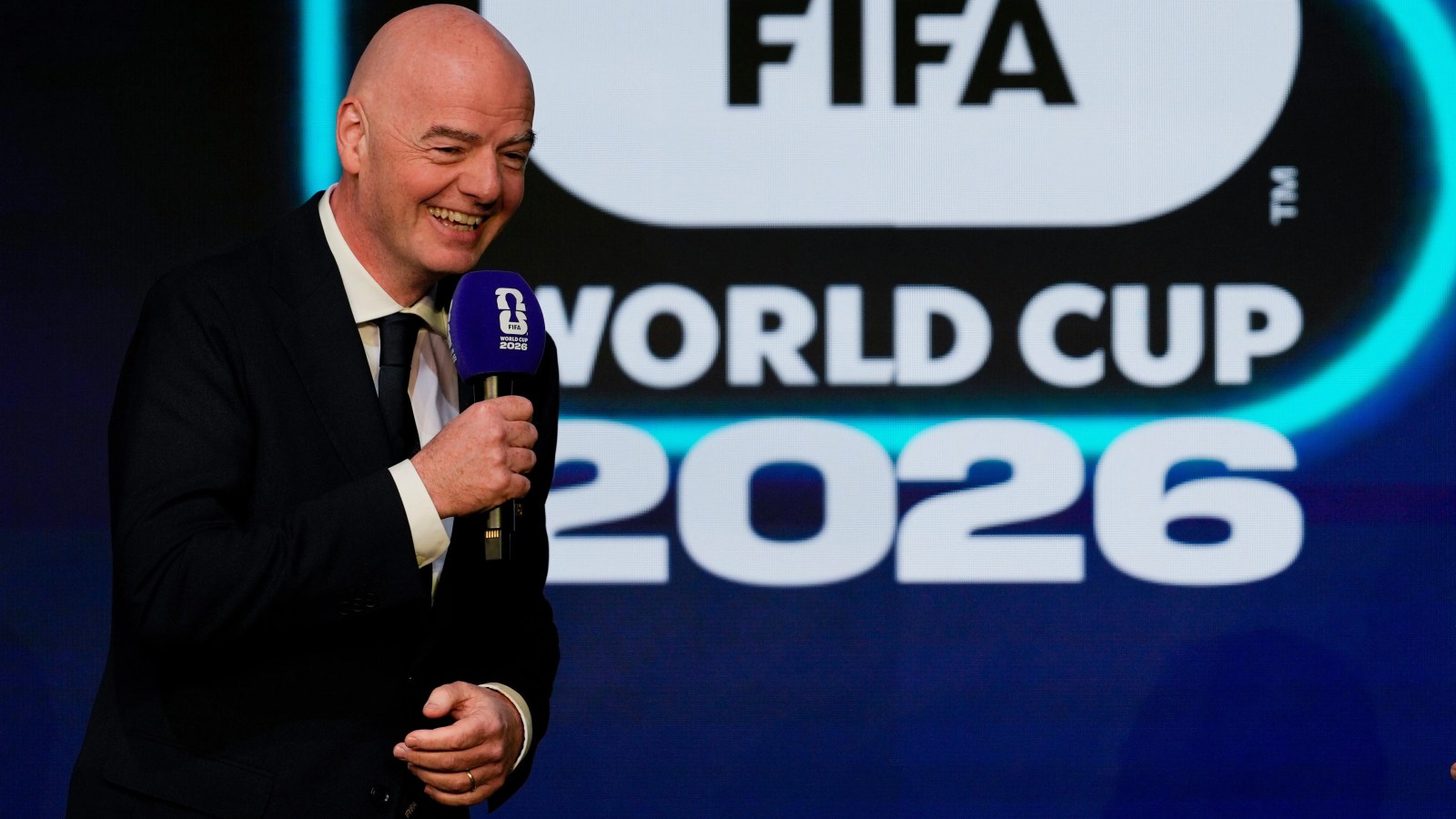
Gianni Infantino remains FIFA president and has declared his candidacy for re-election, but the politics around world football’s governing body have entered a far more volatile phase after an abandoned proposal to sell a stake in the World Cup triggered a leadership crisis. The failed plan has emerged as the defining issue in a widening internal power struggle, with battle lines now forming inside FIFA and some key figures breaking ranks. That shift matters because it turns a policy setback into a direct test of authority at the top of the organisation. With the next presidential selection process due in March, the central question is no longer whether Infantino faces meaningful opposition inside FIFA, but how much support he can still command as the election approaches.
- Gianni Infantino remains in place as FIFA president despite a growing leadership crisis inside the organisation.
- An abandoned proposal to sell a stake in the World Cup is described as the trigger for the current power struggle.
- The failed stake-sale plan represents a major setback for Infantino’s leadership.
- Battle lines are forming within FIFA, with some key figures breaking ranks as the fallout deepens.
- Infantino has declared his candidacy for re-election, with the selection process scheduled for next March.
A setback that has become a political test
The significance of the abandoned World Cup stake-sale proposal lies not only in its failure, but in what that failure appears to have exposed. Any proposal tied to FIFA’s flagship tournament carries enormous symbolic and strategic weight, so its collapse inevitably raises questions about decision-making, alignment and confidence at boardroom level. In that sense, the issue has moved beyond a single commercial or governance debate and into a broader struggle over leadership. What might once have been contained as a difficult internal disagreement has instead become the trigger for a more public and more consequential contest over authority.
For Infantino, that makes this episode especially damaging. He remains in office and is still positioned to seek another term, yet the current moment is defined more by pressure than by control. The failed plan is being viewed as a major setback, and setbacks at this level tend to invite scrutiny from every corner of an organisation as complex and politically layered as FIFA. Once key figures start breaking ranks, the challenge is no longer simply to defend a decision; it is to prevent that disagreement from hardening into a coalition of resistance. That is why the coming months matter so much: they will show whether this controversy fades into managed dissent or develops into a durable challenge to the president’s standing.
The episode also underlines how quickly strategic missteps can become political liabilities inside a governing body where influence is often measured as much by internal consensus as by formal authority. A failed proposal involving the World Cup was always likely to resonate far beyond the specifics of the idea itself. In this case, the fallout appears to have crystallised concerns that may already have existed beneath the surface. Rather than closing down debate, the collapse has opened a wider conversation about leadership, judgment and the degree of confidence still invested in the current administration.
Battle lines inside FIFA ahead of the election
The phrase “battle lines forming” is especially revealing because it suggests positions inside FIFA are becoming clearer and more entrenched. Internal politics often remain opaque until a flashpoint forces individuals and blocs to define where they stand, and the abandoned World Cup stake-sale proposal appears to have done exactly that. Some key figures have broken ranks, a development that can alter the balance of power even before any formal vote takes place. In practical terms, that means Infantino now faces a dual task: preserving the appearance of institutional stability while also rebuilding enough internal trust to carry momentum into the next election cycle.
His declaration of candidacy for re-election ensures the crisis cannot be viewed in isolation from the political calendar. With the selection process due next March, every move inside FIFA now carries electoral meaning. Supporters will want to project continuity and resilience, while critics or wavering allies may see this period as an opportunity to test how firm the president’s backing really is. The timing therefore intensifies the stakes of the current dispute. Rather than allowing space for a quiet reset, the election horizon compresses events and forces everyone involved to think in terms of leverage, loyalty and long-term positioning.
There is also a broader institutional dimension to this moment. The World Cup is the centrepiece of FIFA’s identity and influence, so any proposal involving a stake in that competition was always likely to attract exceptional attention internally. When such a proposal is abandoned and then becomes the catalyst for a leadership crisis, the consequences extend beyond personal authority. It raises questions about how major strategic ideas are advanced, who is consulted, and how consensus is built or lost inside the organisation. Even without additional detail on the mechanics of the proposal, the aftermath alone shows the issue has touched a nerve at the highest level of FIFA governance.
What happens next will depend largely on whether the current fractures remain limited or spread further across FIFA’s internal landscape. If those who have broken ranks are isolated, Infantino may still be able to contain the damage and reassert control before the March selection process. If, however, the fallout continues to deepen, the failed stake-sale plan could become the moment that transformed dissatisfaction into a coherent political challenge. Leadership crises are often shaped less by one event than by the reactions that follow it, and the reactions inside FIFA now appear to be the real story. The pressure on Infantino is therefore not just about defending the past, but about proving he still has the authority to lead the organisation into its next cycle.
For FIFA as a whole, this is an uncomfortable moment because uncertainty at the top can quickly affect confidence across the wider structure. The organisation may still project continuity externally, but internally the immediate issue is one of alignment and control. A president seeking re-election would normally want the months before a selection process to reinforce stability and broad support. Instead, this period is being shaped by a failed proposal, visible dissent and a growing sense that the balance of power is under examination. That combination makes the road to March far more politically charged than it might once have seemed.
The next phase will be decisive. Infantino remains in place and has formally entered the race for another term, but the abandoned World Cup stake-sale proposal has changed the mood around his leadership and sharpened scrutiny of his internal support. As FIFA moves toward next March’s presidential selection process, the key measure will be whether he can halt the fallout, rebuild alliances and prevent this power struggle from defining the campaign. Until then, the leadership crisis will remain one of the most important stories in world football governance.

Leave a Reply