
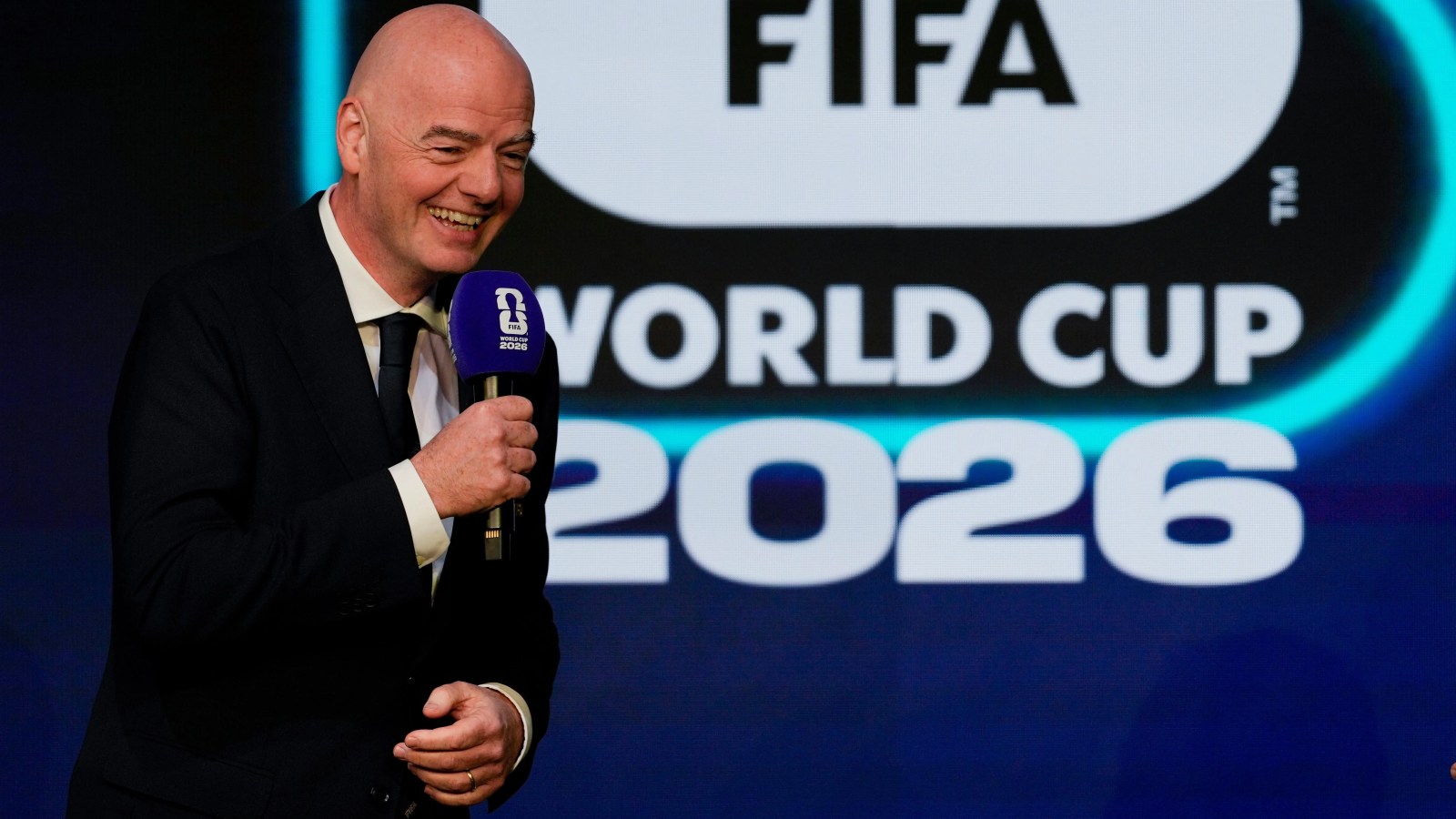
Gianni Infantino’s growing influence over the global game has come into sharper focus through a wider examination of his political connections, private-jet travel and decision-making at the top of FIFA, with the 2026 World Cup emerging as a key measure of the scale of his reach. Rather than being driven by a single tournament development, the latest picture is of a president whose presence extends across football and politics alike. The standout figure is Infantino himself, not because of a match result or a competition launch, but because his methods and movements increasingly shape the conversation around FIFA. With the 2026 World Cup on the horizon, that matters because leadership at this level influences not only strategy and scheduling, but also the tone and priorities surrounding the game’s biggest event.
- A newly published profile examines Gianni Infantino’s political connections, use of private jets and growing influence within world football.
- One reported episode describes Infantino arriving in Bogota and being greeted on the runway by the president of the Colombian Football Federation.
- A separate confirmed detail states that access to aircraft allowed Infantino to take up to three flights a day and watch two games during the 2026 World Cup.
- In the past week, Infantino said he had scrapped a controversial plan to sell stakes in FIFA competitions to private investors.
- The verified angle is a wider look at Infantino’s power, travel and decision-making, with the 2026 World Cup serving as a clear example of his operational reach.
Power, visibility and the shape of FIFA leadership
The significance of this moment lies in how the discussion around FIFA is being framed. Instead of focusing solely on tournament logistics or commercial growth, attention is shifting toward the style of leadership at the center of the organization. Infantino’s political connections and high-visibility travel underline how closely FIFA’s presidency is tied to influence beyond the pitch. That broader reach is not a side story to the 2026 World Cup; it is part of the environment in which the tournament will be staged, promoted and governed.
The reported arrival in Bogota is telling because it captures the ceremonial and political weight attached to Infantino’s movements. Being greeted on the runway by the president of the Colombian Football Federation suggests a level of status that goes beyond routine administration. It reflects how FIFA’s top office can command attention in national football circles and, by extension, in the political and institutional settings linked to the sport. For a governing body that oversees the world’s biggest tournament, that visibility can be presented as a sign of strength, but it also invites closer examination of how power is exercised and displayed.
The private-jet element adds another layer to that picture. Travel itself is not unusual for the head of a global federation, especially one responsible for competitions, meetings and relationships across continents. But the detail that aircraft access allowed Infantino to take up to three flights a day and watch two games during the 2026 World Cup illustrates the extraordinary mobility available to him. In practical terms, that kind of schedule points to a presidency capable of projecting presence across multiple venues and engagements in a single day, reinforcing both operational control and personal visibility during football’s most demanding event.
That matters especially in the context of the 2026 World Cup, which will place unique demands on FIFA’s leadership because of its scale and complexity. Even with only limited verified detail here, the reference to multiple flights and multiple matches in a day speaks to the logistical sprawl surrounding the tournament. A president able to move rapidly between sites can be seen as engaged and hands-on, but the same image can also sharpen questions about cost, priorities and the symbolism of executive privilege. In that sense, the travel detail is not trivial; it becomes part of the wider debate about what modern football governance looks like at the highest level.
Decision-making under scrutiny before 2026
The other major development in this broader examination is Infantino’s decision to scrap a controversial plan to sell stakes in FIFA competitions to private investors. That reversal is important because it shows that even at the height of FIFA’s institutional power, major strategic ideas can become flashpoints. Selling stakes in competitions would have touched the commercial core of the organization, raising questions about control, long-term value and the balance between financial innovation and stewardship. By saying the plan had been scrapped, Infantino effectively acknowledged the sensitivity of decisions that reshape how FIFA’s tournaments are owned, managed or monetized.
Placed alongside the profile of his growing influence, the abandoned investment plan reveals a leadership model built on both ambition and centralization. On one hand, it suggests a willingness to explore major structural changes around FIFA competitions. On the other, the decision to pull back shows that not every initiative can simply move forward on presidential momentum alone. For those looking ahead to 2026, that is a meaningful signal: the World Cup will not only be a sporting spectacle, but also a stage on which FIFA’s executive choices are judged in real time.
There is also a clear contrast between mobility and restraint in the verified details. Infantino appears able to move rapidly, maintain visibility and operate across football’s political landscape with unusual ease. Yet the scrapping of the private-investment plan shows that influence does not eliminate scrutiny. If anything, the more expansive the presidency appears, the more intensely its choices are likely to be tested, particularly when they concern the future of FIFA’s premier competitions.
For the 2026 World Cup, that creates an important backdrop. The tournament will inevitably be discussed in terms of football, spectacle and global reach, but leadership will remain part of the story as well. Infantino’s ability to attend multiple games in a day, his prominence in football diplomacy and his role in major strategic reversals all point to a president who is deeply embedded in every layer of FIFA’s public identity. Supporters may ultimately focus on what happens on the field, but the governance climate around the competition helps determine how the event is perceived, administered and remembered.
What comes next is likely to be continued attention on how Infantino exercises that influence as 2026 draws nearer. The broader examination of his political links, travel habits and decision-making has already established the main lines of scrutiny. His choice to scrap the plan to sell stakes in FIFA competitions closes one contentious chapter, but it also keeps the spotlight on how future decisions are made. With the 2026 World Cup serving as the clearest example of FIFA’s scale and the president’s reach, the leadership story around the tournament is only likely to grow in significance from here.



Leave a Reply