

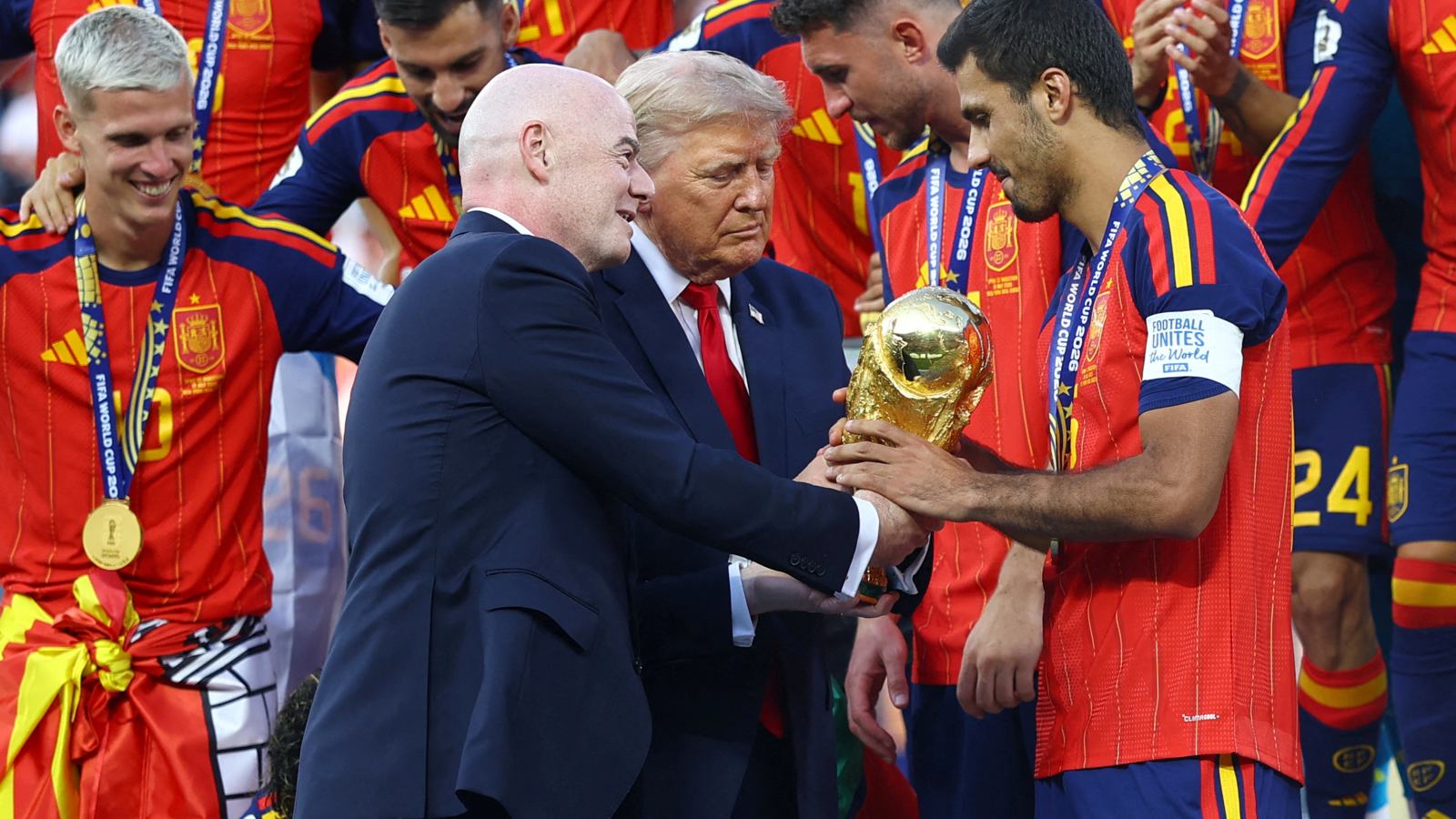
Gianni Infantino remains FIFA president after securing the backing of senior executives at a crisis meeting in Morocco on Wednesday, a significant outcome after the collapse of his plan to sell a stake in FIFA’s World Cup commercial rights triggered calls for his resignation. The immediate threat to his leadership has, for now, receded, but the episode has exposed a moment of instability around one of the most important commercial projects linked to the 2026 FIFA World Cup. With the proposed stake sale falling apart and pressure building inside football’s governing structure, the central development is that Infantino has survived the crisis rather than being forced out. That matters not only for FIFA’s internal politics, but also for continuity in decision-making around the business and presentation of the next World Cup.
- Gianni Infantino remains FIFA president after receiving the backing of senior executives at a crisis meeting in Morocco on Wednesday.
- The meeting took place amid the fallout from the collapse of his plan to sell a stake in FIFA’s World Cup commercial rights.
- The attempted stake sale triggered calls for Infantino’s resignation.
- No resignation followed the meeting, leaving Infantino in place for now.
- The confirmed position is that he has survived the immediate crisis with leadership support.
Why the meeting mattered
The significance of Wednesday’s meeting lies in how quickly a commercial setback became a leadership test. FIFA’s World Cup commercial rights sit at the heart of the organization’s financial strength and strategic reach, so any failed effort to reshape ownership or investment around them was always likely to carry political consequences. Once the attempted stake sale collapsed, the issue moved beyond a business proposal and into a broader debate about confidence in Infantino’s leadership. Calls for his resignation showed that the fallout was serious enough to raise questions about whether he could continue to lead FIFA into the next World Cup cycle.
Instead, the meeting ended with senior executives backing him, the clearest sign that FIFA’s leadership chose continuity over upheaval. That support does not erase the controversy created by the failed plan, but it does steady the organization in the short term. For a governing body preparing for a tournament as large and commercially important as the 2026 World Cup, maintaining a functioning leadership structure is itself a major outcome. The alternative — a resignation or a prolonged vacuum at the top — would have introduced fresh uncertainty at a time when FIFA can least afford distraction around its flagship competition.
The meeting also mattered because it established the immediate balance of power inside FIFA. Senior backing did not resolve the underlying concerns raised by the failed proposal, but it did show that the internal power structure was not prepared to force a change in leadership. In practical terms, that means FIFA can continue planning for 2026 without the disruption of a sudden presidential transition. Politically, however, it also means the organization has chosen to absorb the fallout internally rather than reset publicly through a change at the top.
What the failed rights plan means for FIFA
The collapse of the proposed sale of a stake in World Cup commercial rights remains the key issue beneath the immediate politics and the most consequential part of the story beyond this week’s meeting. Commercial rights tied to the World Cup are among the most valuable assets in global sport, and any attempt to alter how they are controlled, packaged or monetized carries enormous weight. When a plan involving those rights fails, it inevitably invites scrutiny over judgment, governance and strategic planning. That is why the backlash was not limited to disappointment over a business idea falling through; it became a direct challenge to the authority of the president who had championed it.
For FIFA, the episode raises broader questions about how aggressively it should pursue new structures around the World Cup’s commercial future. The 2026 tournament is expected to sit at the center of the organization’s sporting and financial agenda, and any uncertainty around its rights strategy has implications far beyond one meeting. Even with Infantino still in place, the failed plan is likely to remain a reference point whenever FIFA’s leadership asks stakeholders to trust another major commercial initiative. Surviving the crisis gives him time, but it also means he must now manage the aftermath of a setback that damaged confidence enough to provoke open calls for him to step down.
That tension defines the current moment. On one hand, the backing of senior executives indicates that the internal power structure was not prepared to force a change at the top. On the other, the emergence of resignation calls shows that support for the president cannot simply be assumed when major strategic ideas unravel. The difference between surviving a crisis and putting it behind you is substantial, and FIFA appears to be in the first of those two stages. Infantino remains in office, but the failed commercial rights plan has ensured that scrutiny of his leadership will not fade quickly.
There is also an important distinction between what is confirmed and what is not. The verified position is that Infantino remains president after receiving backing at the Morocco meeting and that no resignation followed despite the pressure created by the collapsed stake sale. What is not verified here is the specific claim that he apologized for “mistakes,” so that cannot be treated as established fact. In a story shaped by internal tension and high-stakes governance, that distinction matters because the tone of any response from the president would help define whether FIFA sees this as a contained setback or a deeper failure requiring contrition and reset.
From a 2026 World Cup perspective, the immediate consequence is continuity. FIFA’s preparations and commercial planning now continue under the same president rather than shifting into a transition caused by resignation or removal. That continuity may help preserve operational momentum, but it also places greater responsibility on Infantino and the senior executives who backed him to show that the organization can move beyond the failed proposal without further instability. If they cannot, this week’s meeting may be remembered less as the end of a crisis than as the moment FIFA chose to manage it internally rather than confront a more dramatic change.
The next phase will be judged by whether FIFA can restore confidence in its World Cup commercial strategy while avoiding another bout of leadership turmoil. Infantino has emerged from Wednesday still in office and still supported by senior executives, giving him breathing room after a damaging challenge to his authority. But the collapse of the World Cup rights stake-sale plan remains a serious setback, and the calls for his resignation underline how quickly commercial missteps can become existential political problems. For now, FIFA moves forward with the same president in place, but the pressure remains on its leadership to prove that survival at the Morocco meeting was the start of renewed stability rather than only a temporary reprieve.


Leave a Reply