

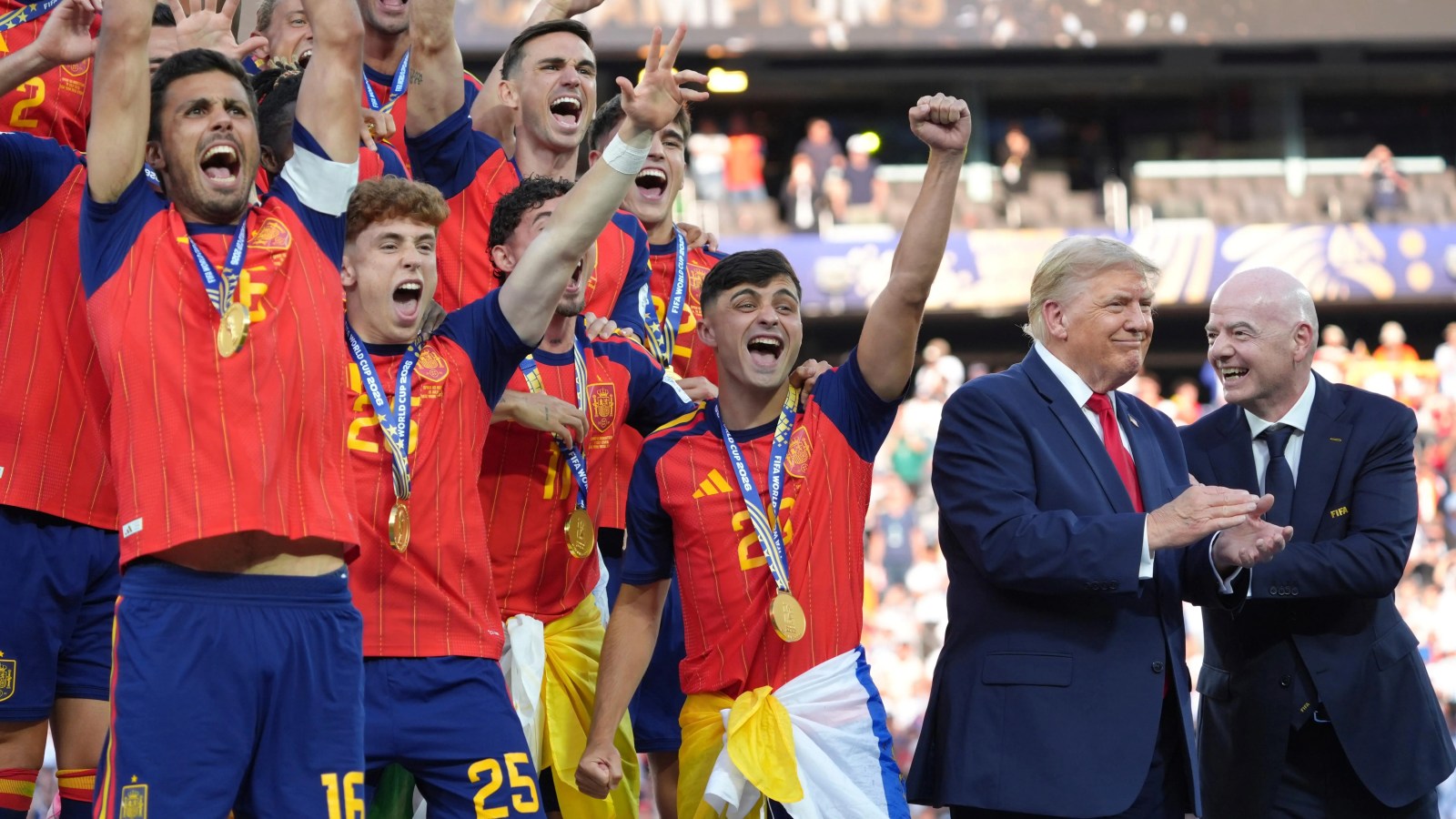
Gianni Infantino is facing a major political setback ahead of the 2026 World Cup cycle, with the English FA set to withdraw its support for his re-election as FIFA president after the collapse of the proposed plan to sell a stake in the World Cup. The significance of the development extends far beyond internal governance, signalling a widening rift between FIFA’s leadership and influential European associations at a critical moment for the tournament’s commercial and political direction. Infantino now sits at the centre of a dispute that stretches from boardroom strategy to the future shape of the game’s most valuable competition. With Wales having already publicly withdrawn its backing and UEFA considering legal action, the pressure has moved beyond isolated criticism and into a coordinated challenge with potentially lasting consequences.
- The English FA is set to withdraw its support for Gianni Infantino’s re-election as FIFA president.
- The FA plans to write to Infantino to make its position clear.
- UEFA is considering legal action against FIFA and Infantino over a now-withdrawn plan to sell a stake in the World Cup.
- Wales has publicly withdrawn its backing for Infantino’s bid to remain FIFA president.
- The growing pressure on Infantino follows the collapse of the proposed World Cup sell-off plan.
European resistance gathers force
The importance of the FA’s expected move lies in both its symbolism and its substance. England remains one of the most prominent voices in world football, and a formal withdrawal of support would amount to a direct rebuke of FIFA’s president at a time when unity around the 2026 World Cup would ordinarily be a priority. The indication that the FA intends to communicate that position in writing underlines that this is not a fleeting expression of frustration but a deliberate institutional decision. In governance terms, that matters because written opposition draws a clearer public and political line, one that other associations may find easier to follow.
Wales withdrawing its backing adds another layer to the pressure, showing that dissatisfaction is not confined to a single federation. Taken together, the positions of England and Wales point to a broader unease within the British game over FIFA’s direction under Infantino. Even without a formal bloc being announced, multiple public breaks in support can alter the atmosphere around any re-election effort. They also intensify scrutiny of every major decision connected to the World Cup, especially when those decisions touch on the tournament’s ownership, value and governance.
UEFA’s consideration of legal action raises the stakes further because it shifts the dispute from political disagreement to the prospect of a formal challenge. At the heart of that tension is the now-withdrawn plan to sell a stake in the World Cup, a proposal that appears to have triggered much of the current backlash. Once a matter reaches the point where legal options are being weighed, it suggests trust has been damaged in a way that routine diplomacy may not quickly repair. For FIFA, that creates a difficult backdrop as it seeks to project stability in the build-up to 2026.
The wider significance is that opposition to Infantino is no longer abstract or confined to private discontent. It is taking shape through formal positions, public statements and the possibility of legal escalation. That combination gives the dispute more weight than a routine disagreement over policy. It also increases the likelihood that other associations will feel emboldened to define their own positions more clearly as the political temperature around FIFA rises.
What the collapsed World Cup plan means
The collapse of the proposed World Cup sell-off plan is the pivotal event in this story because it has transformed a commercial idea into a political crisis. The World Cup is football’s flagship property, and any attempt to sell a stake in it inevitably raises questions about control, accountability and long-term strategy. When a proposal of that scale is withdrawn, the immediate issue may be over, but the damage often lingers in the relationships around it. That appears to be the case here, with the fallout extending into support for Infantino’s leadership rather than ending with the plan’s abandonment.
For the 2026 World Cup, the broader concern is not about the tournament’s existence but about the governance climate surrounding it. Major competitions depend not only on scheduling and infrastructure but also on confidence among member associations that the game’s leadership is acting transparently and in the collective interest. The current dispute threatens to distract from that, replacing momentum with mistrust. Even if no immediate structural change follows, the perception of division at the top of world football can influence how future commercial and political decisions are received.
There is also a strategic dimension to the timing. With the World Cup drawing closer, FIFA would ordinarily want the focus to be on planning, promotion and consensus-building across confederations. Instead, Infantino now faces a narrative shaped by opposition from national associations and the possibility of a legal confrontation with UEFA. That does not automatically weaken his formal position, but it does complicate the environment in which he operates. Every subsequent move connected to the tournament is likely to be viewed through the lens of this failed proposal and the resistance it provoked.
For European football’s leadership, the current moment is about more than one presidency. It is also a test of how firmly associations are prepared to push back when they believe the governance of the World Cup has crossed a line. The FA’s expected withdrawal of support, Wales’ public stance and UEFA’s legal considerations all point to a shared determination to assert influence over the sport’s biggest decisions. Whether that pressure produces compromise, further confrontation or a wider realignment remains unclear, but the immediate effect is unmistakable: Infantino’s authority is being challenged openly by some of the game’s most influential stakeholders.
What happens next will be watched closely across the football world. The FA’s expected letter should clarify England’s position in formal terms, while UEFA must decide whether its concerns remain political or become legal. Wales has already made its view public, leaving open the question of whether other associations will now follow. As the 2026 World Cup approaches, FIFA and Infantino must contain the fallout from the abandoned sell-off plan, but the issue has already grown into a broader battle over trust, control and the future direction of the tournament.


Leave a Reply