

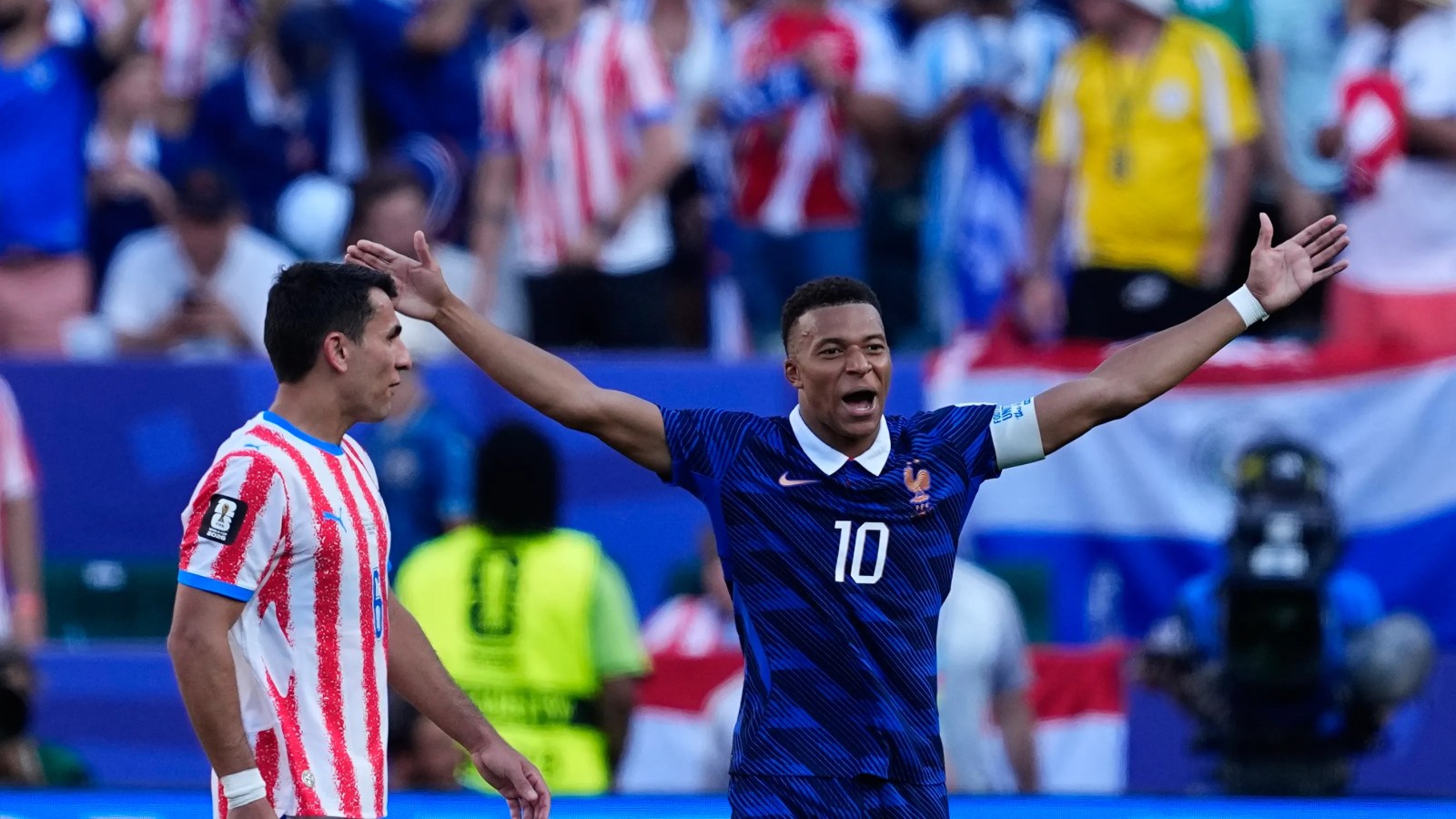
France’s 2026 FIFA World Cup campaign produced another deep run on football’s biggest stage, with Kylian Mbappé leading the team as captain to the semi-finals before the tournament ended with France in fourth place. That blend of achievement and disappointment defines the story of their summer: reaching the last four confirmed France as one of the competition’s strongest sides, but the final placing also underlined how fine the margin remained between an impressive charge and a medal finish. For a nation that arrived with major expectations after reaching the previous World Cup final, the outcome matters because it preserved France’s place among the elite while still leaving a clear sense of unfinished business. Mbappé sits at the center of that narrative, not because of any unverified message or quote, but because of the simple and significant fact that he captained France through another high-pressure tournament run.
- France secured the first semi-final place at the 2026 FIFA World Cup.
- Kylian Mbappé captained France during the tournament.
- France reached the last four, confirming another deep World Cup run.
- France ultimately finished fourth at the 2026 tournament.
- The final placing meant France did not match its runners-up finish from the previous World Cup.
Another deep run, but not the final step
Reaching the semi-finals is, in itself, a major accomplishment at any World Cup. It reflects consistency across multiple matches, emotional resilience in the knockout rounds, and the ability to meet the changing demands of tournament football. France’s path into the final four highlighted that enduring quality. Securing the first semi-final place was especially notable because it signaled not only progress but authority in the decisive phase of the competition, putting France ahead of the field as the quarter-final stage unfolded.
Yet World Cups are judged as much by the final image as by the route taken to get there, and that is why fourth place carries a more complicated meaning. France remained close enough to the summit to dream of another final, but they left without the kind of finish that tends to define a generation. For a team measured against the highest standards, the distinction between semi-finalists and finalists is enormous. The gap between fourth and second is just as significant, particularly for a squad and a football culture that had recently experienced the pressure and prestige of reaching the last match.
That context shapes how this campaign will be remembered. On one hand, France once again proved they belong in the small group of nations capable of sustaining excellence across successive World Cups. On the other, the tournament stopped short of becoming a true continuation of their previous run to the final. The result therefore occupies a middle ground: too strong to be called a failure, yet too incomplete to be celebrated without qualification. That tension is what gives the 2026 campaign its lasting significance.
Mbappé’s leadership and what fourth place means
Mbappé’s role as captain is central to understanding the broader importance of France’s tournament. Leadership at a World Cup is never merely symbolic, especially for a player already so closely associated with France’s modern era. Wearing the armband during a run to the semi-finals placed him at the forefront of the team’s competitive identity, linking the squad’s ambitions, pressure and public expectations to one of the defining figures of the international game. Even without attaching unverified statements to him, the confirmed facts are enough to show that his influence extended beyond individual star power into formal responsibility.
That matters because captaincy changes the lens through which a tournament is viewed. A deep run under Mbappé reinforced the idea that France’s present and future remain tied to his ability to lead as well as perform. It also raised the stakes of the final outcome. When a captain takes a team to the last four, the achievement strengthens his standing, but finishing fourth rather than reaching the final ensures the conversation remains open rather than settled, focusing not only on what was accomplished but on what still has to be completed.
For France as a whole, the 2026 campaign offers both reassurance and challenge. The reassurance lies in the team’s continued presence at the sharp end of the World Cup, where only a handful of nations consistently operate. France did not slide into an early exit or drift through a forgettable tournament; they remained relevant into the closing stages. The challenge lies in converting that relevance into a return to the final, because once a team has established itself as a semi-final regular, the standard inevitably rises from competitiveness to genuine silverware contention.
There is also a broader historical dimension to this finish. International football is often defined by cycles, and sustaining a place near the top across multiple tournaments is one of the hardest tasks in the sport. France’s fourth-place finish shows a side still firmly within that upper tier, even if it did not produce its highest possible outcome this time. The campaign therefore stands as evidence of continuity rather than collapse. It suggests that the foundations for another major challenge remain in place, while also reminding everyone that legacy is shaped by the final steps of tournaments, not only by the early and middle rounds.
In practical terms, the 2026 World Cup leaves France with a clear dual message. The team can look back on a semi-final appearance as proof that its standards remain exceptionally high, and Mbappé can point to captaining the side deep into the competition as an important chapter in his international career. At the same time, fourth place ensures there will be no temptation toward complacency. The gap between being one of the best teams in the tournament and leaving with the prize, or even with a top-two finish, remains the gap France must now close.
What comes next is the attempt to turn that hard-earned position into something greater at the next major opportunity. France leave 2026 with their credibility intact, with Mbappé established as captain during a serious World Cup challenge, and with the experience of another run into the final stages. But they also leave with a result that will sharpen motivation rather than satisfy it. The semi-final breakthrough was real, the fourth-place finish was final, and the next chapter will be judged by whether France can turn another deep run into the ending they could not quite reach this time.

Leave a Reply