

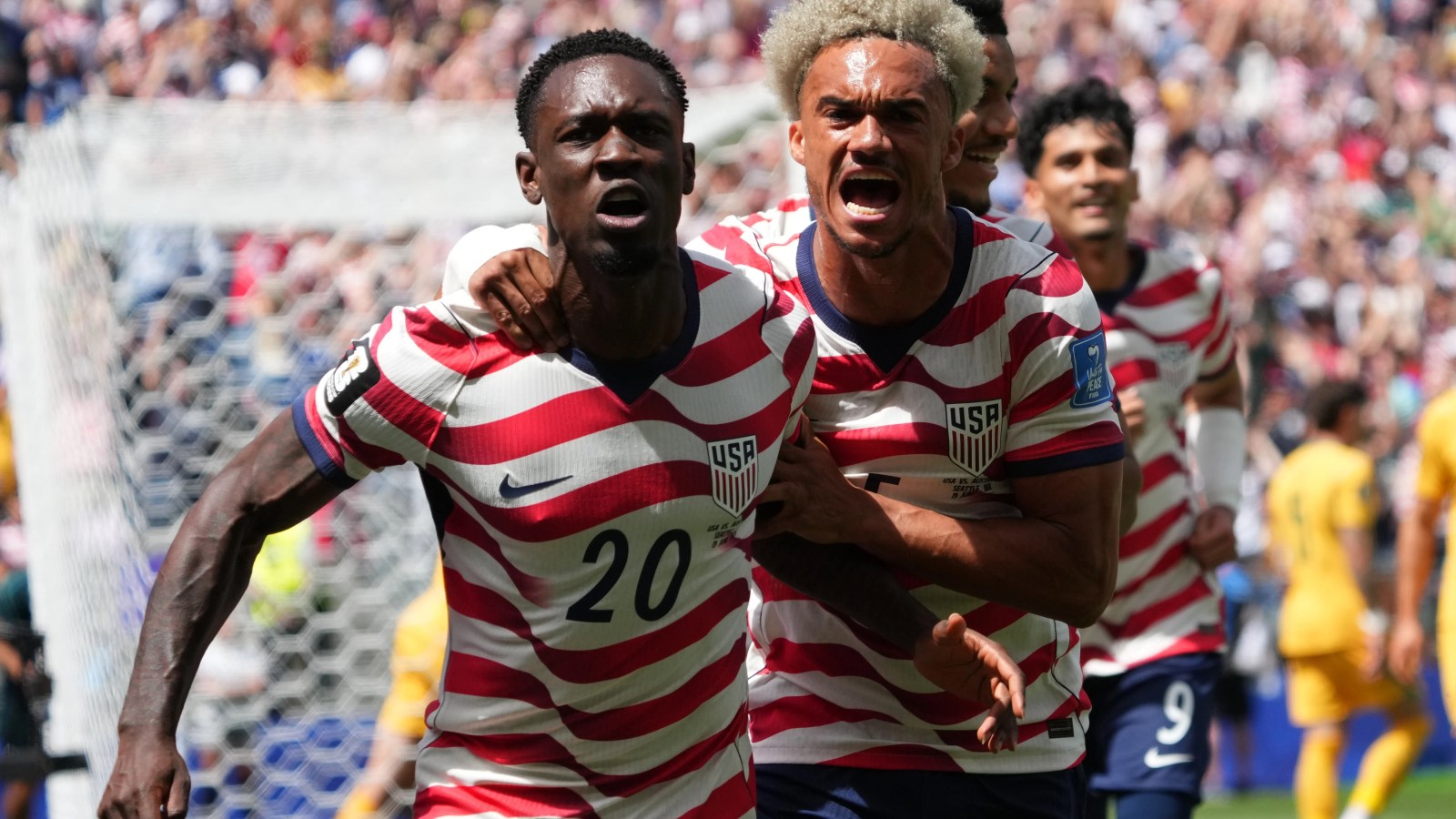
The United States advanced from the World Cup round of 32 with a victory over Bosnia and Herzegovina, but the result may come with a significant cost. Folarin Balogun was sent off and now appears certain to miss the team’s next match. In a knockout tournament, where margins are thin and continuity is vital, the dismissal is more than a disciplinary footnote; it changes the attacking outlook for the Americans at the stage when squad balance matters most. With no mechanism available to appeal a World Cup red card, there is no clear path for the United States to seek a reversal before the quarter-finals. That leaves Balogun as the central figure in the aftermath, not because of a decisive goal or defining display, but because his absence could shape the course of the team’s campaign.
- Folarin Balogun was sent off in the United States’ World Cup round-of-32 win over Bosnia and Herzegovina.
- A World Cup red card cannot be overturned through an appeal, leaving the United States unable to challenge the decision.
- Balogun is set to miss the United States’ next match because a sending-off automatically brings a suspension.
- The available information suggests the suspension could extend beyond one game, although that has not been confirmed.
- The United States must now prepare for its next knockout match without clarity on whether Balogun’s absence will be limited to a single fixture.
Suspension changes the shape of the knockout picture
The immediate consequence is straightforward: the United States will have to play its next World Cup match without Balogun. In tournament football, especially once the bracket tightens and every game carries elimination stakes, losing a forward to suspension can force changes that go far beyond a simple personnel replacement. A team’s pressing structure, its ability to stretch the field and the timing of runs into the penalty area are often built around familiar attacking relationships. Even without further detail on the exact circumstances of the red card, the practical effect is clear enough: the United States has one fewer attacking option available at the point it can least afford disruption.
What makes the situation more difficult is the absence of any recourse. Because there is no mechanism for teams to appeal a World Cup red card, the United States cannot spend the days after its round-of-32 victory trying to restore Balogun’s availability through a formal challenge. That removes an entire layer of uncertainty often seen in domestic or club competitions, where disciplinary decisions can sometimes be reviewed. Here, the planning process becomes brutally simple. The coaching staff must prepare on the assumption that Balogun will not be available, and all tactical work for the next match has to begin from that reality rather than from hope of a late administrative reprieve.
That matters because knockout football punishes instability. The further a team advances, the more valuable continuity becomes, particularly in attacking areas where chemistry and movement are built through repetition. A suspension can interrupt not only selection plans but also the rhythm of a side that has just done enough to keep its campaign alive. For the United States, the challenge now is to preserve the qualities that carried it beyond Bosnia and Herzegovina while adjusting to the loss of a forward who would otherwise have been part of the quarter-final picture.
Why the uncertainty may stretch beyond one game
The other issue hanging over the team is whether the suspension will stop at one match. The available information indicates that a sending-off automatically triggers a ban and also points to the possibility that the punishment could extend beyond a single game, though that has not been confirmed. That uncertainty matters because knockout football demands not only immediate solutions but also medium-term planning. If the United States expects to remain in the tournament into the later rounds, it must think about how to manage attacking roles across more than one fixture, and that affects training loads, lineup decisions and the way substitutes are used.
From a strategic standpoint, uncertainty can be nearly as disruptive as the suspension itself. If the ban is limited to one game, the task is to survive the next hurdle and then restore a familiar option afterward. If it lasts longer, the United States may need to redesign parts of its attacking identity for the remainder of the tournament. That could influence how aggressively the side presses from the front, whether it chooses to play more directly or more patiently in possession, and how much responsibility falls on supporting attackers and midfield runners. In a World Cup, where recovery time is short and opponents only become more difficult, even small tactical adjustments can carry outsized consequences.
There is also a psychological dimension to the moment. Advancing from the round of 32 should generate momentum, confidence and a growing sense of possibility, yet a red card in the same match inevitably complicates the mood. The United States can take satisfaction from progressing, but it must also absorb the reality that one of its forwards will be unavailable when the stakes rise again. Successful tournament teams are often defined by how quickly they compartmentalize moments like this: celebrate the result, accept the punishment and move immediately into problem-solving mode. That is the test now facing the Americans.
For Bosnia and Herzegovina, the match ends in elimination, but Balogun’s dismissal still becomes part of the broader story because it influences the aftermath as much as the result itself. The United States leaves the round with advancement secured, yet the conversation quickly turns to discipline, squad depth and whether the team can maintain its edge without one of its attacking pieces. That is often how knockout football works. A side can win the game in front of it while still paying a price that shapes the next one, and suspensions are among the harshest examples because they cannot be solved by tactical will alone. The bracket moves on regardless, and the United States must do the same.
The coming days will therefore be defined by adaptation rather than appeal. Balogun is set to miss the next match, and until there is clarity on whether the suspension extends further, the United States must prepare for a quarter-final challenge with reduced certainty in its forward line. The round-of-32 victory over Bosnia and Herzegovina keeps the campaign alive, but it also places fresh emphasis on discipline and depth as the tournament intensifies. What happens next will depend on how effectively the Americans absorb Balogun’s absence and reconfigure their attack under pressure. In a World Cup knockout run, progress is all that matters, but the cost of that progress can become the story just as quickly as the result itself.


Leave a Reply