

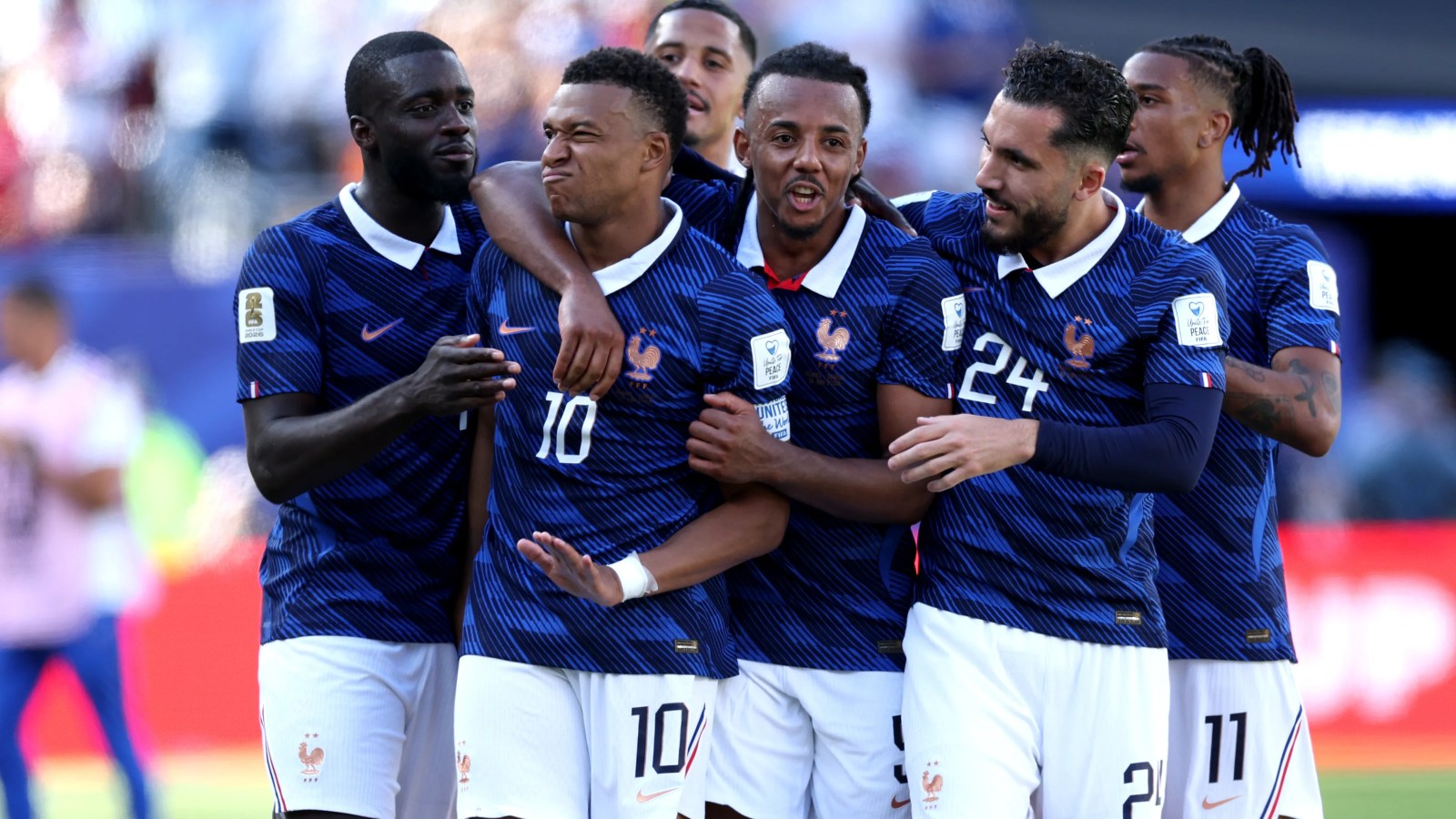
The early picture of the 2026 FIFA World Cup does not support any sweeping claim that Europe is thriving at the tournament. Instead, the opening phase has produced a far more uneven story, with seven of the 10 European teams to have played by June 16 failing to win and the wider conversation quickly shifting to the impact of extreme conditions. Heat has emerged as the central factor in assessing those results, not only because of its possible effect on performances but also because it has become one of the defining issues surrounding the competition. While France was still regarded as the top team in the tournament after two matches by June 24, that status reflects the strength of one side rather than proof of a broader European surge.
- By June 16, seven of the 10 European teams to have played at the 2026 World Cup had failed to win.
- Heat has been raised as a possible factor in Europe’s early struggles during the tournament.
- Wider concerns around the competition have also included heat, cost and environmental impact.
- France was still regarded as the top team in the tournament after two matches as of June 24.
- France’s strong position does not confirm overall European success across the competition.
Early results challenge the narrative
The clearest takeaway from the opening stretch is that Europe’s collective record has not matched the idea of a continent in control. When seven of the 10 teams to have played had failed to win by June 16, the pattern was too significant to dismiss as a mere blip. That does not mean every European side has underperformed to the same extent, nor does it automatically predict what will happen in the knockout rounds. It does, however, make clear that the early tournament landscape has been more complicated than any simple narrative of European dominance.
That matters because expectations for European teams at major tournaments are consistently high, particularly given the depth, resources and competitive structures many of those nations bring into a World Cup. A return of only three wins from the first 10 European participants to play suggests the gap between reputation and reality was exposed early. In tournament football, starts shape the mood as much as the standings, and this one has forced a reassessment of what success is likely to look like. Rather than setting the pace across the board, European teams have had to navigate a far more demanding opening environment.
The later update that still placed France at the top of the competition after two matches adds useful balance, but it does not overturn the broader trend. France can be excellent while Europe as a whole remains inconsistent; those two ideas are not in conflict. In fact, France’s standing may underline the point that the continent’s hopes are being carried by select elite sides rather than by a uniform wave of strength. That distinction is important when judging the tournament as a whole, because one standout team cannot be used as evidence that every European contender is flourishing.
It is also a reminder that early tournament narratives can harden too quickly. Europe’s reputation means a handful of strong performances can easily be taken as confirmation of expected superiority, but the results to this point do not justify that conclusion. The opening phase has instead highlighted variability from team to team, with some sides adjusting better than others and several falling short of the standards attached to them before the tournament began. For now, the evidence points to a region still searching for consistency rather than one imposing itself on the field.
Heat shapes performance and perception
Heat has quickly become central to understanding the tournament, both in football terms and in the wider debate around staging conditions. As a possible factor in Europe’s early struggles, it offers one explanation for why teams accustomed to different climates may have found it difficult to impose their usual tempo and control. High temperatures can affect pressing intensity, recovery runs and concentration, all of which are especially important in the opening rounds when squads are still trying to settle into the competition. Even without attaching the issue to any one specific match, the broader pattern has made heat impossible to ignore.
That influence extends beyond results because it changes how games are managed. In hotter conditions, teams may be forced into more conservative rhythms, with less sustained pressure and a greater premium on energy conservation. Sides that usually rely on repeated high-intensity phases can look less fluid when they are unable to maintain those demands for long stretches. If Europe’s early record has been below expectations, part of the explanation may lie in how difficult it has been for some teams to reproduce their preferred style under those conditions.
The wider concerns around this World Cup have also expanded the significance of the issue. Heat is not being discussed in isolation, but alongside cost and environmental impact, which means the conversation has moved beyond matchday inconvenience to a broader judgment on the event itself. That gives every difficult performance an added layer of scrutiny, because poor results can appear to reinforce concerns about whether the tournament environment is serving the football well. As a result, Europe’s uneven start has become part of a larger story about adaptation, planning and the demands placed on teams in this edition of the World Cup.
France’s position after two matches shows that adaptation is possible and that top-level quality can still rise above the conditions. Yet even that positive example should be treated carefully. Being regarded as the tournament’s top team at that stage says much about France’s standard and composure, but it does not erase the evidence that many other European sides had been unable to convert expectation into wins. The more accurate reading is that the tournament has rewarded the teams best able to manage the environment, rather than any region enjoying automatic superiority.
That leaves the European contingent at an intriguing point in the competition. The opening numbers suggest underachievement relative to reputation, but they do not close the door on recovery or deeper runs from several sides. Tournament football often turns on adaptation, and the teams that learn fastest from the first two matchdays can still reshape the narrative. For now, though, the evidence is clear: Europe’s start has been mixed, heat has been a major talking point, and France stands out as the exception rather than proof of a continent-wide trend.
The next phase will determine whether this is remembered as a temporary wobble or the sign of a more fundamental shift at the 2026 World Cup. European teams still have time to respond, but they must do so in conditions that have already tested them and under a spotlight sharpened by wider concerns over heat, cost and environmental impact. France has shown that strong form remains possible, yet the broader group has more to prove before any claim of European success can be taken seriously. Until those results arrive, the early story of the tournament is one of caution, adjustment and a challenge to assumptions.



Leave a Reply