

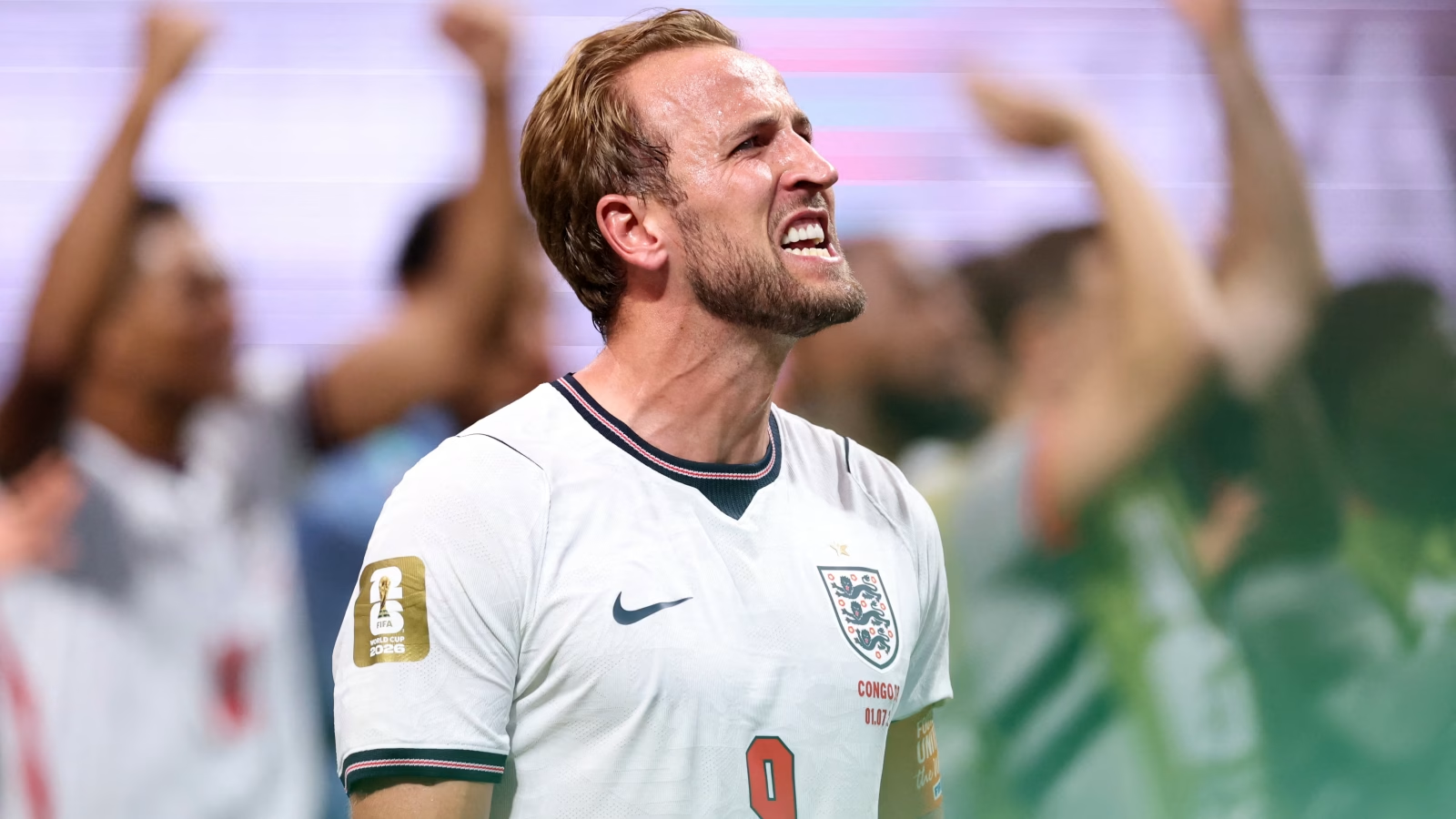
England have secured progress to the knockout stage of the 2026 World Cup as group winners, an important step that gives them control over their immediate route through the tournament and confirms their status among the contenders heading into the elimination rounds. Their next assignment came against DR Congo in the round of 32 on July 1, underlining the shift from the measured demands of the group stage to the unforgiving reality of knockout football. The central fact is straightforward: England have done enough to finish first in their section and move on. More than anything, this is a moment defined not by embellishment but by the practical value of qualification, seeding and the opportunity now in front of them.
- England have progressed to the knockout stage of the 2026 World Cup as group winners.
- England faced DR Congo in the round of 32 on July 1.
- Official tournament highlights were listed for England’s match against DR Congo.
- England’s group-winning finish confirms a successful opening phase and carries them into the elimination bracket.
Group Stage Job Completed
Finishing top of a World Cup group is never a trivial achievement, regardless of how a team gets there. It reflects consistency across three matches, the ability to collect the necessary points and the composure to avoid the kind of slip that can turn a promising campaign into a complicated one. For England, ending the group phase in first place means the primary objective of the opening round was met cleanly. In tournament football, that matters because it allows a side to move forward with certainty rather than spending the closing days of the group stage calculating permutations and depending on outside results.
There is also broader significance in winning the group rather than merely advancing. The difference can shape the tone of the knockout path, influence preparation and reinforce confidence within the squad. A team that tops its section has tangible proof that it handled the first challenge placed in front of it, and that can provide an important psychological platform when margins become finer in the rounds that follow. England now enter the knockout phase with that platform in place, carrying the label of group winners rather than simply survivors.
What can be said with confidence is that England’s progress has been formalised and the tournament has moved into a different mode for them. The group stage allows room to recover from a difficult moment; the knockout stage does not. Every decision, every spell of control and every lapse now carries greater weight. That is why the confirmed facts around England’s campaign are significant enough on their own: they have advanced, they have won the group, and they have reached the point where execution becomes everything.
What the DR Congo Match Means
England’s round-of-32 meeting with DR Congo on July 1 marked the beginning of that elimination test. The listing of official tournament highlights for the match confirms its place in the knockout schedule and reinforces the basic timeline of England’s campaign. Once a team reaches this stage, the conversation naturally shifts from accumulation to consequence. There are no longer standings to manage or future group fixtures to balance against immediate needs; there is only the requirement to get through the next match and keep the campaign alive.
That shift places a premium on clarity and discipline. Group winners are often judged not only on whether they advance but on whether they can translate early control into knockout resilience. England’s position at the top of the group suggests they built a solid enough foundation to earn that opportunity. The challenge against DR Congo therefore stands as the first direct measure of how effectively England can carry their group-stage work into a one-off contest where the stakes are absolute.
It is also important to separate established fact from interpretation. England being through as group winners is verified, and the round-of-32 meeting with DR Congo is established. But broader claims about the team having already reached the last 16, or specific tactical conclusions about individual solutions in certain positions, are not supported here and should not be treated as settled fact. That distinction matters because World Cup analysis can quickly become overconfident, especially when a major team advances. The stronger piece of reporting remains anchored to what is actually confirmed.
From England’s perspective, the confirmed picture is still an encouraging one. Group winners usually earn that status by showing enough balance to navigate different types of matches, whether through control of possession, defensive concentration or the ability to take key moments when they arrive. Even without adding unsupported detail, the outcome itself tells a meaningful story. England have put themselves in the strongest available position from the group stage and given themselves the chance to shape the tournament on their own terms in the rounds ahead.
For DR Congo, the significance of the fixture is equally clear. Any knockout match against a group winner presents both a challenge and an opportunity, with underdogs often looking to disrupt rhythm and turn the game into a contest of nerve. England’s status at the top of their section would naturally place expectation on them, while DR Congo could approach the occasion with the freedom that comes from facing a side carrying greater external pressure. That dynamic is part of what makes the knockout stage compelling: previous results shape the bracket, but they do not decide the next game.
The larger context for England is that major tournaments are often remembered less for how teams begin than for how they adapt once the margin for error disappears. Winning the group is valuable, but it is only the first layer of a successful campaign. The knockout rounds demand a different kind of control, built on concentration, game management and the ability to handle momentum swings without the safety net of another fixture to come. England have earned the right to confront that challenge from a position of relative strength, and that alone makes their progress one of the more important developments at this stage of the competition.
What comes next is straightforward in structure, even if demanding in practice. England’s route now runs through knockout football, beginning with the confirmed meeting against DR Congo and continuing only if they keep winning. As group winners, they have completed the first mission of the World Cup and placed themselves in contention for a deeper run. The next phase will determine whether that strong opening becomes the foundation of a serious title challenge or simply the prelude to a more difficult story.

Leave a Reply