

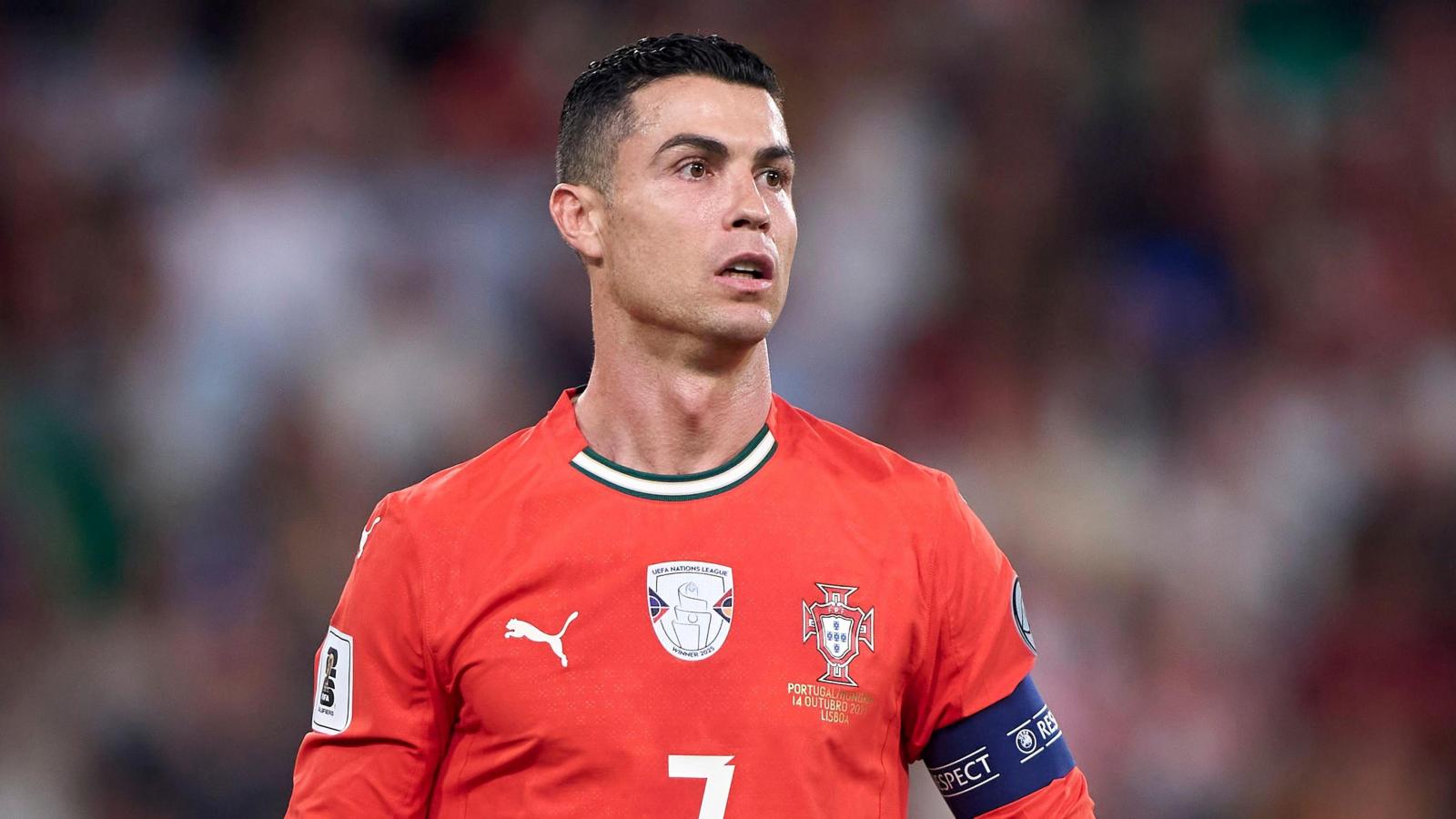
Cristiano Ronaldo’s place in World Cup history is back in focus ahead of the 2026 tournament, with debate intensifying over whether football’s biggest international stage will ultimately define his career. Ronaldo has made his own view clear, insisting the World Cup will not define his legacy, yet the discussion persists because of the competition’s scale and the weight it carries in any assessment of the game’s greatest players. What makes the subject especially compelling is that Ronaldo is not approaching 2026 as a figure seeking relevance, but as one who has already produced landmark achievements on this stage. His record as the first male player to score in five different World Cups ensures his name is already deeply embedded in tournament history.
- Cristiano Ronaldo’s World Cup legacy is a major talking point ahead of the 2026 tournament.
- Ronaldo has said that the World Cup will not define his legacy.
- He is already the first male player to score in five different World Cups.
- Ronaldo later became the first player to score in six World Cups after netting twice in Portugal’s 5-0 win over Uzbekistan.
- He will be 41 during the 2026 tournament, raising the prospect that it could be his final World Cup appearance.
A legacy already secured on the biggest stage
The central tension in this debate is that Ronaldo’s World Cup story can be viewed from two angles at once. On one side, the tournament remains the most visible measuring stick in international football, the competition most likely to shape public memory across generations. On the other, Ronaldo’s body of work is already so extensive that reducing his standing to one event, however prestigious, risks overlooking the breadth of what he has achieved. His own position reflects that second argument, and it is strengthened by the fact that he has repeatedly broken new ground in World Cup competition rather than merely taking part in it.
Being the first male player to score in five different World Cups is not just a statistical footnote; it reflects extraordinary longevity, adaptability and consistency across eras. Different tournaments bring different teammates, tactical demands, opponents and physical realities, yet Ronaldo found a way to leave a scoring mark again and again. That kind of record is inseparable from legacy because it captures one of the hardest qualities to sustain in elite sport: relevance over time. It also means the discussion ahead of 2026 is not about whether Ronaldo belongs in World Cup history, but about how much further he can extend a chapter that is already exceptional.
The significance of the later milestone is even more striking. Ronaldo became the first player to score in six World Cups after netting twice in Portugal’s 5-0 win over Uzbekistan, a development that pushes the conversation beyond traditional tournament boundaries and toward a broader reflection on durability at international level. Even without attaching every honour or comparison that often surrounds his name, that achievement alone reinforces the idea that his relationship with the World Cup is defined by endurance as much as by moments. It also sharpens the intrigue around 2026, because every appearance now carries the sense that he is adding to a record book that already bears his imprint.
That is why the question of whether the World Cup defines Ronaldo can never be answered in simple terms. The tournament is too important to be dismissed from the conversation, but his achievements within it are already too substantial for his legacy to be framed as incomplete. He has not merely appeared on the sport’s grandest international stage; he has shaped part of its modern history through sustained scoring across multiple editions. That distinction matters because it changes the nature of the debate. Rather than asking whether he has done enough, the focus shifts to whether 2026 can add a final layer to a story that is already historically significant.
Why 2026 carries such emotional and historical weight
The age factor gives the 2026 tournament a particularly compelling edge. Ronaldo will be 41 during the competition, and that reality inevitably frames it as a possible final World Cup appearance. In practical terms, that makes every discussion about his role, influence and output feel more consequential, because there may be no later edition to reshape the narrative. In emotional terms, it creates a natural moment for reflection, with the football world weighing not only what Ronaldo might still do, but what his sustained presence says about his career as a whole.
That is why the idea that the World Cup defines him can feel both overstated and unavoidable. It is overstated because very few players in football history have built a résumé broad enough to resist being judged by a single tournament alone, and Ronaldo plainly belongs in that category. Yet it is also unavoidable because the World Cup has a unique power to condense judgment into a handful of matches and moments, especially when a player arrives with such an established reputation. For Ronaldo, then, 2026 is less about proving he matters and more about determining the final shape of a story that has already stretched across multiple World Cup cycles.
There is also wider significance for Portugal in the way this conversation unfolds. When a player of Ronaldo’s stature enters another World Cup year, the focus naturally broadens from individual legacy to national ambition and identity. His presence carries symbolic weight, but it also raises practical questions about how Portugal can maximise the experience, composure and scoring instinct that have defined his international career for so long. Even without projecting tactical details that are not yet established, it is clear that any path Portugal takes into 2026 will be viewed through the lens of whether this generation can make the most of having one of the game’s enduring figures still involved.
For Ronaldo himself, the most striking aspect of the current debate may be what it reveals about his rare sporting position: he is simultaneously beyond needing validation and still capable of creating new historical markers. That combination is what keeps the legacy discussion alive. If 2026 does become his final World Cup, it will be interpreted not only as an ending but as the closing act of a relationship with the tournament that has already produced unprecedented scoring continuity. If he adds anything more, the argument over whether the World Cup defines him may continue, but the evidence will only grow stronger that he has, in return, defined a significant part of the World Cup’s modern history.
As the 2026 tournament approaches, the road ahead is shaped less by uncertainty over Ronaldo’s stature than by anticipation of what may come next. He has already set the benchmark as the first male player to score in five different World Cups and then extended that distinction by becoming the first player to score in six. At 41, he may be heading toward a final appearance on football’s grandest international stage, and that possibility gives every step toward the tournament added significance. Whether or not the World Cup defines his legacy in the way others insist, 2026 offers Ronaldo one more chance to deepen a record that is already unique.

Leave a Reply