
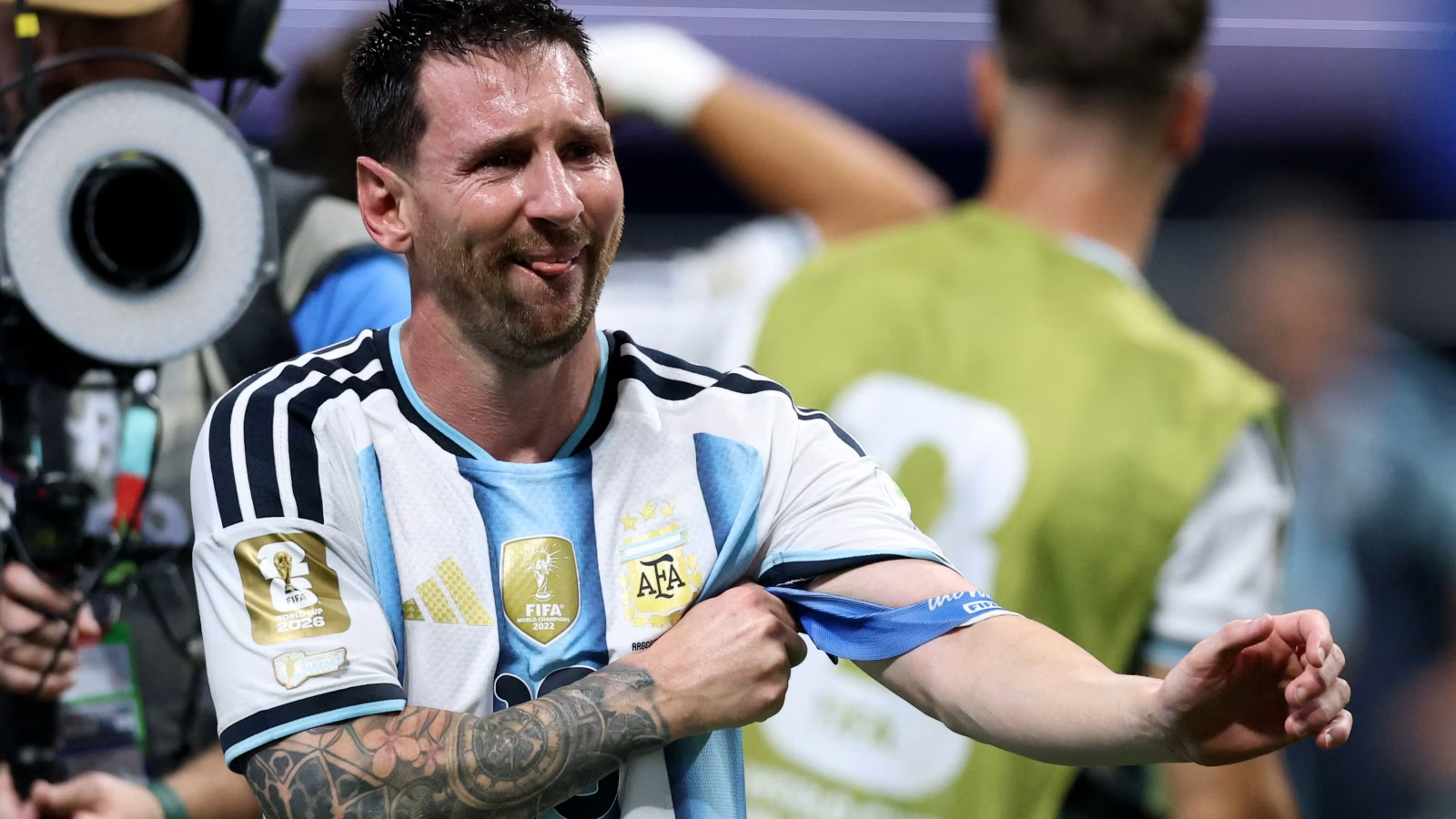
Argentina remains one of the defining stories in the build-up to the 2026 FIFA World Cup, with the defending champions certain to command global attention as the tournament approaches. But one point needs to be handled carefully: the claim that fans were celebrating in the streets of Buenos Aires is not supported by the available evidence. That distinction matters. In the noise and excitement of a World Cup cycle, separating confirmed tournament information from unverified scenes and speculation is essential, especially when scrutiny around Argentina is naturally heightened by its status as the team to beat. At this stage, the clearest verified picture is not one of confirmed public celebration, but of a nation and a squad being closely followed as the next World Cup comes into sharper focus.
- Argentina is being tracked for the 2026 FIFA World Cup through its team page, fixtures, results and squad information.
- Argentina is the defending world champion heading into the 2026 tournament.
- The claim that Argentina fans were celebrating in the streets of Buenos Aires is not verified by the available evidence.
- Verified tournament-related information includes Argentina’s group-stage match locations, with Kansas City and Dallas referenced among the host cities.
What Is Verified About Argentina’s 2026 World Cup Picture
The strongest confirmed details concern Argentina’s tournament profile rather than any off-field celebration scene. Argentina has an established team page for the 2026 World Cup, and its fixtures, results and squad information are being tracked as part of the tournament build-up. That is standard for any major contender, but in Argentina’s case it carries added significance because the team enters this cycle as defending champion. Every update on the squad, the schedule and the possible route through the competition will be examined more closely than most, and that alone helps explain why stories connected to the national team can spread quickly.
Being the defending champion changes the lens through which every Argentina development is viewed. There is an expectation that interest around the team will stretch well beyond matchdays, and that public emotion will attach itself to even minor milestones on the road to 2026. Yet that wider context should not be mistaken for confirmation of a specific event. The available evidence does not establish that fans were celebrating in the streets of Buenos Aires, and without that verification, the claim cannot be treated as fact. In practical terms, the responsible conclusion is simple: Argentina’s prominence is undeniable, but this particular street-celebration story remains unconfirmed.
The verified information that is available already says plenty about Argentina’s place in the tournament narrative. The team is firmly embedded in the competition framework, with fixtures, results and squad details being monitored as part of the broader World Cup picture. That reflects not only Argentina’s football stature but also the scale of interest that follows any title defence. The champions do not move quietly through a World Cup cycle, and every confirmed detail becomes part of a larger discussion about readiness, pressure and expectation.
There is also value in focusing on what can be established with certainty. Confirmed tournament information offers a clearer and more useful view of Argentina’s current position than emotionally charged but unsupported claims. It shows a team already being mapped within the structure of the 2026 event, with practical details taking shape and the outline of its campaign beginning to emerge. That is the most reliable way to understand where Argentina stands right now: not through unverified imagery, but through the documented framework of its World Cup path.
Why Verification Matters in the World Cup Build-Up
World Cup coverage often unfolds in an atmosphere of constant anticipation, where national mood, fan culture and tournament expectation become part of the story almost as much as the football itself. Argentina is one of the clearest examples of that dynamic because the country’s relationship with the World Cup is emotionally charged and globally visible. That is exactly why unverified claims can gain traction so quickly. A suggestion of celebrations in Buenos Aires may sound plausible in football terms, especially with Argentina carrying the title of defending champion, but plausibility is not the same as verification. For a tournament followed as closely as the 2026 World Cup, that distinction is more than technical; it shapes how the wider narrative is built and understood.
The verified details that do exist provide a more grounded picture of Argentina’s current position. The tournament infrastructure around the team is already in place, with fixtures, results and squad information being monitored, and group-stage match locations including Kansas City and Dallas already referenced. Those location details matter because they begin to sketch the geography of Argentina’s early tournament path, even if they say nothing about fan scenes back home. They also underline how much of the 2026 conversation is shifting from abstract expectation to concrete planning. Travel, preparation and competitive rhythm will all become more defined as the tournament draws closer, and that is where the most dependable reporting remains focused.
From a football standpoint, Argentina’s status as defending champion ensures that every confirmed detail carries competitive significance. Opponents will measure themselves against the title holder, supporters will track every scheduling development, and the team’s group-stage route will be assessed for both opportunity and risk. Kansas City and Dallas being part of the picture is relevant because host-city assignments are not merely logistical notes; they form part of the broader framework in which a campaign is built. Conditions, travel demands and the sequence of matches can all influence the tone of a group stage. Even without going beyond the verified information, it is already clear that Argentina’s road to defending the title is being mapped in practical terms.
For supporters, the immediate takeaway is that there is a clear difference between the confirmed momentum of Argentina’s World Cup preparation and the unconfirmed imagery that can attach itself to a major football nation. The team’s place at the centre of the 2026 conversation is beyond dispute. What is not beyond dispute is the claim of street celebrations in Buenos Aires, and that claim should therefore be treated with caution. In a World Cup cycle, disciplined reporting is not about stripping emotion from the story; it is about making sure that emotion rests on facts that can be supported. Argentina does not need embellishment to remain one of the tournament’s defining narratives.
What comes next is likely to be a steady accumulation of verifiable tournament detail around Argentina rather than confirmation of this specific celebration claim. Attention will remain fixed on the defending champions as their fixtures, squad picture and route through the group stage continue to take shape, with Kansas City and Dallas already part of the confirmed tournament map. Until further evidence emerges, the reported scenes of fans celebrating in Buenos Aires should remain in the unverified category. The larger confirmed reality is compelling enough on its own: Argentina is heading toward the 2026 World Cup carrying both the prestige and the burden of defending the crown.




Leave a Reply