


Argentina’s confirmed place at the 2026 FIFA World Cup has brought the South American giants back into sharp focus, with Lionel Messi again emerging as the defining figure after scoring eight goals and finishing with the adidas Silver Boot. While speculation continues over what comes next for Messi and the wider Argentina squad after the tournament, the verified picture is more limited and still highly significant: Argentina are listed in Group J, they are part of a World Cup scheduled to run from June 11 to July 19, 2026, and they travelled with a 26-man squad. Those facts alone frame a major story, underlining both Argentina’s enduring presence on football’s biggest stage and Messi’s lasting influence in a competition that once more placed him at the center of attention. In a tournament shaped by pressure, expectation and global scrutiny, Argentina’s status and Messi’s output remain the clearest indicators of where the team stands.
- Argentina are listed for the 2026 FIFA World Cup and have been placed in Group J.
- The 2026 tournament is scheduled to run from June 11 to July 19, 2026.
- Lionel Messi scored eight goals during the tournament.
- Messi finished the competition with the adidas Silver Boot.
- Argentina brought a 26-man squad to the 2026 World Cup.
Messi remains the defining figure
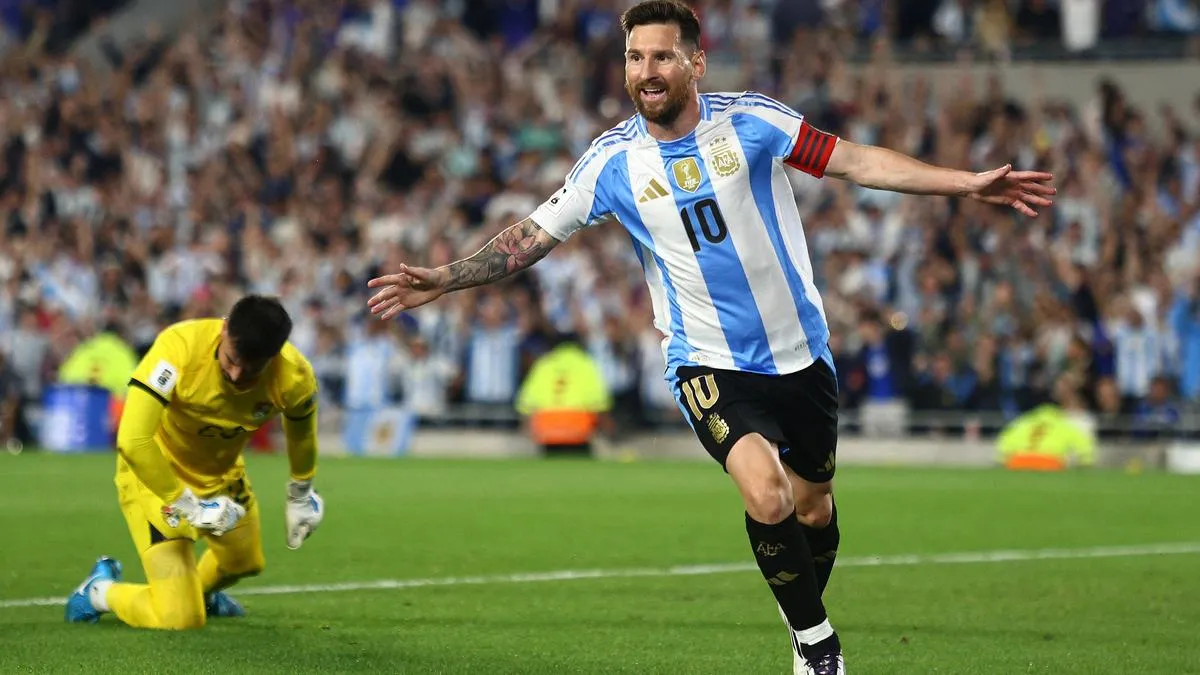
Messi’s return of eight goals is the clearest competitive detail available, and it says a great deal about Argentina’s attacking identity at the tournament. A total like that does not happen by chance in a World Cup setting, where space is tighter, opponents are more varied and every match presents a different tactical challenge. Even without a full match-by-match breakdown, the number itself points to a player who remained central to Argentina’s progress and to the way the side created and finished chances. The adidas Silver Boot adds another layer, confirming that Messi was not merely influential in isolated moments but one of the tournament’s most productive attacking players across its full duration.
That matters for Argentina beyond individual recognition. When a leading scorer also serves as the emotional and technical reference point of a team, his form shapes the rhythm of the entire campaign. Messi’s eight-goal contribution suggests Argentina were able to channel possession, territory and decisive attacking phases through their most accomplished player, trusting him to turn pressure into tangible outcomes. It also reinforces a broader football truth: tournament football often turns on elite difference-makers, and Argentina once again had one in decisive form. In a World Cup environment, where margins are thin and knockout stakes intensify quickly, that kind of reliability can define how far a team goes.
Messi’s output also sharpens the broader reading of Argentina’s campaign. Goals at this level are not simply a matter of finishing; they are often the final expression of structure, timing and collective belief. For a player to produce eight across a World Cup requires not only individual quality but also a team framework capable of repeatedly placing him in dangerous situations. That does not reduce the achievement. If anything, it highlights how Messi’s influence can elevate the entire attacking system around him, giving Argentina a focal point capable of deciding matches under the heaviest pressure. The Silver Boot, in that sense, stands as both an individual honor and a reflection of the team’s ability to remain competitive at the highest level.
What Group J and the squad structure tell us
Argentina being listed in Group J provides the first formal marker of the team’s route through the competition. Group placement is more than a scheduling detail; it establishes the framework within which every tactical and emotional decision is made. Teams do not approach a World Cup in the abstract, but through the immediate demands of group-stage management, where balance is essential between control, ambition and risk. For Argentina, being in Group J meant their campaign began with the same core challenge every contender faces: gather enough points and momentum to advance while preserving the cohesion needed for the later rounds. Even without the full group composition here, the listing itself places Argentina within the tournament’s competitive architecture and confirms their active role in the 2026 field.
The 26-man squad is another important detail because it speaks to the scale and complexity of modern World Cup planning. A squad of that size creates room for tactical flexibility, rotation and contingency, all of which become crucial over a tournament running from June 11 to July 19, 2026. That timeline stretches across more than a month, demanding not only quality but also durability, recovery management and internal competition for places. Argentina’s 26-man group therefore represents more than a roster number; it reflects the depth required to navigate a long, high-intensity international event. In practical terms, it means the campaign was never only about the starting lineup, but about how a full national-team structure supports key performers such as Messi over several rounds.
The tournament dates also sharpen the sense of scale around Argentina’s challenge. A World Cup running from mid-June to mid-July is not a brief sprint but an extended examination of form, resilience and adaptability. Teams must be ready to respond to shifting opponents, changing physical demands and the psychological strain that builds as the competition narrows. For Argentina, that long runway would have increased the importance of leadership, experience and the ability to manage big moments repeatedly rather than only once. Messi’s scoring record fits neatly into that context, because sustained output over the life of a tournament is usually the sign of a player and a team capable of handling repeated high-pressure assignments.
At the same time, the limits of the verified information matter. There is no confirmed detail here about where Messi or Argentina’s players will be after the 2026 World Cup in club terms, and that absence is significant because it keeps the focus squarely on what the tournament itself established. The strongest conclusions available are football conclusions: Argentina were there, they were organized around a full 26-man squad, they competed from within Group J, and Messi delivered one of the standout individual scoring returns of the event. That is enough to support a meaningful reading of Argentina’s campaign without drifting into transfer speculation or post-tournament forecasting that cannot be verified. In a football landscape often crowded by projection, the confirmed facts still paint a compelling picture of continuity, stature and elite-level influence.
What comes next is less important than the enduring significance of what Argentina showed at the 2026 World Cup. Their presence in Group J, the structure of their 26-man squad and Messi’s eight-goal tournament all point to a team that remained firmly relevant on the global stage from June 11 through July 19. For Argentina, that keeps the conversation anchored in performance and competitive standing rather than conjecture. For Messi, the Silver Boot is another marker of lasting excellence in football’s biggest arena, and for Argentina as a whole it ensures their 2026 campaign will be remembered first for the impact they made on the pitch.

Leave a Reply