


Australia’s opening day in the first Test against New Zealand in Wellington witnessed several note worthy moments, setting the stage for an intriguing contest. Here are the key talking points from Day 1:
1. Cameron Green’s Century:

Cameron Green’s magnificent century rescued Australia from a precarious position, showcasing his talent and justifying the selectors’ faith in him at the No. 4 position. His partnership with provided crucial momentum, shifting the balance in Australia’s favor.
2. Mitchell Marsh-Cameron Green Partnership:
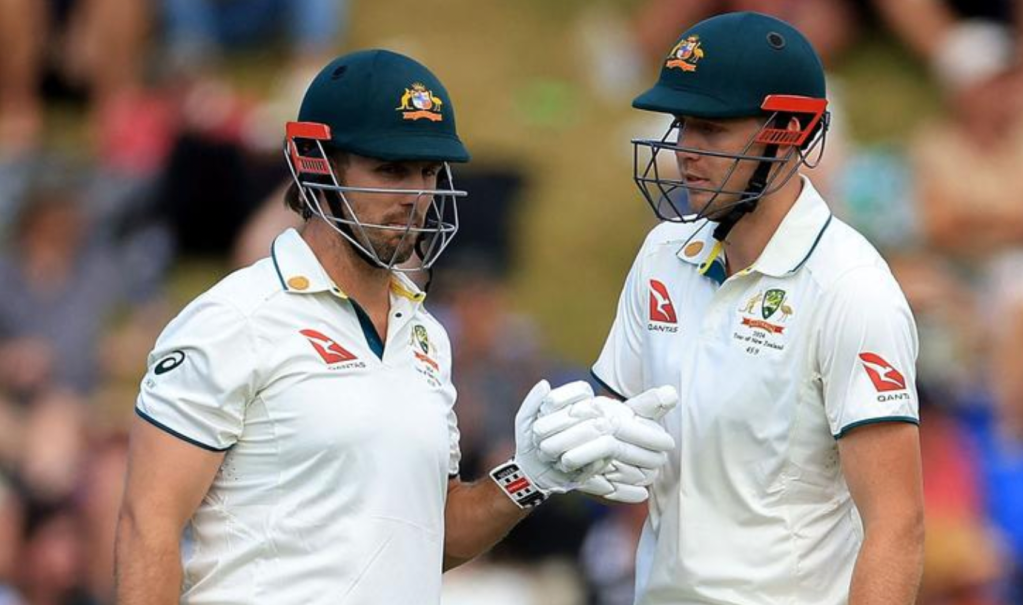
The partnership between Mitch Marsh and Cameron Green demonstrated the potential synergy between the two Western Australians. Marsh’s aggression complemented Green’s measured approach, stabilizing the innings during a challenging phase.
3. Labuschagne’s Struggles:
Marnus Labuschagne’s batting woes continued as he fell cheaply yet again, displaying signs of tentativeness at the crease. With three consecutive dismissals in the slips, questions arise about his form and approach, indicating a need for improvement.
4. Khawaja’s Milestone:
Usman Khawaja’s patient innings marked a significant milestone as he became only the second Australian to surpass 2500 Test runs after turning 35. His return to the team has been marked by consistent performances, reaffirming his value at the top of the order.
5. Warner-less Australian Approach:
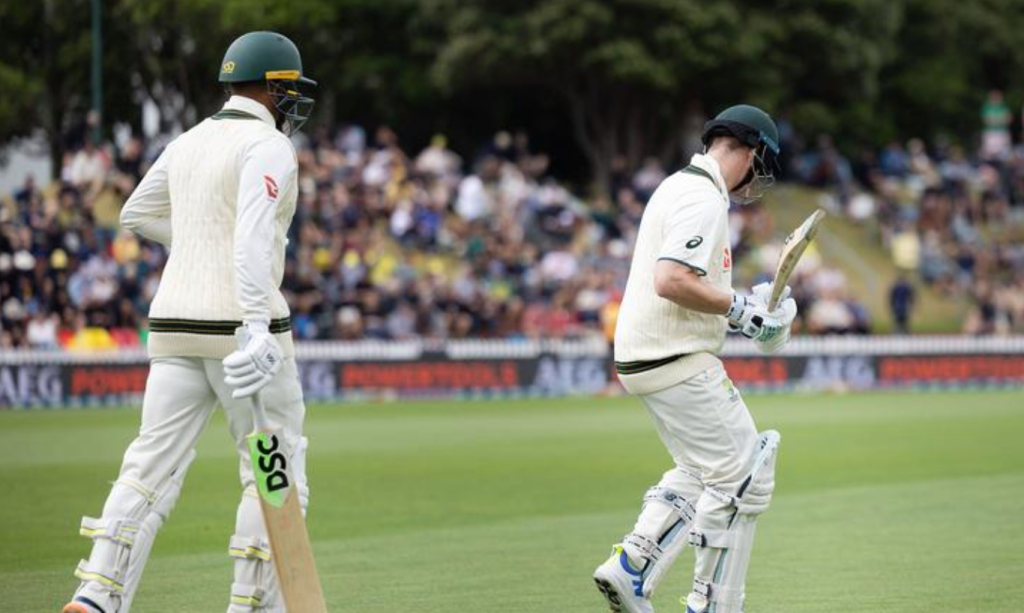
The absence of David Warner was palpable as Australia’s opening pair adopted a more conservative approach, focusing on survival rather than aggression. The contrasting style reflects the void left by Warner’s aggressive batting at the top.
6. Kiwi Quick’s Length Woes:

New Zealand’s bowlers struggled to find the right length early on, bowling slightly short and failing to hit the stumps consistently. Adjustments were made later in the session, leading to break throughs and highlighting the importance of pitch perfect deliveries.
Overall, Day 1 provided a blend of resilience, struggles, milestones, and adjustments, setting the stage for an intriguing battle between the two sides.



Leave a Reply