

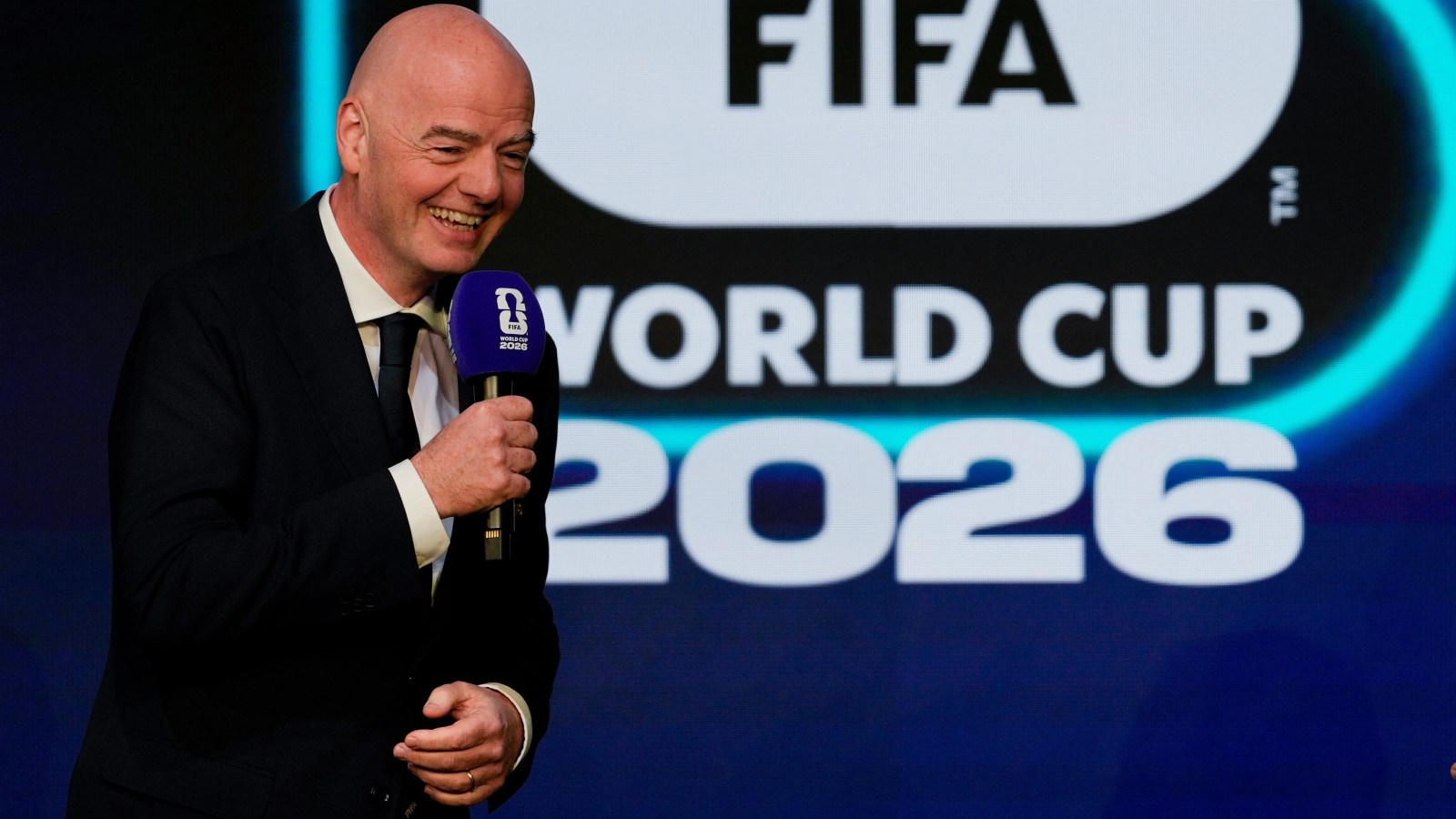
FIFA has said there is a concerted and ongoing effort to remove Gianni Infantino as president, thrusting the leadership of world football’s governing body back into the spotlight at a crucial stage in the build-up to the 2026 World Cup. The significance of the dispute extends well beyond internal politics, arriving as preparations for the expanded tournament gather pace and scrutiny increases over how the competition is being managed. Infantino sits at the center of the story, both because FIFA says he is the target of a coordinated campaign and because separate pressure is mounting for him to step aside. With legal action alleging favoritism toward one player and one country during the 2026 World Cup, the governance debate is now colliding directly with the credibility of the tournament itself.
- FIFA says there is a concerted and ongoing effort to remove Gianni Infantino as president.
- The dispute has emerged after FIFA scrapped plans to sell stakes in World Cup-related operations to private investors.
- Calls are growing for Infantino to resign amid legal action alleging favoritism toward one player and one country during the 2026 World Cup.
- FIFA has confirmed that Infantino will stand unopposed for a third term next year.
- The available verified details confirm the pressure around Infantino, but do not establish further specifics of the underlying allegations.
Governance battle moves into the World Cup frame
What makes this episode especially significant is its timing. The 2026 World Cup is no distant project on the horizon; it is the next major landmark for the sport, and every governance issue surrounding FIFA now carries immediate implications for trust, planning and public confidence. When the governing body publicly characterizes opposition to its president as a concerted and ongoing effort, it presents the dispute as organized and sustained rather than a passing burst of criticism. That alone raises the political temperature around the tournament and ensures that questions about leadership will remain attached to the event in the months ahead.
The pressure is also notable because it appears to be coming from more than one direction. On one side, FIFA is portraying the situation as an attempted campaign to remove Infantino. On the other, calls for his resignation are growing at the same time as legal action alleging favoritism toward one player and one country during the 2026 World Cup. The verified information does not provide further detail on those allegations, so the precise substance of the legal case remains outside the established record here. Even so, the overlap between formal legal action and broader political pressure means this is no longer simply a debate about style, personality or internal alliances; it has become a question about the perceived fairness and integrity of the competition.
That shift matters because the World Cup is not just FIFA’s flagship event but also the lens through which the organization is judged. Any dispute involving the president inevitably takes on added weight when it unfolds so close to the tournament cycle. Concerns that might once have been viewed as internal power struggles now carry wider consequences, because they shape how stakeholders interpret FIFA’s decision-making. In that sense, the issue is not only whether Infantino can withstand the pressure, but whether FIFA can preserve confidence in the impartiality of the event it is preparing to stage.
Why the abandoned investment plan matters
Another important layer in the dispute is the decision to scrap plans to sell stakes in World Cup-related operations to private investors. That matters because major commercial decisions inside FIFA rarely exist in isolation; they affect power, influence and the future shape of the organization. The available verified information links the current dispute to that abandoned plan, suggesting the fallout is not only about leadership in the abstract but also about control over the business of the World Cup. In practical terms, that means the contest around Infantino can be read both as a political struggle and as a clash over the direction of FIFA’s commercial strategy.
For the 2026 World Cup, that commercial dimension is highly significant. The tournament is the centerpiece of FIFA’s global calendar, and any debate over World Cup-related operations touches the most valuable part of the organization’s portfolio. When plans involving private investment are dropped, expectations among stakeholders can shift quickly, and disagreement over who should lead the next phase can intensify. Even without additional verified detail on why the plan was scrapped, the sequence is enough to show that the current pressure on Infantino is unfolding against a backdrop of high-stakes decision-making, not merely routine election-year maneuvering.
That context helps explain why the presidency remains such a focal point. FIFA has confirmed that Infantino will stand unopposed for a third term next year, a fact that creates a striking contrast with the turbulence around him. Ordinarily, an uncontested path to another term would suggest stability and consolidated authority. Here, however, it coexists with a public claim of an effort to remove him and with growing calls for him to resign. The result is a picture of formal control paired with persistent controversy, a combination that can keep uncertainty alive even when the electoral outcome appears straightforward.
There is also a broader reputational issue for FIFA as the 2026 World Cup approaches. The governing body needs the focus to be on the tournament, its organization and the football itself, yet leadership disputes have a way of pulling attention upward to the executive level. Allegations of favoritism, even without fuller verified detail at this stage, are particularly sensitive in that environment because they cut to the principle of equal treatment. For players, teams, officials and supporters, confidence in the competition depends on the belief that decisions are made impartially. Any sustained challenge to that belief can become a parallel story that shapes how every subsequent decision is interpreted.
The absence of fuller verified detail on the underlying allegations is itself an important part of the current picture. It means the established facts are narrower than the intensity of the debate, leaving a gap between what is confirmed and what is being argued around the issue. That often creates a volatile environment in which institutional statements, legal developments and political positioning carry even greater weight. FIFA’s assertion of a coordinated attempt to unseat Infantino is therefore not just a defensive line; it is one of the clearest confirmed markers in a dispute that remains only partially visible in public. Until more verified information emerges, the central reality is that the president remains under pressure while also remaining the uncontested candidate for another term.
What happens next will matter for both FIFA’s leadership and the wider atmosphere around the 2026 World Cup. Infantino is set to stand unopposed for a third term next year, but that does not mean the controversy will fade on its own. The legal action alleging favoritism and the growing calls for his resignation ensure that scrutiny will continue as tournament preparations move forward. For now, FIFA faces the challenge of defending its president while also preserving confidence in the competition that will define the next chapter of the global game.

Leave a Reply